We may earn a commission when you buy through links on this page, at no extra cost to you. How this works.
Clarity 53714 Dect 6.0 Amplified Cordless Phone with Digital Answering System
Compare three amplified phones that help your parent hear calls clearly without strain.
Fit and safety come first
Use the comparison as a shortlist, but keep fit, comfort, and any health or safety constraints ahead of price.
When your parent starts asking you to repeat yourself on the phone, or when they stop picking up altogether, the problem is rarely stubbornness. Standard telephone handsets are designed for typical hearing, and for someone with age-related hearing loss, the volume ceiling simply isn't high enough. An amplified telephone raises that ceiling - often dramatically - but the difference between a helpful model and one that sits unused comes down to three factors: how much louder it can go, how simple it is to adjust, and whether the price reflects real function or just extra buttons.
Sandra's situation is common. Her mother lives independently, values her privacy, and has begun avoiding calls because straining to hear is exhausting. Sandra wants a solution that her mother will actually use, not a device that requires a manual or creates new frustration. That means the phone needs to amplify clearly without distortion, offer controls that make sense at a glance, and cost what it's worth.
This guide compares three amplified telephones across those decision points. We'll look at amplification strength - measured in decibels of boost - so you know which models suit mild versus severe hearing loss. We'll evaluate ease of operation, because a phone with a confusing interface defeats the purpose. And we'll weigh price against features, so you can see where you're paying for capability and where you're paying for extras that may not matter. The goal is to help you choose a phone that keeps your parent connected without turning every call into a chore.
Side-by-Side: How These Three Phones Compare
- Amplification strength: Panasonic and Hamilton offer 40dB+, Clarity suited for mild to moderate loss
- Price range: Clarity at $61, Hamilton at $75, Panasonic at $300
- Captioning: Only Hamilton provides real-time text; others rely on volume alone
- Cordless convenience: All three are cordless with answering systems
- Expandability: Panasonic supports multiple handsets; Clarity and Hamilton are single-unit focused
- Setup complexity: Clarity simplest, Hamilton requires Wi-Fi, Panasonic straightforward but feature-rich
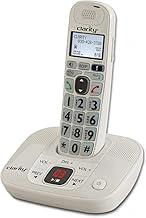
Clarity 53714 Dect 6.0 Amplified Cordless Phone with Digital Answering System
The Clarity 53714 offers cordless freedom and digital answering at $61.02, making it the most budget-friendly option in this lineup. Its DECT 6.0 technology delivers interference-free calls while you move around the house, and the built-in answering system means you won't miss messages when you can't reach the phone in time.
This model provides enough amplification for mild to moderate hearing loss without the premium cost of higher-end systems. The large buttons and straightforward controls reduce fumbling during calls, and the cordless handset lets you answer from the kitchen, bedroom, or living room without rushing to a base unit.
The tradeoff for the lower price is clear: you get less amplification headroom than the Panasonic KX-TGM450S, so if your parent struggles even with hearing aids during phone conversations, this may not deliver enough boost. There's no captioning to read what callers are saying, and expandability is limited compared to the Panasonic system if you later want handsets in multiple rooms.
At 4.2 out of 5 stars, the Clarity 53714 has proven reliable for thousands of users who need modest amplification and cordless convenience. If budget is tight or hearing loss is still in the mild range, this model provides solid value without the features - or cost - your parent may not yet need.
- ✅ Budget-friendly at $61.02
- ✅ DECT 6.0 cordless with digital answering system
- ✅ Large buttons and simple controls
- ✅ Sufficient amplification for mild to moderate hearing loss
- ⚠️ Less amplification headroom than premium models
- ⚠️ No captioning feature
- ⚠️ Limited expandability options
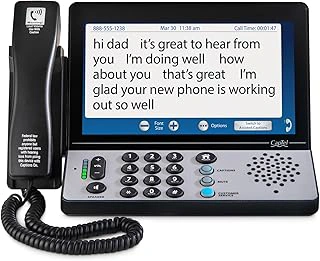
Hamilton CapTel 2400iSPNBT Captioned Phone, 40dB Amplification, Touch Screen, Wi-Fi
When turning up the volume isn't enough to catch every word, the Hamilton CapTel 2400iSPNBT adds a second layer of support by displaying real-time captions on a 7-inch touch screen while delivering 40dB of amplification. This dual approach helps seniors with moderate to severe hearing loss follow conversations even when clarity becomes an issue, not just volume.
The phone connects to your home Wi-Fi or Ethernet and routes audio through a free captioning service that transcribes the other person's words as they speak. You see the text appear on screen with a brief delay - typically a few seconds - which means you can read along if you miss a phrase or need to confirm what was said. The touch screen interface lets you adjust text size, scroll back through the conversation, and save important details like appointment times or addresses.
At $75.00 with a 4.3 out of 5 rating, this model sits between basic amplified phones and premium caption systems. The amplification matches mid-range corded options, and the captioning service adds meaningful value for anyone who struggles to distinguish similar-sounding words or follow rapid speech. The screen measures large enough to read comfortably from a typical seated distance, and tone control helps you tune the audio to match your hearing profile.
Setup requires an active internet connection and a brief registration with the captioning service, which handles the transcription remotely. The process takes about ten minutes, but it does mean the phone won't display captions if your internet goes down - though you'll still have amplified audio and standard phone functionality. The touch screen may feel unfamiliar if you're accustomed to physical buttons, and the captioning delay means you can't rely on text alone for time-sensitive exchanges like quick yes-or-no questions.
This phone makes the most sense when hearing aids or amplification alone leave gaps in understanding, especially on calls with unfamiliar voices, accents, or Hamilton CapTel 2400iSPNBT Captioned Phone, 40dB Amplification, Touch Screen, Wi-Fi noise. If your parent frequently asks callers to repeat themselves or misses key details even with the volume turned up, the captioning feature addresses that frustration directly.Check current priceto see if the combination of amplification and captions fits your budget, or compare specs with the other models in this guide if internet-dependent features feel like an unnecessary complication.
- ✅ 40dB amplification with real-time captions on 7-inch touch screen
- ✅ Adjustable text size and scrollable transcript help confirm missed words
- ✅ Tone control and visual display work together for moderate to severe hearing loss
- ✅ Mid-range $75.00 price includes captioning service access
- ⚠️ Captioning requires Wi-Fi or Ethernet connection and brief service registration
- ⚠️ Text appears with a few seconds of delay during conversation
- ⚠️ Touch screen interface may feel less intuitive than physical buttons
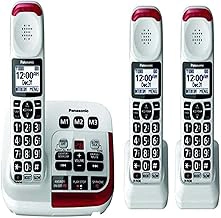
Panasonic KX-TGM420W Amplified Cordless Phone with Digital Answering Machine
When call clarity matters most, the Panasonic KX-TGM420W delivers the highest amplification ceiling in this comparison. This cordless system combines a powerful handset volume boost with a digital answering machine that plays messages with exceptional clarity - two features that matter when your parent struggles to catch every word.
The KX-TGM420W amplifies incoming calls significantly more than budget models, which helps users who need that extra headroom during conversations with soft-spoken callers or poor phone connections. The cordless handset offers freedom to move around the house without losing call quality, and the digital answering machine ensures your parent can replay messages as many times as needed to catch details.
One practical advantage: this system supports additional handsets, so you can place phones in the bedroom, kitchen, and living room without running new phone lines. Each handset shares the same amplification settings and answering machine access, which simplifies setup for someone managing hearing loss across multiple rooms.
At $299.97, this phone costs substantially more than single-unit amplified models. That price reflects the cordless convenience, answering machine clarity, and expandable handset design. If your parent lives alone in a small space and rarely uses voicemail, the extra features may outpace their actual needs. But for someone who values the strongest amplification available and wants phones within reach throughout the home, the investment pays off in reduced frustration and more reliable communication.
The tradeoff is straightforward: you're paying for maximum amplification power and multi-room flexibility. If those priorities match your parent's daily routine, the KX-TGM420W offers the clearest path to confident phone conversations.
- ✅ Highest amplification ceiling for soft-spoken callers
- ✅ Digital answering machine with clear message playback
- ✅ Cordless handset for mobility around the home
- ✅ Expandable system supports additional handsets in multiple rooms
- ⚠️ $299.97 price point reflects premium features
- ⚠️ More capabilities than needed for single-room use or users who rarely access voicemail
What Makes a Telephone 'Amplified' and What Actually Matters
An amplified telephone increases incoming voice volume beyond what standard phones offer, typically adding 30 to 40 decibels of boost. A 30dB increase makes conversation noticeably louder, while 40dB brings voices into a range where people with moderate hearing loss can follow phone calls without straining. Every 10dB step roughly doubles perceived loudness, so the gap between 30dB and 40dB amplification is meaningful when someone struggles to hear high-frequency consonants or soft-spoken callers.
Tone control adjusts pitch, letting users shift sound toward lower or higher frequencies depending on which range their hearing captures best. Many older adults lose high-frequency hearing first, so shifting tone downward makes speech clearer even when overall volume is adequate. Visual indicators - flashing lights that pulse with each ring or incoming call - add a layer of notification for anyone who might miss audible alerts, and large, high-contrast buttons reduce dialing errors in low light or for users with reduced vision.
Cordless models offer mobility around the home, but they introduce variables like battery life, handset weight, and base-station placement that affect everyday usability. Corded phones eliminate charging routines and tend to have simpler controls, though they tether the user to one spot. Built-in answering machines vary in playback clarity and message capacity; some use compression that flattens voice quality, making saved messages harder to understand than live calls.
The reviews that follow compare each phone on four practical criteria: maximum amplification level, button layout and tactile feedback, answering machine voice clarity where present, and setup steps required out of the box. These attributes directly shape whether a phone works for someone with hearing loss or creates new frustration.
How to Choose the Right Phone for Your Parent's Needs
Choosing an amplified telephone starts with understanding your parent's actual hearing challenges, not just assuming what they need. Before shopping, sit down together and listen to their current phone on speaker. Ask which parts of conversations they miss most - high-pitched voices, consonants, or everything when there's this product noise. That conversation will guide whether they need moderate volume boost, extra treble control, or a phone with visual alerts and captions.
If possible, test button size and dial tone volume in person. Many seniors avoid calling not because they can't hear well enough, but because tiny buttons frustrate them or the interface feels overwhelming. Look for models with backlit, widely spaced keys and a screen large enough to read without glasses. Confirm the store or online retailer has a clear return policy - ideally 30 days or more - so your parent can try the phone in their actual home environment, where carpet, furniture, and room layout affect how well they hear the ringer.
Decide early whether captions are essential. If your parent frequently asks people to repeat themselves or misunderstands key details like appointment times, a captioned model removes that guesswork. For parents who move between rooms or spend time in a garage or garden, a system with multiple handsets keeps them reachable without sprinting to one base unit.
The right match reduces call avoidance. When a phone is too quiet, too fiddly, or too stressful to use, seniors stop picking up or making calls altogether. A well-chosen amplified phone turns conversations back into something comfortable rather than exhausting, which directly supports connection and independence.
Helping Your Parent Reconnect Without the Guesswork
A phone that your parent can actually hear isn't just a convenience - it's a connection to the outside world. Missed calls mean missed doctor's appointments, delayed prescription refills, and the creeping worry that comes when a familiar voice can't break through the static. For your mother, a clearer phone conversation can mean less repeating, less frustration, and more confidence picking up when you call.
You've seen the options now: extra amplification for severe loss, visual alerts for missed rings, and tone controls that let her tune out the frequencies that distort speech. Each phone in this guide trades off something - size, complexity, or price - to deliver a different kind of clarity. The comparison grid shows you the specs side by side, but your mother's comfort with the buttons, the weight of the handset, and the sound of your voice on the other end will tell you which one works.
Independence doesn't mean going it alone. It means having tools that don't require a manual every time the phone rings. If she can hear you without asking you to repeat yourself three times, that's one less reason to avoid the phone - and one more reason to stay in touch with the people who matter. Review the comparison checklist above, revisit the product details for the models that fit her hearing profile, and choose the phone that makes reconnecting easy instead of exhausting.