We may earn a commission when you buy through links on this page, at no extra cost to you. How this works.
GotomRich Electric Hands-Free Automatic Jar Opener
Four reliable jar openers compared side-by-side for grip strength, ease of use, and kitchen independence.
Fit and safety come first
Use the comparison as a shortlist, but keep fit, comfort, and any health or safety constraints ahead of price.
Opening jars becomes a daily frustration when grip strength declines or arthritis makes twisting motions painful. The right jar opener can restore kitchen independence by removing the need for strong hands or wrist rotation, but the market splits into two distinct camps: electric models that operate hands-free at the press of a button, and manual tools that use leverage or gripping surfaces to reduce the force you need to apply.
Choosing between these approaches depends on four practical factors. First, how much grip strength you can comfortably use - electric openers require almost none, while manual designs still need light hand pressure or the ability to turn a handle. Second, the range of jar sizes you encounter most often, since not every opener accommodates both small spice jars and large pickle containers. Third, whether you have counter space for a permanent appliance or prefer a drawer-stored tool. Fourth, budget: electric models typically cost more upfront, while manual options start under ten dollars.
This guide compares four jar openers across those decision points. Two are electric and operate without twisting, while two are manual tools designed to multiply your existing grip strength. Each review explains what the product does well, where it falls short, and which situations make it the better fit. By the end, you'll know whether an electric hands-free design or a leverage-based manual tool matches your grip ability, kitchen layout, and the jar sizes you open most.
Quick Comparison: At-a-Glance Features
Choosing the right jar opener depends on how much grip strength you have, the types of jars you open most often, and whether you prefer a manual assist or a hands-free electric model. The four options covered in this guide differ in operation style, price, and jar-size range, making it easier to narrow your choice based on your specific needs.
Electric models remove nearly all grip and twist effort, while manual lever-style openers require some hand strength but cost less and take up minimal counter space. Price ranges from around $10 for basic manual tools to $30 - $40 for electric units. Jar-size compatibility varies: some openers handle only standard mason and pickle jars, while others adjust to fit everything from small spice jars to large pasta-sauce containers.
If you open jars daily and have very limited hand strength, an electric opener with one-touch operation will be the most practical. If you have some grip ability and want a compact, budget-friendly backup, a manual V-shaped or under-cabinet opener will do the job. For households that deal with a wide variety of jar sizes, look for models with adjustable clamps or multi-size settings. The comparison table below shows how each product stacks up on operation type, price tier, jar-size range, and the feature that sets it apart, so you can quickly eliminate options that don't match your daily routine or budget.
Electric vs Manual: The Real Tradeoffs
Electric jar openers eliminate the need for grip strength entirely - you position the opener on the jar, press a button, and the motor does all the twisting. Manual openers, including under-cabinet models and handheld lever designs, still require you to turn a handle or pull a lever, though they reduce the force needed compared to opening jars by hand. The choice between these two types depends on how much hand strength you have left, how often you open jars, and where you have room in your kitchen.
If gripping and twisting cause pain or feel impossible, an electric model is the more reliable option. You won't need to squeeze, turn, or apply downward pressure - just align the opener and let it run. The tradeoff is that electric openers take up counter or cabinet space, need an outlet or fresh batteries, and cost more upfront. They also tend to be bulkier, so portability is limited.
Manual openers work well if you retain some ability to rotate your wrist or pull a lever but struggle with the tight seal on new jars. Under-cabinet models stay out of the way and don't require storage space on the counter, though installation means they're fixed in one spot. Handheld lever openers are compact and travel-friendly, but they demand enough hand coordination to position and operate the mechanism. Manual options are quieter, never need charging, and generally cost less.
Consider how many jars you open each week. If you cook frequently and face multiple stubborn lids daily, the convenience of an electric opener may justify the space and expense. If jar opening is occasional and you have moderate hand function, a well-designed manual opener may be enough. Kitchen layout matters too: small counters and limited outlets favor compact manual designs, while spacious kitchens with accessible power can easily accommodate an electric unit.
What to Expect: Jar Size Compatibility
Electric jar openers typically accommodate standard kitchen jars between 1 and 4 inches in diameter, making them well-suited for pasta sauce, jam, and pickle jars, but less effective for very small medicine bottles or unusually large commercial-size containers. Most electric models grip the lid from above and require enough rim surface to establish a secure hold, which can be a limitation with short or deeply recessed lids.
Manual V-shaped openers and adjustable strap-style tools often handle a wider size range - from pill bottles under an inch to large mason jars over 4 inches - because they adapt their grip angle or strap length to fit the container. This versatility makes them a practical choice if your mother opens everything from small condiment jars to large bulk containers, though they still require some grip strength to turn or tighten the mechanism.
Under-cabinet models are typically designed around the most common jar sizes found in kitchens, usually covering 1.5 to 3.5 inches in diameter. If most of the jars in your mother's home fall into that mid-range, an under-cabinet opener will handle daily tasks reliably, but keep a backup manual tool on hand for outliers like spice jars or oversized bulk lids.
Before choosing, take a quick inventory of the jar types your mother opens most frequently. If her routine includes a lot of small prescription bottles or supplement containers, prioritize adjustable manual models or electric openers with smaller diameter settings. If she primarily deals with standard grocery jars, most electric and under-cabinet options will provide consistent performance without needing a secondary tool.
Final Recommendation: Match the Tool to the Need
The best automatic jar opener for seniors with weak hands or arthritis depends on three factors: grip strength, the types of jars you open most often, and whether the person will actually use the tool. An electric opener delivers the most torque with zero grip required, making it the strongest choice for severe arthritis or very large, stubborn jars. If you open multiple jars daily or struggle with most standard lids, that hands-free power justifies the counter space and battery maintenance.
A versatile manual opener like the AMOSA makes sense when grip strength is moderate, jar sizes vary widely, or portability matters. It works on twist-offs, pop-tops, and pull-tabs without batteries, and the wider grip surface reduces the force your fingers need to apply. This option suits seniors who want one tool that handles multiple container types and can travel or move between rooms easily.
The NEWPAII manual lever opener fits budgets under $15 and provides reliable mechanical advantage for standard jars when grip weakness is mild to moderate. It requires enough hand strength to squeeze the lever, so it works best as a backup tool or for someone who opens jars infrequently. If the senior uses it successfully on their most common jar sizes during a trial, it delivers excellent value.
Acceptance drives results more than features. Choose the tool that matches both the physical need and the person's willingness to reach for it. Compare your top two candidates side by side based on the jars you actually open, the counter or drawer space available, and whether battery charging or manual leverage feels more natural. The right opener is the one that gets used consistently, not the one with the longest feature list.
How to Choose the Right Jar Opener
- Assess actual grip strength: Can she rotate at all, or is any twisting motion painful?
- Inventory the jars she uses most: pickle jars, pasta sauce, medication bottles, or varied sizes?
- Check counter space and outlet access if considering electric models
- Consider backup needs: would a manual option provide redundancy if power is out?
- Factor in acceptance: will she use a countertop appliance, or prefer a drawer tool?
- Compare price to frequency of use: daily cooking vs occasional jar opening
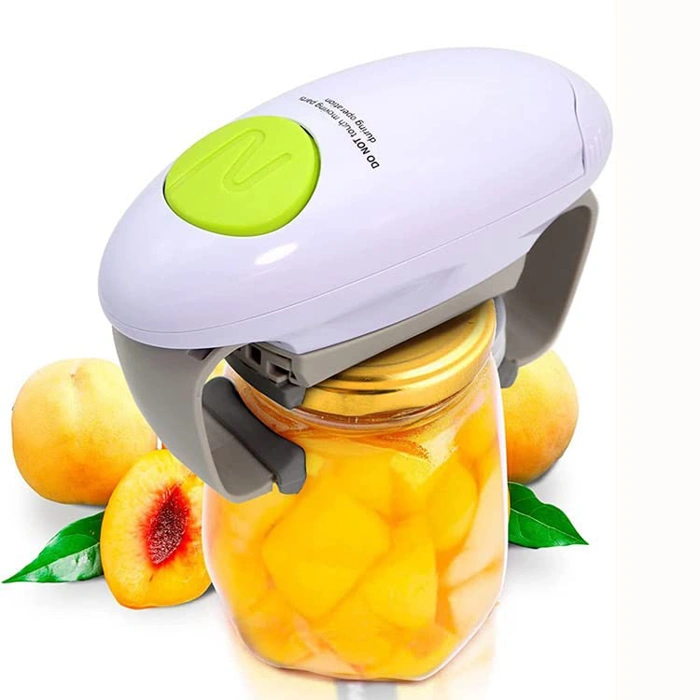
GotomRich Electric Hands-Free Automatic Jar Opener
The GotomRich Electric Hands-Free Automatic Jar Opener is designed for seniors who need a fully automatic solution that requires zero grip strength or manual twisting. This electric model handles jar opening with the push of a button, making it a practical choice for those with severe arthritis, limited hand mobility, or significant grip weakness.
Priced at $25.99, this opener operates entirely on its own once positioned over the jar lid. You place the unit on the lid, press the start button, and the motor does all the work - no squeezing, no turning, and no hand pressure required. This hands-free design sets it apart from manual or hand-crank models that still demand some level of grip or rotation.
The tradeoff is that this electric opener needs counter space and a power source, whether through batteries or a plug. It's less portable than compact manual options, and you'll need to ensure the jar size falls within the opener's compatibility range. The unit works best with standard kitchen jar lids; very large or unusually shaped lids may not fit securely.
With a 5.0 rating, this model appeals most to users who prioritize complete automation over portability. If grip weakness makes even assisted manual openers difficult, the GotomRich delivers a reliable, effort-free alternative that handles the entire opening process independently.
- ✅ Fully automatic operation requires zero grip strength or manual twisting
- ✅ Push-button control makes it simple to use for those with severe hand weakness
- ✅ Eliminates all hand pressure and rotation effort
- ⚠️ Requires counter space and a power source, reducing portability
- ⚠️ Jar size compatibility is limited to the unit's design range
- ⚠️ Less compact than manual or hand-crank alternatives
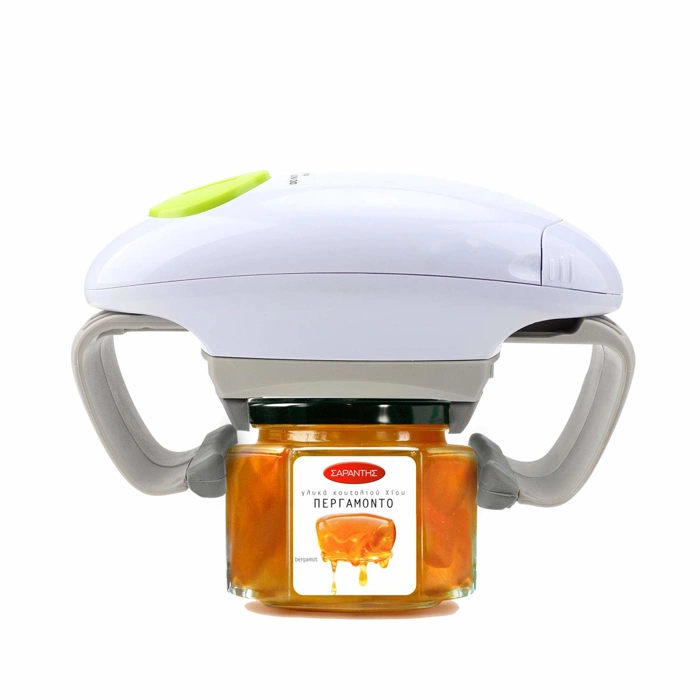
Electric Automatic Hands-Free Jar Opener
The Electric Automatic Hands-Free Jar Opener offers a budget-friendly entry point into electric jar opening at $24.99. This hands-free model operates with the press of a button, removing the need for grip strength or twisting motion entirely. It accommodates a range of jar lid sizes and sits on the countertop during use, making it accessible for seniors who prefer a stable, stationary setup.
Compared to the GotomRich electric opener reviewed earlier, this model delivers similar hands-free convenience at a slightly lower price point. However, its 4.2 rating - lower than the GotomRich - suggests possible trade-offs in consistency or long-term durability. The price difference is modest, so the choice often comes down to whether you prioritize the lowest upfront cost or a higher-rated track record.
This opener works best for seniors testing electric jar openers for the first time or those working within a tighter budget. If you open jars infrequently and want to avoid grip strain without a significant investment, the hands-free design provides meaningful relief. For users who open multiple jars daily or need a tool they'll rely on for years, the rating difference may warrant considering a higher-rated electric model.
The electric mechanism handles typical kitchen jars - from pasta sauce to pickles - without requiring hand strength. Keep in mind that any electric opener depends on battery life or power availability, so plan for occasional recharging or battery replacement. The hands-free operation remains the core advantage: you position the jar, press the button, and let the motor do the work.
- ✅ Hands-free operation eliminates grip and twisting requirements
- ✅ Budget-friendly at $24.99
- ✅ Accommodates multiple jar lid sizes
- ✅ Stable countertop design for easy positioning
- ⚠️ 4.2 rating suggests possible consistency or durability concerns
- ⚠️ Requires battery power or recharging
- ⚠️ Lower rating than competing electric models at similar price
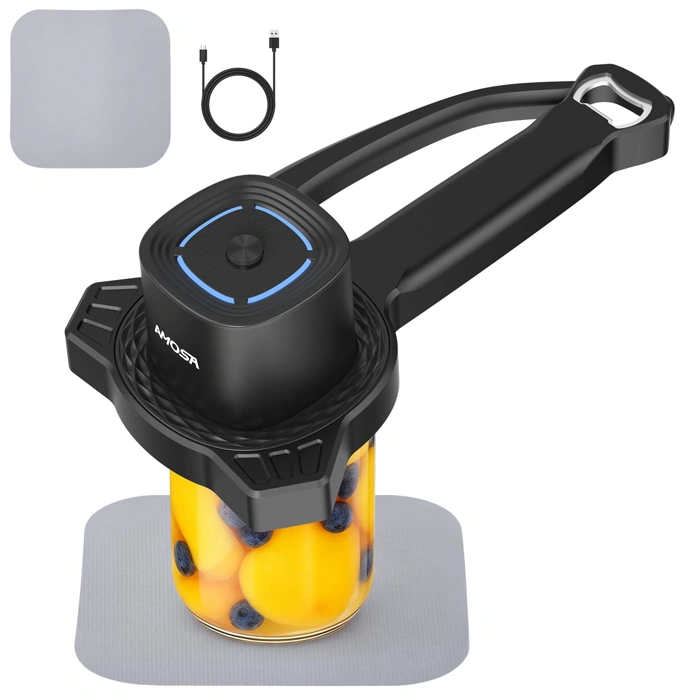
AMOSA Electric Jar & Bottle Opener with Gripper Pad
The AMOSA Electric Jar & Bottle Opener with Gripper Pad bundles two tools for $29.99, earning a 5.0 rating from users who need versatility across container types. The electric opener handles stubborn, tightly sealed jars without requiring grip strength, while the included gripper pad offers a lower-tech option for bottles, loosely sealed jars, and lighter tasks. This dual approach means you can reach for the electric unit when a lid won't budge and use the pad when you want a quieter, battery-free solution.
The tradeoff is price - at $29.99, this bundle costs more than single-function manual aids. However, households that open a mix of jars, bottles, and twist-top containers benefit from having both tools on hand. The gripper pad provides texture and leverage for tasks that don't need full electric assistance, while the powered opener tackles the heavy-duty seals that cause hand fatigue or pain. If you frequently switch between container types or share the kitchen with someone who has fluctuating grip strength, the bundled design reduces the need to hunt for multiple gadgets.
Because the product is currently in stock at $29.99 with a 5.0 rating, this option suits seniors who want a ready-made pair of openers without assembling a piecemeal collection. The gripper pad also serves as a backup when batteries run low, adding a layer of reliability to the everyday routine.
- ✅ Includes both electric opener and gripper pad for different container types
- ✅ 5.0 rating reflects strong user satisfaction
- ✅ Electric unit eliminates grip-strength requirement for stubborn jars
- ✅ Gripper pad offers battery-free backup for lighter tasks
- ✅ In stock at $29.99 for immediate availability
- ⚠️ Higher price point than single-function manual openers
- ⚠️ Requires batteries for the electric component
- ⚠️ May be more than needed if you only open one container type
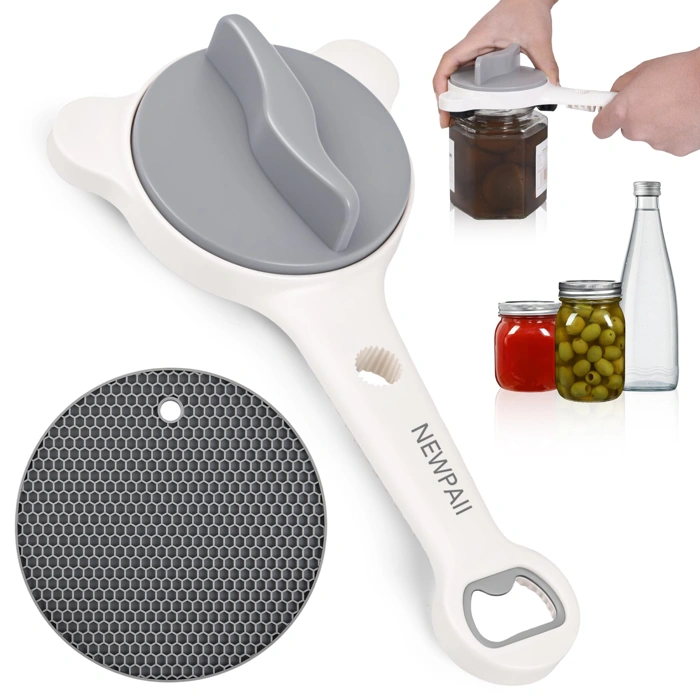
NEWPAII Jar Opener for Weak Hands, Seniors & Arthritis – Adjustable 4-in-1 Bottle & Can Opener with Non-Slip Pad – for Large Pickle Jars, Soda, Wine – Left-Handed & Kid-Friendly, Dishwasher Safe
If you have moderate grip weakness and prefer a tool that doesn't require batteries or electricity, the NEWPAII Jar Opener offers a practical, adjustable solution at $19.99. This manual opener features a 4-in-1 design that adjusts to fit a wide range of jar sizes - from large pickle jars down to soda bottles and wine caps - making it a versatile addition to any kitchen.
The NEWPAII opener uses an adjustable clamp mechanism with a non-slip pad that grips the lid, while you provide the turning force. Because it's manual, you do need enough hand and wrist strength to rotate the handle, but the leverage design reduces the effort compared to gripping a lid directly. The tool works equally well for left-handed and right-handed users, and its compact size stores easily in a drawer.
This opener is dishwasher safe, which simplifies cleanup and maintenance. With a 4.5 rating, it's the most affordable option in this comparison, but the key tradeoff is clear: it requires some rotational strength, so it may not be suitable for severe arthritis or very limited grip. For those who can manage light turning motions or who want a reliable backup when batteries run out, the NEWPAII provides broad jar compatibility and straightforward operation without the need for power.
- ✅ Adjustable 4-in-1 design fits large pickle jars, soda bottles, wine caps, and more
- ✅ No batteries or electricity required
- ✅ Left-handed and right-handed compatible
- ✅ Dishwasher safe for easy cleaning
- ✅ Most affordable option at $19.99
- ✅ Compact storage size
- ⚠️ Requires some grip strength and wrist rotation to turn
- ⚠️ May not be suitable for severe arthritis or very limited hand strength
- ⚠️ No powered assistance for stubborn lids