We may earn a commission when you buy through links on this page, at no extra cost to you. How this works.
When your loved one is at risk of falling during nighttime bathroom trips or early-morning confusion, a bed sensor alarm becomes more than a gadget - it's a decision that touches both safety and dignity. If you're like Sandra, who watches her mother struggle with mobility yet refuse to give up independence, you're navigating a narrow path: catch the moment she stands before she stumbles, but avoid turning her bedroom into a surveillance zone.
Choosing the right bed sensor alarm means weighing three core tradeoffs. First, wireless range versus cost: pager systems let you monitor from another room or floor, but they cost more than simple plug-in alarms. Second, portability versus installation complexity: lightweight sensor pads travel easily between bedrooms or to vacation homes, while wired systems may require routing cords under mattresses and around furniture. Third, immediate bedside alert versus remote notification: a loud alarm in the bedroom wakes the person and nearby caregivers instantly, while a silent pager in your pocket preserves nighttime quiet but requires you to be within range and awake enough to respond.
Your home layout and caregiver proximity drive the choice. If you sleep in an adjacent room and wake easily, a budget plug-in alarm with a pressure-sensitive pad may be enough. If you're two floors away or need to step outside for chores, a wireless pager system with 300-foot range makes more sense. If your loved one spends weekdays with you and weekends with a sibling, a battery-powered portable unit avoids duplicate purchases.
The three products reviewed below represent these distinct paths: a wireless caregiver pager for multi-room or multi-floor homes, a rechargeable door-and-bed combo alarm for households that need both exit monitoring and bed alerts, and a straightforward corded sensor pad for caregivers who stay close and want the simplest setup. Each solves a real scenario; none solves every scenario.
Fit and safety come first
Use the comparison as a shortlist, but keep fit, comfort, and any health or safety constraints ahead of price.
How Bed Sensor Alarms Work: A Simple Explanation
Bed sensor alarms use a simple pressure-sensing mechanism to detect when someone gets out of bed. A thin pad - usually placed under the fitted sheet near the torso or hips - registers weight when occupied and triggers an alert when that pressure is released. This approach works for elderly sleepers of varying weights and doesn't require wearables or cameras, making it less intrusive than many monitoring technologies.
Most systems include two pieces: the sensor pad itself and an alarm unit. Wired alarms run a cable from the pad to a bedside unit that sounds a chime or buzzer when pressure lifts. These models plug into a wall outlet and keep the alarm close to the bed. Wireless alarms send a radio signal to a separate receiver, which can be a portable pager carried by the caregiver or a unit placed in another room. Wireless setups offer more flexibility when you need to monitor from a distance - across the hall, in a living room, or even outside during the day.
Alert types vary by model. Bedside units typically emit an audible chime or buzzer at volumes ranging from 85 to 100+ decibels, loud enough to wake a nearby caregiver. Wireless pagers may chime, vibrate, or do both, letting you choose a gentler notification during daytime hours or a stronger alert at night. A handful of advanced systems also offer visual LED indicators or adjustable tone patterns.
Sensitivity matters. If the pad is too sensitive, shifting in bed can trigger false alarms; if it's not responsive enough, the person may already be standing before the alert sounds. Quality pads balance this by using calibrated pressure thresholds that recognize the difference between rolling over and actual weight removal. Placement also plays a role: positioning the pad where the hips rest tends to deliver the most reliable signal.
Understanding these basics helps you evaluate the three product types in this guide: a wireless caregiver pager system for whole-home coverage, a rechargeable cordless alarm for portability and quick setup, and a budget wired sensor for straightforward bedside monitoring. Each takes the same core pressure-sensor approach but tailors the alert delivery to different household layouts and caregiver routines.
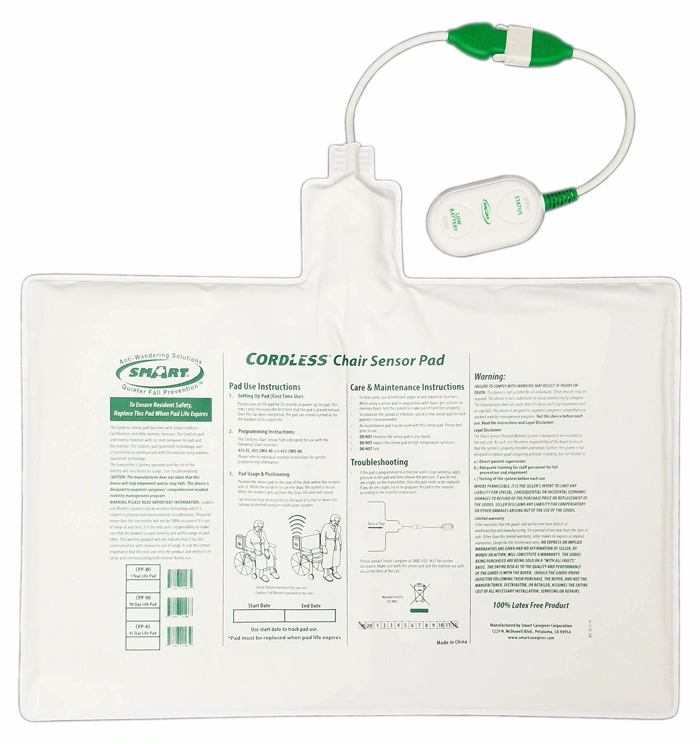
Smart Caregiver Cordless Chair Sensor Pad
The Smart Caregiver Cordless Chair Sensor Pad offers flexibility for caregivers who need to monitor someone across multiple rest spots. Priced at $69.95, this mid-range option reduces the wire trailing from the pad to the alarm, making it easier to move between a chair, wheelchair, or bed without reconfiguring cords.
The cordless design simplifies placement - just position the pad on the furniture and pair it with a compatible wireless receiver. This setup works well if you're caring for someone who spends time in a living room recliner during the day and a bed at night, or if you want to avoid tripping hazards from sensor wires. The pad detects when weight is removed and signals the receiver to alert you.
The tradeoff is that you'll need a compatible receiver unit, which may add to the initial cost if you don't already own one. The system also relies on wireless transmission, so placement and range matter - thick walls or distance between the pad and receiver can affect reliability. With a 4.4 out of 5 rating, most users find it dependable, though a few report occasional missed signals in larger homes.
This sensor pad is best for caregivers who value portability and want a single pad that moves with their loved one throughout the day. If your care routine involves multiple seating areas or you prefer a clean, wireless look, the cordless design offers practical advantages. However, if you need a complete plug-and-play system with no additional hardware, a bundled bed alarm may be simpler.
- ✅ Cordless design with no wire trailing from pad to alarm
- ✅ Easy to move between chair, wheelchair, or bed
- ✅ Mid-range price at $69.95
- ✅ Flexible placement for multiple rest spots
- ⚠️ Requires compatible wireless receiver (sold separately or bundled)
- ⚠️ Wireless range may be limited by walls or distance
- ⚠️ Some users report occasional missed signals in larger spaces
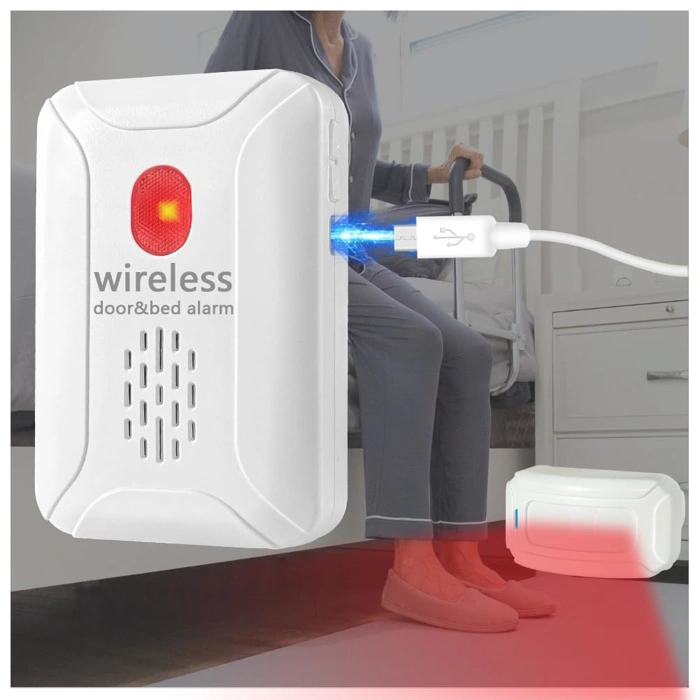
Rechargeable Door & Bed Exit Alarm for Fall Prevention
At $29.99, this rechargeable door and bed exit alarm offers the most affordable entry point in this comparison, with a solid 4.6 out of 5 rating. The magnetic sensor strip attaches to the bed frame or door frame, triggering an audible alert when contact is broken - making it simple to set up without complex wiring or remote pagers.
The rechargeable design reduces the need for frequent battery replacements, and the dual-use capability means you can mount it on a bedroom door or position it bedside depending on your monitoring needs. The alarm sounds directly from the unit itself, which works well for caregivers who sleep in the same room or close by.
The tradeoff is clear: this is a bedside-only alert system with no remote pager or wireless range. If you need to monitor from another floor or while doing household tasks elsewhere, you won't hear the alarm. The setup is also simpler by design - there's no programming, no pairing, and no hub to configure - but that means fewer customization options compared to wireless systems.
This alarm fits caregivers who want a straightforward, budget-friendly solution without installation complexity. If you're nearby at night and prefer a plug-and-go approach over managing multiple receivers, the combination of low cost, rechargeable convenience, and high user ratings makes this a practical choice for basic exit monitoring.
- ✅ Lowest-cost option at $29.99
- ✅ Rechargeable design - no battery replacements
- ✅ Dual-use for door or bedside monitoring
- ✅ Simple setup with no wiring or pairing required
- ⚠️ Bedside alert only - no remote pager or wireless range
- ⚠️ Caregiver must be in the same room or very close by to hear alarm
- ⚠️ Fewer customization options than multi-receiver systems
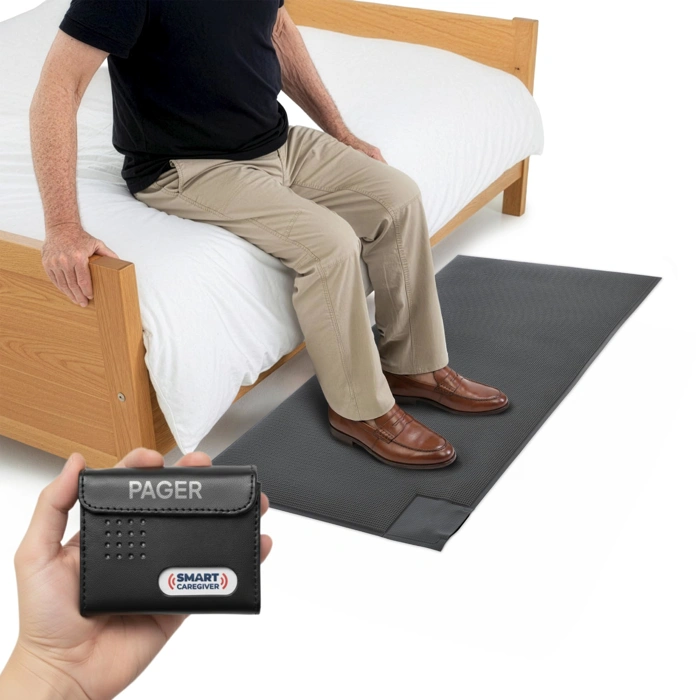
Smart Caregiver Floor Mat Alarm and Pager System with Wireless Sensor
The Smart Caregiver Floor Mat Alarm and Pager System is the wireless solution designed for caregivers who need to monitor from another room or floor. At $149.95, it's the premium option in this guide, trading higher upfront cost for freedom of movement and remote notification capability.
This system uses a floor mat sensor placed beside the bed. When the person being cared for steps onto the mat, the sensor wirelessly transmits an alert to a portable pager that the caregiver can carry anywhere in the home. The wireless range allows you to sleep in a separate bedroom, work in another part of the house, or even step outside without losing coverage in most residential layouts.
The floor mat design focuses on detecting weight when feet touch the ground, rather than monitoring movement in bed. This approach reduces nuisance alerts from normal repositioning during sleep but catches the critical moment when someone attempts to stand or exit the bed. The system earned a 4.4 out of 5 rating, reflecting solid real-world performance in this category.
The tradeoff is complexity and cost. You're managing two separate components - the mat sensor and the pager - rather than a single standalone alarm. Battery or power management becomes a consideration for both pieces. Setup requires pairing the devices and finding the right placement for the mat to ensure reliable contact without creating a trip hazard.
This system makes the most sense in larger homes where a bedside alarm wouldn't be heard from the caregiver's room, during nighttime monitoring when the caregiver needs uninterrupted sleep in another space, or in households where multiple family members share caregiving shifts and need portable notification. If you're providing care in a small apartment or staying in the same room, the added cost and components may not justify the wireless convenience. But for caregivers who need reliable alerts while maintaining their own rest and mobility, the Smart Caregiver pager system delivers functional independence that simpler alarms can't match.
- ✅ Wireless pager allows caregiver mobility throughout the home
- ✅ Floor mat sensor detects weight when feet touch ground
- ✅ Reduces false alerts from normal sleep repositioning
- ✅ Effective for nighttime monitoring from separate rooms
- ⚠️ Higher cost at $149.95 compared to standalone alarms
- ⚠️ Requires managing and powering two separate components
- ⚠️ More complex setup with device pairing and mat placement
Side-by-Side: Comparing Your Three Best Options
When choosing between these three bed sensor alarms, your decision comes down to caregiver proximity, home layout, and budget. Here's how they stack up across the factors that matter most for at-home elderly care.
Price: The Smart Caregiver Cordless Bed Alarm starts at $29.99, making it the most affordable entry point. The Medline Bed Sensor Pad with audible alarm sits in the middle at $69.95, while the Smart Caregiver Wireless Pager System reaches $149.95 for the complete wireless monitoring package.
Alert Type: The Smart Caregiver Cordless model delivers alerts through a bedside monitor only - you need to be within earshot. The Medline sensor pad uses a wired connection to an audible alarm unit placed near the bed. The Wireless Pager System sends alerts to a portable pager you can carry anywhere in the home or yard, offering the longest range of the three.
Sensor Design: The Cordless Bed Alarm uses a strip sensor that mounts on the door frame or tucks under the mattress edge. The Medline option is a 10 x 30 inch sensor pad placed on top of the mattress under a draw sheet. The Wireless Pager System includes a larger floor mat designed to detect when feet touch the ground beside the bed.
Portability: The Cordless Bed Alarm and Medline Sensor Pad both stay in one room and require proximity to the alarm unit. The Wireless Pager gives caregivers freedom to move throughout the house, into the garage, or outside while staying connected.
Best-Fit Scenario: Choose the Cordless Bed Alarm if you sleep in the same room or nearby and need a simple, low-cost alert. Pick the Medline Sensor Pad if you want moderate sensitivity on the mattress surface with a straightforward wired setup. Opt for the Wireless Pager System if you care for someone alone, manage a larger home, or need to step outside while remaining alert to movement.
Compare all three product links side-by-side before deciding - your home layout and daily routine will make the right choice clear.
What to Consider Before You Buy a Bed Sensor Alarm
- How far away will you be when the alarm goes off? (same room, down the hall, separate floor)
- Does your parent sleep restlessly or shift positions often? (may trigger false alarms with overly sensitive pads)
- Do you need the alarm to travel between rooms or homes? (portability and battery vs. plug-in)
- What alert types work best for your household? (loud alarm, chime, vibration, or pager)
- Will the sensor pad or mat fit your bed or chair dimensions?
- Do you need a system that can pair with multiple receivers or pagers?
How to Talk to Your Parent About Using a Bed Alarm
Introducing a bed alarm can feel uncomfortable, especially if your parent values independence. Many caregivers worry the conversation will sound like they're taking away control or treating their loved one like a child. The key is to frame the alarm as a tool that supports autonomy, not surveillance.
Start by explaining how the alarm helps you as the caregiver. Instead of checking on them every hour or lying awake listening for movement, the alarm lets you sleep better knowing you'll be alerted if they need help. This shifts the focus from monitoring to peace of mind for the entire household.
Emphasize that the goal is to help them stay in their own home longer. A bed alarm is a small adjustment that can prevent a fall serious enough to require assisted living. When framed this way, the device becomes a partner in maintaining independence rather than a symbol of lost freedom.
Acknowledge their feelings openly. If your parent resists, listen without dismissing their concerns. You might say, "I know this feels like a big change, and I respect that. Can we try it for two weeks and see how it goes?" A trial period gives both of you time to adjust and evaluate whether the alarm truly helps.
If the conversation stalls, involve them in the decision. Let them choose the alarm type - wireless pager, door chime, or sensor pad - so they have ownership over the solution. Some families find it helpful to start with a motion-activated night light or a simpler intervention before introducing an audible alarm.
Remember, this conversation is rarely a one-time event. Revisit the topic gently, and be prepared to adjust your approach. Small safety steps today can preserve dignity and independence far longer than avoiding the discussion altogether.