We may earn a commission when you buy through links on this page, at no extra cost to you. How this works.
GE LED Motion Sensor Night Light, Plug-in, Soft White, 40 Lumens, 2-Pack
Compare four motion-sensor bed lights designed to illuminate pathways and reduce fall risk at night.
Fit and safety come first
Use the comparison as a shortlist, but keep fit, comfort, and any health or safety constraints ahead of price.
Nighttime trips to the bathroom create a collision of two needs: seniors want to stay safe moving in the dark, but turning on overhead lights disrupts sleep and can make it harder to settle back down. Motion-activated under-bed lighting offers a middle path - automatic illumination when feet hit the floor, without the jarring this product of a lamp or hallway switch.
For adult children arranging a safer home environment, the challenge lies in balancing installation simplicity, bedroom layout, and whether your parent will tolerate a visible device. Some systems plug into wall outlets and sit on the floor; others use adhesive-backed LED strips tucked under the bed frame. this product varies from soft amber glow to brighter white light, and coverage length determines whether one side of the bed or both receive even illumination.
The four products compared here split along those practical lines. Two use plug-in sensors with attached light strips, offering easy setup but requiring outlet access near the bed. The other two are adhesive strip kits that mount directly to the frame, hiding the hardware but demanding more careful placement. If your mother's bedroom has limited outlet locations or she dislikes visible cords, the adhesive route may fit better. If she moves furniture occasionally or you want a no-commitment trial, plug-in models remove and relocate without leaving residue.
Length and this product control also shape the decision. A single-strip kit may light only one side of the bed, which works if she consistently exits from that direction. Dual-strip or longer kits provide wraparound coverage, useful when bathroom access varies or the bed sits away from walls. Adjustable this product lets you dial in enough light to see the floor without waking a partner, while fixed-output models simplify operation at the cost of flexibility.
Each section below details one product's installation method, sensor behavior, light characteristics, and the bedroom scenarios where it makes the most sense. Use the comparison to match hardware constraints and acceptance factors to your mother's specific setup.
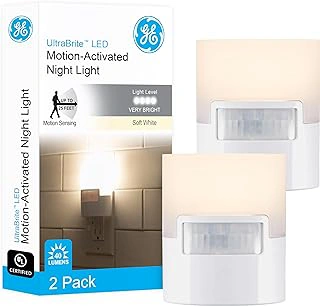
GE LED Motion Sensor Night Light, Plug-in, Soft White, 40 Lumens, 2-Pack
If adhesive strips and wiring feel like too much work, the GE LED Motion Sensor Night Light offers the simplest path to motion-activated bedside lighting. This 2-pack plugs directly into standard outlets - no tools, no sticky pads, no setup beyond sliding the light into the socket.
Each unit delivers 40 lumens of soft white light when motion is detected, enough to illuminate the immediate floor area around your bed without flooding the room. The warm tone won't disrupt sleep the way cooler LEDs can, and the compact housing stays flush against the wall so it won't block adjacent outlets or create a tripping hazard.
The two-pack design works well for caregivers managing both sides of a bed or covering a bedroom and hallway. Because each light operates independently, you can position one near the bed frame and another by the bathroom door, creating a simple path without coordinating a single long strip.
The tradeoff is coverage. Unlike flexible strip lights that wrap around bed frames or tuck under the entire footboard, these plug-ins only light the space directly in front of the outlet. If your outlets sit high on the wall or far from the bed edge, the sensor may miss low movement, and the light will point forward rather than down toward the floor. You'll also need accessible outlets on both sides if you want symmetrical coverage.
This option makes the most sense when you value familiar plug-and-play reliability over custom placement. Caregivers who want to avoid explaining adhesive installation to a loved one, or renters who can't modify furniture, will appreciate the zero-commitment setup. Just plug in, and the motion sensor handles the rest.
At $19.99 for two lights, the cost per unit is lower than many specialty under-bed strips, though you're paying for convenience and traditional form factor rather than flexible layout or extended reach.
- ✅ Plug-in design requires no tools, adhesive, or wiring
- ✅ 2-pack covers both sides of the bed or multiple rooms
- ✅ 40-lumen soft white output won't disrupt sleep
- ✅ Compact housing won't block adjacent outlets
- ✅ Familiar form factor for caregivers and older adults
- ⚠️ Limited coverage compared to flexible strip lights
- ⚠️ Requires accessible outlets near the bed
- ⚠️ Sensor may miss low movement if outlet is high on the wall
- ⚠️ Light projects forward, not down toward the floor
Why Motion-Activated Under-Bed Lighting Works
Motion-activated under-bed lighting addresses a specific gap in home safety: the moment when someone first stands up in a darkened room, disoriented and searching for a light switch. These systems use passive infrared sensors to detect movement - typically the swing of legs over the edge of the bed - and automatically illuminate a strip or series of LEDs positioned low to the floor. The light appears exactly when needed, without fumbling for a switch or reaching for a lamp.
The low mounting position creates a gentle visual guide along the path to a bathroom or doorway, bright enough to show obstacles but soft enough to avoid the harsh glare that can make it harder to fall back asleep. Most units offer warm white or amber tones in the 2700 - 3000K range, which have less impact on melatonin production than cooler blue-spectrum light. Placement near the floor also keeps the light source out of direct line of sight when lying down, preserving the dim environment that supports circadian rhythm.
This automation removes the need to remember a new habit or rely on manual switches in the dark. For older adults or anyone navigating mobility concerns, that independence matters - there's no behavior change required, no additional step to complete before moving. The light simply responds to presence. Users who resist traditional nightlights or bedside lamps often accept motion-activated systems more readily because the technology adapts to them, rather than the other way around.
The result is a practical layer of fall prevention that stays invisible until the moment it's useful, then fades away once the room is empty again.
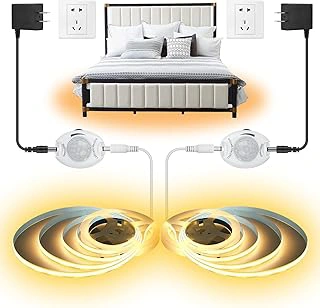
Motion Activated COB LED Strip Bed Lights, Warm White, 2-Pack, 6.56ft
This two-pack delivers a larger amount of warm-white COB strip per light, giving you multiple-plus feet of coverage when both strips are installed along opposite sides of a bed frame or headboard. The adhesive backing mounts directly to wood, metal, or painted surfaces without screws or clips, making it straightforward for caregivers who need ambient lighting in place quickly.
Each strip switches on when motion is detected within its sensor range and turns off automatically after about multiple seconds of no movement. Because the color temperature and Motion Activated COB LED Strip Bed Lights, Warm White, 2-Pack, 6.56ft are fixed, there's no app pairing, no remote to lose, and no menu to navigate - peel the backing, press the strip into place, and the system is live.
The warm white output (around multiple K based on similar COB designs) provides enough illumination to see the floor and furniture edges without the blue-spectrum alertness that can interfere with returning to sleep. The absence of Motion Activated COB LED Strip Bed Lights, Warm White, 2-Pack, 6.56ft control means the light level is consistent every night, which helps if routine and predictability matter more than customization.
Installation requires only a clean, dry surface. Wipe the mounting area with rubbing alcohol, let it dry, then apply steady pressure along the strip for multiple seconds. Each strip includes a USB power cable; you'll need two USB wall adapters (5 V, 1 A minimum) or two open USB ports on a charging hub. Cable length is approximately a larger amount, so plan outlet or hub placement accordingly.
This option works well when you need straightforward under-bed coverage without adjusting hue or intensity. If you want dimming, color selection, or app scheduling, the RGB models reviewed earlier offer those features. If you want a light that simply turns on when someone gets up and stays out of the way otherwise, this warm-white pair delivers that with minimal setup friction.
- ✅ 6.56 ft per strip (13+ ft total) covers both sides of most beds
- ✅ Adhesive mount installs without tools or drilling
- ✅ Fixed warm white eliminates app setup and remote management
- ✅ Motion sensor activates automatically with 60-second auto-off
- ⚠️ No brightness adjustment or color options
- ⚠️ Requires two separate USB power sources
- ⚠️ Adhesive bond depends on surface prep and may weaken over time
What to Look For in Motion-Sensor Bed Lights
- Installation method: plug-in units require nearby outlet; adhesive strips attach directly to bed frame
- Detection range and angle: sensor should cover the side of the bed where the person exits most often
- Brightness levels: adjustable or warm white options reduce sleep disruption
- Strip length: measure bed perimeter to ensure full coverage where needed
- Power source: plug-in, USB, or battery-powered affects placement flexibility
- Auto shut-off timer: conserves energy and prevents lights staying on indefinitely
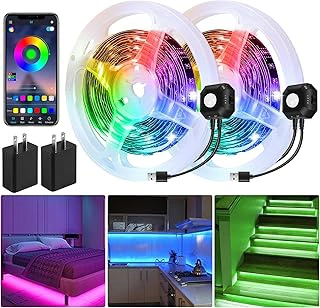
Motion Activated Under Bed RGB LED Strip Light, 2x9.8ft, App Control, Dimmable
Households that value flexible Motion Activated Under Bed RGB LED Strip Light, 2x9.8ft, App Control, Dimmable and optional color control can use this two-strip kit to cover a queen or king bed frame with a larger amount total. The app-based dimmer lets you dial warm white down to a soft glow that guides footsteps without waking a partner, and the motion sensor activates the strips when feet hit the floor. RGB modes add daytime or aesthetic options if you want accent lighting during the day, though most late-night use sticks to warm white.
Setup requires pairing the controller to a smartphone, which opens scheduling and Motion Activated Under Bed RGB LED Strip Light, 2x9.8ft, App Control, Dimmable presets but may feel complicated for seniors who avoid apps. Adult children or caregivers who live nearby - or who can walk through installation during a visit - will find the one-time configuration straightforward, and remote adjustments through the app mean tweaking sensitivity or Motion Activated Under Bed RGB LED Strip Light, 2x9.8ft, App Control, Dimmable later without crawling under the bed. The adhesive backing holds well on metal or wood frames; wipe the surface clean and press firmly along each 9.8-foot strip.
At $19.99, the price sits close to simpler plug-and-play strips, so the extra features cost little. If no one in the household feels comfortable with app pairing, a basic motion-only strip will be easier. If Motion Activated Under Bed RGB LED Strip Light, 2x9.8ft, App Control, Dimmable control or scheduling matters - dimming further after midnight, for example - the app interface delivers that precision. The sensor range works within six feet, and the auto-off timer conserves power when motion stops.
The kit includes adhesive clips, a motion sensor module, and a plug-in adapter. Total cable reach from outlet to far side of the bed determines whether you need an extension cord; measure before ordering. The dimmable warm white strikes a balance between visibility and preserving night vision, and the 4.3-star rating reflects satisfaction with Motion Activated Under Bed RGB LED Strip Light, 2x9.8ft, App Control, Dimmable options and ease of mounting once the app hurdle is past.
- ✅ 19.6 feet total coverage fits queen and king frames
- ✅ App dimming adjusts warm white to very soft levels
- ✅ Scheduling and remote brightness changes through smartphone
- ✅ RGB modes available for daytime or aesthetic use
- ⚠️ Requires smartphone pairing, which may intimidate some users
- ⚠️ Cable reach from outlet may need extension cord on larger rooms
Installation Tips for Maximum Safety and Effectiveness
Proper installation determines whether motion-activated under-bed lighting provides reliable safety or creates new hazards. The most effective setups combine strategic sensor placement with clean adhesive mounting and careful cable management.
Start by cleaning the bed frame surface with rubbing alcohol before applying adhesive strips or tape. Dust, oil, and residue prevent secure bonding, which can cause lights to sag or detach. Wait for the surface to dry completely, then press firmly along the entire length of the strip for at least 30 seconds to ensure full contact.
Position motion sensors on the side of the bed where you typically exit, angled to detect movement in the area where your feet will touch the floor. Sensors mounted too high or facing the wrong direction may fail to activate when needed. Test the detection range before finalizing the placement by walking through your typical nighttime path at different speeds and angles.
Route power cables and extension cords along the bed frame or wall, securing them with cable clips to keep them off the floor. Loose cords crossing walking paths introduce tripping risks that negate the safety benefit of the lighting. If using plug-in models, choose an outlet location that minimizes cable length across open floor space.
Adjust this product to the lowest setting that still provides adequate visibility. Overly bright lights can be jarring when you wake, while dim settings may not illuminate obstacles effectively. Walk the path several times at night to verify the light provides enough illumination without creating glare or harsh shadows.
Common installation mistakes include placing sensors too far from the bed edge, using strips that are too short to light the full path to the door, and failing to test activation before securing components permanently. The goal is invisible assistance that activates reliably without requiring conscious interaction or introducing new obstacles.
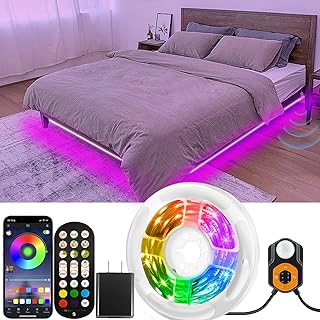
Motion Sensor RGB LED Strip Light, 19.68ft, Under Bed, Music Sync, Timer, Dimmable
Extended coverage makes a difference when your bed sits far from the bathroom door or you need a continuous lit path across a large bedroom. This 19.68-foot strip wraps around queen or king beds and still leaves enough length to guide someone past a chair or dresser - useful if unsteady footing means the last few steps to the doorway matter as much as the initial bed exit.
The motion sensor triggers the strip when feet hit the floor, and a built-in timer lets you set how long the light stays on before switching off automatically. Dimmable warm-white mode provides enough glow to see obstacles without flooding the room, which helps preserve night vision and avoid waking a partner. RGB color modes and music-sync features add flexibility for other uses during the day, though most fall-prevention setups will leave the strip locked on warm white.
Installation requires routing the full length along the bed frame or floor channel, so plan to spend a few extra minutes managing adhesive backing and cable routing compared to shorter plug-and-play kits. The added setup time pays off if your room layout demands perimeter lighting that reaches beyond the immediate bedside - for example, lighting both sides of a platform bed and the path to an adjacent nightstand.
The slight price premium over compact two-strip kits reflects the extra footage and programmable timer. If your bedroom is compact and the path from bed to door stays within six feet, simpler options deliver the same core function with less cable to manage. Choose this strip when you need coverage that follows someone from mattress edge to doorway, or when a caregiver wants one system that handles multiple zones without installing separate sensors in each area.
- ✅ 19.68ft length covers large beds and extends pathway to doorway or furniture
- ✅ Timer function automatically switches off light after set duration
- ✅ Dimmable warm-white mode preserves night vision and minimizes partner disturbance
- ✅ Single motion sensor manages lighting across multiple zones
- ⚠️ Longer strip requires more time to route adhesive backing and cables during installation
- ⚠️ RGB and music-sync features add complexity caregivers may not need
- ⚠️ Higher price than shorter kits when room layout does not require extended coverage
Comparing the Four: Which Light Fits Your Setup?
Choosing between these four options comes down to three practical factors: how accessible your outlets are, how much coverage you need, and whether you want this product control beyond on/off.
The GE plug-in suits bedrooms where wall outlets sit within reach of the bed frame and simplicity matters most. No adhesive, no app, no fuss - plug it in and the motion sensor handles the rest. Coverage is limited to the immediate area around the fixture, so it works best for standard-width beds and short walks to the bathroom.
The COB warm white strip is the middle-ground pick when you want longer under-bed illumination but prefer to avoid smartphone apps. Installation requires measuring, cutting if necessary, and securing adhesive backing, but the payoff is even lighting along one or both sides of the bed. this product is fixed, which keeps operation straightforward for anyone waking during the night.
The 9.8-foot RGB strip adds tunable this product and color through an app, giving caregivers the ability to adjust intensity for glare sensitivity or dim the light further once someone's eyes adjust. Setup involves pairing the controller and configuring preferences, so plan for someone comfortable with that process to handle the initial installation. Length covers most queen and king bed frames without excess.
The 19.68-foot option extends coverage beyond the bed itself - wrap it around a nightstand, continue along a hallway threshold, or light both sides of a California king. That added length comes with the same app-based controls and RGB flexibility, but also more planning: you'll need to route the strip, secure it neatly, and ensure the power supply reaches your chosen starting point.
All four address the core safety need - motion-activated light that turns on before feet hit the floor. The differences lie in how much installation effort you're willing to invest, how much floor area you need lit, and whether adjustable this product or color temperature adds real value to your routine. Compare your room layout, outlet locations, and caregiver confidence with setup steps to match the right light to your situation.
Conclusion
Motion-activated under-bed lighting is one of the simplest, least intrusive ways to reduce nighttime fall risk without making a home feel like a care facility. Each of the four options covered here turns on automatically when feet hit the floor, eliminating the fumble for a switch in the dark. The right choice depends on how easy you want installation to be, whether the bed frame has accessible edges for strips, where outlets sit in relation to the bed, and whether adjustable this product or color temperature will help or add unnecessary steps.
Before deciding, measure the bed frame to confirm strip length or clearance for sensor placement. Check how far the nearest outlet sits from the bed, and think about whether your mother will benefit from a dimmable option or prefer a single, predictable setting every night. If you're comfortable with adhesive mounting and want flexibility in positioning, a strip light offers broad coverage. If you'd rather skip any permanent attachment and value a plug-and-play setup, a standalone sensor unit will work better.
Small, practical upgrades like these add up. A motion-activated light won't solve every fall risk, but it addresses one of the most common scenarios - disoriented movement in the dark - with minimal cost and no daily effort. Review the product links above to confirm dimensions, recent user feedback, and specifications that match your layout, then choose the model that fits both the space and your confidence in getting it installed correctly.