We may earn a commission when you buy through links on this page, at no extra cost to you. How this works.
RUGPADUSA Superior-Lock 8'x10' 1/4" Thick Felt + Rubber Non-Slip Rug Pad
Compare material, grip, and thickness to find rug pads that actually stop rugs from sliding.
Fit and safety come first
Use the comparison as a shortlist, but keep fit, comfort, and any health or safety constraints ahead of price.
Area rugs shift, bunch, and slide - especially on smooth hardwood, tile, and vinyl - turning everyday flooring into a tripping hazard. A rug pad creates friction between the rug backing and the floor, holding the rug flat and stationary underfoot. But the market offers dozens of pad types, and choosing the wrong combination of material, thickness, and surface compatibility can leave you with a pad that compresses too quickly, yellows your floor, or simply doesn't grip.
Three variables determine whether a rug pad will actually prevent slips in your home. Material composition governs durability and floor safety: natural rubber grips hard surfaces without adhesive residue, while PVC and synthetic felt offer budget-friendly traction on carpet. Thickness affects stability - thinner pads (1/8 inch) work best on hardwood and tile where you want the rug to lie flush, while thicker cushioned pads (1/4 inch or more) add comfort on concrete or in high-traffic kitchens but can create a trip edge if the rug border lifts. Surface compatibility is non-negotiable: a pad designed for carpet will slide on polished hardwood, and a tacky rubber pad meant for tile can trap moisture or discolor unsealed wood.
Budget pads marketed as universal often rely on a single rubberized layer that works adequately on low-pile carpet but skates across hardwood. Premium felt-rubber hybrids bond a dense felt top to a natural rubber base, delivering grip on the floor side and cushioning on the rug side - at two to three times the price. Installation method also changes performance: some pads require trimming to sit one inch inside the rug perimeter to prevent edge curl, while others are sized to match the rug exactly. Grip claims vary widely, and testing standards are inconsistent, so the key is matching pad construction to your specific floor type and rug weight rather than relying on marketing language.
This guide walks through each decision point - material types and their tradeoffs, thickness ranges for different rooms, and surface-specific recommendations - so you can compare options with confidence and choose a rug pad that keeps rugs secure without damaging floors.
Why Area Rugs Create Tripping Hazards in the First Place
Area rugs slide because most are manufactured with smooth fabric or latex backing that sits on equally smooth hardwood, laminate, or tile. Without texture or grip, there's no friction to hold the rug in place when weight shifts across it. Step near the edge of an unsecured throw rug and the entire piece can glide forward, taking your foot with it.
The problem becomes acute during everyday movements that seniors repeat dozens of times each day. Pivoting to answer the door, turning quickly in the kitchen to grab a dish, or shuffling out of bed in low light all create lateral force against the rug's edge. In entryways, rugs bunch as people wipe their feet. In bathrooms, moisture on the floor reduces what little grip exists. Kitchens see spills that turn hardwood slick, and any rug without a pad becomes a skating mat.
High-traffic zones compound the risk because rugs migrate inch by inch with each pass. What starts flat on Monday has crept two feet by Friday, leaving a corner curled or an edge overlapping the threshold. That raised lip is exactly the height needed to catch a toe, especially for someone with reduced ankle flexibility or slower reflexes. The rug itself isn't inherently dangerous - it's the physics of two smooth surfaces meeting without an anchor between them.
What to Look For in a Non-Slip Rug Pad: Material, Thickness, and Grip Type
Choosing the right rug pad begins with matching three core features - material, thickness, and grip type - to your floor surface and safety priorities.
Material determines both grip and long-term floor safety. Rubber-only pads deliver strong grip on hardwood and tile but can degrade over time, leaving residue or discoloration on finished floors. Felt-rubber hybrids combine a thin felt layer with rubber backing, adding cushion while allowing air circulation that reduces moisture buildup and staining risk. PVC mesh pads are designed for area rugs placed over wall-to-wall carpet, where rubber would slide rather than grip.
Thickness changes both stability and edge-trip risk. Pads measuring 1/8 inch stay nearly invisible underfoot and work well when you want the rug to lie flat without creating a noticeable lip. A 1/4-inch pad adds cushion that can make standing more comfortable, but the extra height may turn the rug edge into a new tripping point if the transition is abrupt or the rug curls. Thicker is not always safer - consider who walks in the space and whether a prominent edge could catch a toe or mobility aid.
Grip type affects how well the pad holds position during use. Textured rubber surfaces and waffle patterns increase friction without adhesives, so the pad stays put when you walk across the rug but can still be lifted for cleaning. Sticky-back or tacky finishes bond more aggressively to smooth tile and polished hardwood, reducing bunching on high-traffic runners, though they may leave residue when removed. On low-pile carpet, a rougher texture or rubberized grid works better than smooth rubber, which tends to glide rather than anchor.
Match material and grip to your floor finish, choose thickness based on edge height you can tolerate, and prioritize pads that hold the rug flat without bonding permanently to the surface below.
Features That Deliver Real Slip Resistance
- Dual-surface grip that anchors both rug backing and floor underneath
- Thickness between ⅛ and ¼ inch to avoid creating a new trip edge
- Material suited to your floor type: felt-rubber for hardwood, PVC mesh for carpet
- Trimability so you can customize fit and eliminate bunching
- Non-staining rubber that won't leave marks on wood or tile
- Easy to reposition or remove for cleaning without residue
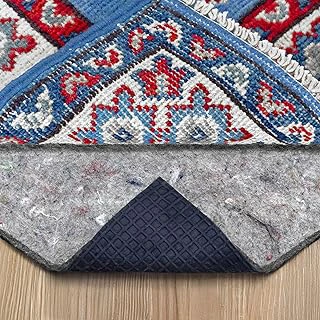
RUGPADUSA Superior-Lock 8'x10' 1/4" Thick Felt + Rubber Non-Slip Rug Pad
Large area rugs in living rooms and dining spaces need serious grip and cushion to stay put underfoot. The RUGPADUSA Superior-Lock 8'x10' 1/4" Thick Felt + Rubber Non-Slip Rug Pad combines a felt top surface with a natural rubber grip layer, delivering both traction and a soft buffer between rug and floor.
The 1/4-inch thickness adds noticeable cushion under heavier wool or hand-knotted rugs, which helps the pad resist wrinkling and keeps edges from curling. The felt layer helps reduce the chance of abrasion on hardwood or tile, while the rubber bottom grips smooth floors without adhesive. That dual-layer design works well in rooms where someone walks frequently - especially when movement patterns cross the rug at angles or during turns.
At $175.96 for the 8x10 size, this pad sits at the premium end of the range. The higher cost reflects the felt-rubber construction and larger coverage area. For a heavy living-room rug or a dining table where chairs slide in and out, that investment pays off in stability. For lightweight throw rugs in low-traffic hallways, the thickness and price may exceed what the situation requires.
The pad earns a 4.5 out of 5 rating, and it ships ready to use - no trimming needed if your rug matches the 8x10 footprint. If your rug is slightly smaller, you can trim the edges with scissors, though the dense felt takes more effort to cut than thinner mesh pads. Once in place, the pad stays flat and keeps the rug from sliding during everyday use, reducing the chance that a corner will fold and create a trip hazard.
- ✅ 1/4-inch felt-rubber construction adds cushion and prevents floor abrasion
- ✅ 8x10 size covers large area rugs in one piece
- ✅ Natural rubber grip works on hardwood and tile without adhesive
- ✅ Keeps heavy rugs stable in high-traffic living and dining areas
- ⚠️ $175.96 price point is higher than budget mesh options
- ⚠️ Thickness and cost may be unnecessary for small throw rugs
- ⚠️ Dense felt layer requires effort to trim if custom sizing is needed
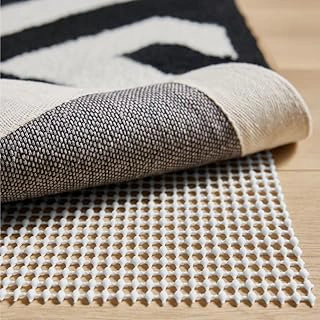
GORILLA GRIP Strong 5x7 FT Slip & Skid Resistant Rug Pad Gripper
When you need to anchor area rugs in bedrooms, hallways, or guest spaces without stretching the budget, the GORILLA GRIP Strong 5x7 FT Slip & Skid Resistant Rug Pad Gripper offers reliable grip at $19.99. Its waffle-texture rubber surface holds lightweight to medium-weight rugs in place on hardwood and tile, and the 4.4/5 rating reflects consistent performance for everyday use.
This pad delivers secure grip but trades cushion for simplicity. Unlike felt-rubber hybrids, the all-rubber construction provides minimal underfoot padding, so it won't soften the feel of a thin rug or protect floors from heavy foot traffic as effectively. The material is also less forgiving over time - rubber can compress and lose some tackiness after a year or two of constant pressure, especially under furniture legs or in high-traffic zones.
The 5x7 size fits standard area rugs in most secondary rooms, and the straightforward design makes trimming easy if you need a custom fit. If you're furnishing multiple rooms or testing whether a rug pad solves your slipping problem before committing to premium coverage, this pad offers a practical starting point. It won't match the longevity or comfort of thicker felt options, but it handles the core job - keeping rugs flat and stable - without adding bulk or cost.
Best for renters, guest bedrooms, or any space where you prioritize secure placement over plush feel. Skip this option if your rug sees heavy daily use or you want extra floor protection; a felt-rubber hybrid will serve you better in those cases.
- ✅ Budget-friendly at $19.99 for 5x7 coverage
- ✅ Waffle-texture rubber grips lightweight to medium rugs securely
- ✅ Works well on hardwood and tile
- ✅ Easy to trim for custom fit
- ⚠️ Minimal cushion compared to felt-rubber hybrids
- ⚠️ Rubber can compress and lose tackiness over time
- ⚠️ Limited floor protection under heavy furniture or high traffic
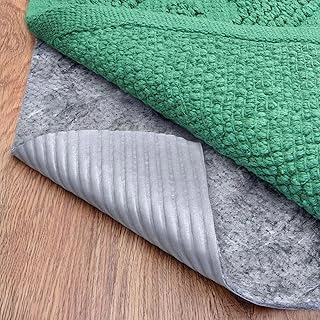
GATORGRIP Waterproof Non-Slip Pet-Friendly Rug Pad, 2x3
High-moisture areas like bathrooms, entryways, and kitchen sink zones introduce a second layer of slip risk: water pooling between rug and pad. The GATORGRIP Waterproof Non-Slip Pet-Friendly Rug Pad addresses this with a waterproof construction that helps reduce the chance of liquid from seeping through to the floor below, reducing the chance of mold growth and making cleanup straightforward after spills or pet accidents.
At 2x3 feet and $29.99, this pad fits small area rugs commonly placed near sinks, bathtub edges, or front doors. The 4.7 out of 5 rating reflects reliable performance in tight, high-traffic spots where both grip and moisture resistance matter. The waterproof layer also adds a modest barrier against tracked-in rain or snow, keeping the floor surface dryer underfoot.
The tradeoff is coverage. A 2x3 pad works well for a single mat or runner, but larger layouts - hallway runners or living room area rugs - require multiple pads or a different size altogether. If your home uses several small throw rugs in wet-prone zones, plan to purchase one pad per rug to maintain consistent grip and waterproofing across each surface.
Waterproofing also adds slight stiffness compared to softer felt pads, which can make repositioning the rug a bit more work. That rigidity, however, translates to better edge stability, reducing the likelihood that rug corners curl or shift when someone steps on or off.
This pad suits households managing incontinence supplies, pet water bowls, or frequent kitchen spills. The waterproof layer simplifies maintenance - wipe down with a damp cloth rather than laundering - and extends the life of both the rug and the floor finish by blocking moisture migration. For seniors living in humid climates or homes with minimal entryway space, the 2x3 footprint delivers targeted protection without requiring a large upfront investment.
- ✅ Waterproof construction blocks spills and pet accidents from reaching the floor
- ✅ 2x3 size fits entryways, bathrooms, and small kitchen mats
- ✅ Easy to clean with a damp cloth
- ✅ Adds edge stability to prevent rug corners from curling
- ⚠️ Small footprint requires multiple pads for larger rugs or hallway runners
- ⚠️ Slightly stiffer than felt pads, making repositioning more effort
How to Install a Rug Pad Correctly to Eliminate Slipping
Proper installation determines whether your rug pad will prevent slips or simply sit beneath a sliding rug. Start by cleaning the floor thoroughly - dust, pet hair, and residue all reduce the pad's ability to grip both the floor and the rug backing. Allow the surface to dry completely before you begin.
Measure your rug and trim the pad so it sits one to two inches smaller than the rug perimeter on all sides. This prevents the pad edges from peeking out and creating a new tripping hazard. If the pad arrives rolled, unroll it and let it relax flat for a few minutes.
Place the pad textured or grippy side down on the clean floor. Many rubber and PVC pads have one smooth side and one textured side; the textured surface should face the floor to maximize friction. Smooth the pad outward from the center to eliminate air pockets and wrinkles, which can cause uneven contact and allow the rug to shift.
Center your area rug on top of the pad, aligning it so the pad remains hidden beneath the rug edges. Press down firmly across the entire surface to help the pad bond with both the floor and the rug backing. Some dense felt and rubber pads need up to 24 hours to settle and develop their full gripping power, so avoid heavy foot traffic during that period if possible.
Skipping the cleaning step or cutting the pad too large are the most common mistakes that lead to slipping. A pad that extends beyond the rug will curl up at the edges, and dirt trapped between the pad and floor acts as a lubricant rather than a stabilizer.
Installation Mistakes That Reduce Rug Pad Effectiveness
- Skipping floor cleaning before pad placement - dust and oils block grip
- Cutting the pad the same size as the rug - edges curl and create new trip points
- Placing the pad textured side up instead of down toward the floor
- Ignoring manufacturer break-in time for adhesive-free pads to bond
- Using a pad designed for carpet on a hardwood floor or vice versa
- Layering two pads for extra cushion - increases instability
How to Test Whether Your Rug Pad Is Working
A rug pad only works if it keeps the rug from moving underfoot. Stand on one corner of the rug and twist your foot as if you're pivoting to change direction - the rug should shift less than a quarter inch. Next, lift the edge of the rug; you should feel noticeable resistance, not an easy peel. Walk across the rug at your normal pace and watch for any bunching or curling at the edges. If the rug slides, lifts easily, or bunches during any of these steps, the pad may be too small, installed incorrectly, or the wrong material for your floor type.
Perform this test every few months, especially after cleaning the floor or repositioning the rug. Hardwood floors can become more slippery with certain cleaners, and tile grout lines may settle over time, reducing grip. If the pad fails the twist or lift test, check that it sits flat without wrinkles and extends to within an inch of the rug edge on all sides. Pads that are too small leave unsupported corners that catch on feet and fold under.
When a pad consistently fails these checks, it's time to replace it or switch materials. Rubber-backed pads lose grip as they age and may leave residue on hardwood. Felt pads on tile often lack enough surface friction to hold a rug in place during quick turns. Testing takes less than a minute and catches problems before a slip happens.
Other Fall Prevention Measures to Pair with Rug Pads
Rug pads work best when they're part of a wider fall prevention plan, not a single fix. Start by walking through your home and removing any throw rugs from narrow hallways, doorways, or other spots where they create trip edges rather than solve a problem. If a small rug sits in a high-traffic path and people step around it more than on it, consider taking it up entirely.
Lighting makes a significant difference. Dimly lit hallways and staircases turn even a well-secured rug into a hazard if someone can't see the edge. Install brighter bulbs, add motion-activated night lights near bedroom and bathroom doorways, and make sure light switches are easy to reach before entering a room.
In bathrooms, grab bars mounted near the tub, shower, and toilet give you a stable handhold when floors are wet. If you use a bath mat in front of the sink or tub, a rug pad underneath reduces sliding, but the grab bar offers a backup if you lose your footing. The two work together.
Keep floors clear of clutter, loose cords, and items that pile up near entryways. Even the grippiest rug pad won't help if someone trips over a bag or shoe left in the path. Walk each room and move anything that blocks a clear line from doorway to furniture.
Think of rug pads as one reliable layer in a system that includes better visibility, clear pathways, and stable support points. When these measures overlap, each one reduces the chance that a single misstep turns into a fall.
Frequently Asked Questions About Non-Slip Rug Pads for Seniors
Rug pads work on most floor types, but the right material depends on your surface. Rubber grips well on hardwood and laminate, while PVC or felt blends often suit tile and stone. Some products specify compatibility - check the manufacturer's guidance if you have specialty finishes like engineered vinyl or waxed wood.
Replace your rug pad every three to five years, or sooner if you notice crumbling edges, loss of grip, or visible compression. High-traffic areas wear pads faster. If the rug begins sliding again after installing a fresh pad, the old one has likely lost its tack.
Most rug pads should not go through the wash with the rug still attached. Remove the pad before cleaning your area rug. Many rubber and felt pads can be spot-cleaned with mild soap and water, then air-dried flat. Washing machines and dryers can break down adhesive surfaces and warp the structure.
Thicker pads are not always safer. A pad that is too thick can create a trip edge if it compresses unevenly or shifts the rug height too much. For walkways and doorways, a low-profile pad between one-eighth and one-quarter inch often provides better stability than a plush cushion.
If your rug still slides after installing a pad, check that the pad size matches the rug dimensions - it should sit at least one inch inside the rug perimeter on all sides. Verify the grippy side faces down and that the floor is clean and dry. On very smooth tile, adding a thin layer of rug tape between the pad and floor can restore hold without damaging the surface.