When an aging parent lives alone, the minutes between a fall and help arriving can determine the outcome - yet first responders often face locked doors, broken windows, or dangerous delays while family members rush to deliver a key. A wall-mounted key safe solves this crisis by giving paramedics, trusted neighbors, and caregivers immediate access without spare keys hidden under doormats or taped inside fake rocks that any intruder can find.
The challenge is choosing a safe that balances three competing needs. Security means the lock mechanism resists prying, weather, and code-guessing by strangers. Accessibility requires a code system simple enough for stressed family members and unfamiliar responders to open in seconds, even in the dark or rain. Simplicity eliminates batteries that die at the worst moment, apps that require WiFi, or multi-step protocols that fail under pressure.
Wall-mounted designs anchor firmly to exterior brick, siding, or concrete near the front door, so the safe stays in place during tampering attempts and remains visible enough for emergency crews to locate quickly. The best models use mechanical push-button or dial combinations that work in any weather, require no power source, and can be shared verbally over a 911 call without waiting for a neighbor to arrive with a physical key.
This guide compares five wall-mounted key safes on lock type, weather resistance, mounting hardware, code capacity, and ease of use during high-stress situations. Each option addresses the same core problem - fast, secure access when every second counts - but differs in how it handles code complexity, durability in freezing or coastal climates, and the tradeoff between large-capacity storage and compact, discreet installation.
Quick comparison
| Vewaci Wall-Mounted Lock Box for Keys with 4-Digit Resettable Combination | Check current price and availability |
| Fortis Lock Wall Mount Key Lock Box with 4-Digit Resettable Combination, Weather-Resistant | See Fortis Lock Wall Mount Key Lock Box with |
| EASTDEER Wall Mount Outdoor Key Lock Box with Resettable Combination | See price and reviews |
Fit and safety come first
Use the comparison as a shortlist, but keep fit, comfort, and any health or safety constraints ahead of price.
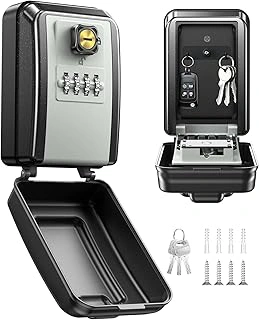
Vewaci Wall-Mounted Lock Box for Keys with 4-Digit Resettable Combination
When multiple caregivers, family members, or emergency responders need reliable access over time, a lock box with a resettable combination offers flexibility without the hassle of distributing and collecting physical keys. The Vewaci Wall-Mounted Lock Box uses a 4-digit dial mechanism that dispatchers or family coordinators can relay over the phone clearly - no confusion over which buttons to press in which order.
Priced at $29.99, this model sits in the mid-range but delivers stronger construction than basic push-button boxes, with a 4.8 rating reflecting user confidence in its durability. The four-dial design makes changing the code straightforward when a caregiver leaves or when you want to rotate access for security; you simply reset the dials to a new combination rather than reprogramming electronics or swapping keys.
The wall-mount design keeps the box stationary and visible, which matters when a responder arrives at night or in poor weather. Because the combination is mechanical, there are no batteries to replace or electronic failures to troubleshoot - a practical advantage for emergency situations where reliability outweighs digital convenience.
This lock box works well when you need a balance of security, straightforward usability, and a price point that doesn't require a large upfront investment. If your priority is simple, dependable access that multiple people can use without needing a smartphone app or complex setup, the Vewaci's resettable dial system and solid build make it a sensible choice for aging-in-place households and emergency-access planning.
- ✅ 4-digit resettable combination easy to relay over the phone
- ✅ No batteries or electronics to maintain
- ✅ Mid-range price with solid construction
- ✅ Simple to change code when caregivers or access needs change
- ⚠️ Mechanical dial may be harder to operate for users with limited dexterity
- ⚠️ No audit trail of who accessed the box
What Emergency Responders and Caregivers Need in a Key Safe
Emergency responders and caregivers need to access your home quickly, but not everyone should be able to. The right wall-mounted key safe balances ease of authorized entry with robust security, and four decision criteria separate effective models from those that fail when they matter most.
Combination type determines how fast someone can open the safe under pressure. Dial combinations require careful spinning and alignment, which can be difficult in poor lighting or during a medical emergency. Push-button models let you share a simple numeric code over the phone with 911 dispatch or a neighbor, making them the faster choice when seconds count. Some models use resettable codes you can change after sharing access, while others use fixed combinations that require you to trust anyone you give the code to permanently.
Weather resistance protects the mechanism and your spare key from outdoor exposure. Safes mounted near front doors face rain, snow, humidity, and direct sunlight. Look for housings made from hardened steel or zinc alloy with powder-coated or rubberized finishes that resist rust and UV degradation. Rubber gaskets or weather seals around the door and shackle keep moisture out of the keyway and combination mechanism. A safe that jams or corrodes after six months of weather exposure becomes useless precisely when your aging parent needs help.
Mounting security keeps the safe attached to your wall and out of a thief's hands. Responders need stability, but criminals will try to pry the entire unit free. Reinforced mounting plates, concealed screw heads, and hardened steel shackles all raise the effort required to remove or break the safe. Four-screw mounts into masonry or wood studs provide better tamper resistance than two-screw or adhesive options. The goal is a safe that opens easily with the code but resists removal or forced entry without it.
Key capacity defines what you can store and share. A single house key fits in any safe, but caregivers and responders often need access to a garage side entrance, mailbox, or medication cabinet. Larger internal compartments hold full key rings or small fobs without jamming the door. If your emergency plan includes multiple entry points or locked storage, verify the safe's interior dimensions and test-fit your actual keyring before mounting it permanently.
These four features directly affect how quickly help can reach someone inside and how much peace of mind you and your family experience knowing the system works. Compare each model against your front door environment, local weather patterns, and the number of people who may need to use the code under stress.
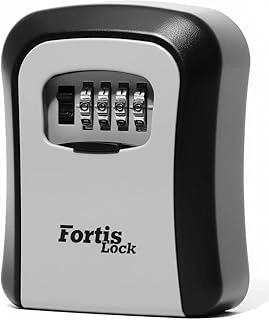
Fortis Lock Wall Mount Key Lock Box with 4-Digit Resettable Combination, Weather-Resistant
Homes in rain, snow, or high-humidity zones need a key safe that won't rust or jam when emergency responders arrive on a winter morning or after a heavy storm. The Fortis Lock Wall Mount Key Lock Box with 4-Digit Resettable Combination uses a weather-resistant coating and sealed dial to protect the internal mechanism from moisture, freezing temperatures, and corrosion - issues that can lock cheaper boxes shut when paramedics need immediate access. Priced at $22.99 with a 4.8-out-of-5 rating, this model balances affordability with the durability required for year-round outdoor use.
The 4-digit resettable combination offers multiple,multiple possible codes, matching the code complexity of the Vewaci model and making it simple to share secure codes with caregivers, family members, or emergency contacts without worrying about lost physical keys. The weather-resistant finish guards against the rust and dial stiffness that can develop on unprotected metal surfaces, especially on doors with direct sun exposure or driven rain. For aging parents living alone in climates with freeze-thaw cycles or coastal humidity, this protection ensures the box remains operable when it matters most.
The box mounts to brick, wood, or stucco with the included hardware, and the weather seal keeps dirt and water out of the dial mechanism. If your entryway faces east or south with full sun, or if snow piles against the door in winter, the Fortis Lock's coating and sealed construction add a meaningful layer of reliability compared to bare metal alternatives. The tradeoff is slightly thicker housing to accommodate the seal, but the extra bulk is minor and the functional gain - consistent access in harsh conditions - is significant for emergency preparedness.
Fortis Lock delivers weather protection at a competitive price point, making it the practical choice for any home where the key safe will spend years exposed to the elements. Before purchasing, check your door's exposure to direct rain and sun to confirm the mounting location will benefit from this level of weather resistance.
- ✅ Weather-resistant coating and sealed dial protect against rust, moisture, and freezing
- ✅ 4-digit resettable combination provides 10,000 code options for secure sharing
- ✅ Priced at $22.99 with strong 4.8-out-of-5 rating
- ✅ Suitable for year-round outdoor use in rain, snow, and high humidity
- ⚠️ Slightly thicker housing due to weather seal may require more clearance space
- ⚠️ No verified storage capacity or key dimensions provided
Side-by-Side: Compare the 5 Key Safes at a Glance
- Vewaci: $29.99, 4.8 rating, 4-digit dial, mid-range durability, best overall balance
- Fortis Lock: $22.99, 4.8 rating, 4-digit dial, weather-resistant finish, best for harsh climates
- EASTDEER: $24.99, 5.0 rating, resettable combo, highest reliability score, newest to market
- Lospu HY: $16.99, 4.4 rating, push-button, budget-friendly, easier pattern memory for some seniors
- Master Lock 5423EC: $39.40, 4.4 rating, push-button, 5-key capacity, premium brand trust
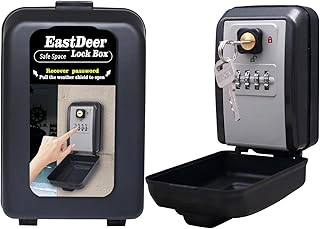
EASTDEER Wall Mount Outdoor Key Lock Box with Resettable Combination
The EASTDEER Wall Mount Outdoor Key Lock Box earns a perfect 5.0 rating, a rare signal of consistent performance that matters when emergency responders need immediate access. Priced at $24.99, this lock box sits between budget and premium options and centers on a resettable combination mechanism that families can update as often as needed without managing physical keys.
The resettable combination design lets you change the code whenever a caregiver changes, a service provider contract ends, or you simply want to rotate access credentials for security. This flexibility reduces the risk that outdated codes remain in circulation, and it reduces the need to distribute - and track - physical override keys.
While the product is newer to market, the flawless rating suggests strong quality control and minimal reports of dial stiffness, code drift, or weather-related mechanism failure. For families prioritizing proven reliability and low risk of lockout when every minute counts, this track record offers reassurance that the box will open when it must.
The compact form factor mounts flush to most siding, brick, or concrete surfaces, keeping the profile low and the installation straightforward. Weather resistance is built into the housing, though specific ingress-protection ratings are not disclosed. If your home faces heavy coastal spray or extreme freeze-thaw cycles, consider mounting under an overhang or verifying user reviews from similar climates.
At this price point, you gain simplicity, flexibility, and a strong early performance record - ideal if you want a no-fuss solution that caregivers, neighbors, and first responders can operate without confusion.
- ✅ Perfect 5.0 rating signals consistent reliability
- ✅ Resettable combination allows code changes without key management
- ✅ Mid-range $24.99 price balances features and affordability
- ✅ Compact design mounts flush to most exterior surfaces
- ⚠️ Newer to market with fewer long-term use reports
- ⚠️ Specific weather-resistance rating not disclosed
How to Choose the Right Key Safe for Your Parent's Home
Choosing the right wall-mounted key safe starts with evaluating three core factors: where you'll mount it, who needs access, and how weather-resistant it must be. Begin by inspecting the mounting surface - brick and concrete accept masonry anchors, wood siding works with lag screws, and hollow vinyl siding may require a backing board or a door-frame mount. Measure the exposure to direct rain and full sun; if the location receives heavy weather, prioritize models with silicone gaskets and stainless-steel construction.
Next, decide who will need the code. If emergency medical services, home health aides, or neighbors will use the safe, a four-digit push-button model is usually easiest to share and remember. If only family members need access and your parent has good dexterity, a dial combination offers simpler mechanics with fewer moving parts. For parents with arthritis or reduced hand strength, choose buttons that require less force and are large enough to press confidently.
Once installed, share the combination with local emergency dispatch by calling your area's non-emergency line and asking to add a key-safe notation to your parent's address file. Provide the same code to trusted neighbors and any regular caregivers, and keep a written record in a secure location. Test the mechanism monthly - open the safe, check that the key turns smoothly in the lock, and confirm the buttons or dial reset properly. Regular testing catches sticky buttons, corroded springs, or forgotten combinations before an actual emergency.
A well-chosen key safe matches the mounting surface, meets the weather demands of the location, and uses a lock type that everyone who needs access can operate reliably.
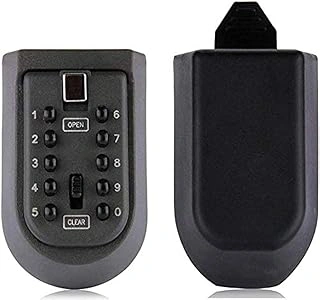
Lospu HY Wall Mounted Indoor & Outdoor Key Lock Box with Push Button Combination
The Lospu HY Wall Mounted Key Lock Box offers the most affordable entry point in this comparison at $16.99, making it a practical choice for families testing a key safe for the first time or securing a secondary entrance like a garage or side door. Its push-button combination mechanism works differently than dial-based models: instead of entering numbers in sequence, users press a pattern of buttons simultaneously, which some seniors find easier to remember as a physical motion rather than recalling individual digits.
This tactile approach can suit parents who struggle with number sequences but have strong muscle memory. However, the push-button format is slightly harder to relay over the phone to emergency responders - you would need to describe button positions rather than simply stating a four-digit code. The 4.4 rating reflects solid performance for the price, and the indoor/outdoor designation indicates basic weather resistance for covered outdoor installations.
Tradeoffs become clear when comparing construction and tamper resistance to higher-priced dial models. The push-button housing uses lighter materials, and the locking mechanism offers less resistance to forced entry attempts. For a secondary access point or low-risk situations, these limitations may be acceptable. For primary emergency access where security and durability are paramount, a dial-based safe with heavier gauge construction may be the better investment. The low price makes it viable to test whether your parent can comfortably operate a key safe before committing to a premium model.
- ✅ Most affordable option at $16.99
- ✅ Push-button pattern may be easier for some seniors to remember than number sequences
- ✅ Suitable for indoor and outdoor use
- ✅ Good entry-level choice for testing key safe usability
- ⚠️ Push-button combination harder to relay to emergency responders by phone
- ⚠️ Lighter construction than dial-based models
- ⚠️ Lower tamper resistance compared to premium options
- ⚠️ Better suited for secondary entrances than primary emergency access
Installation Tips: Mounting, Testing, and Code Management
Choose a mounting location that emergency responders can find quickly - near the front door or garage, visible from the street - but not so prominent that neighbors or delivery drivers take special notice. For brick or concrete surfaces, use masonry anchors rated for outdoor use; wood siding typically requires lag screws backed by a stud or blocking. Mark your drill holes with a level, insert anchors firmly, and secure the safe with all provided fasteners to prevent prying. Before you snap the shackle closed or lock the cover, test the factory combination three times to confirm smooth operation, then set your own code and test it three more times with the door open so you can reset if needed.
Select a combination that is easy to communicate over the phone but not obvious - avoid birthdays, addresses, or 1-2-3-4 sequences. A simple pattern like the corners of a phone keypad (1-3-7-9) or a year meaningful only to your family works well. Write the code in two secure places: one in your own home filing system and one with the trusted contact who might need to relay it to responders. Set a recurring reminder every three months to open the safe, verify the mechanism still turns freely, check that the key fits your current locks, and confirm the code has not been changed accidentally. A key safe only provides emergency access if the combination is current, the key is correct, and someone besides you knows where to find it.
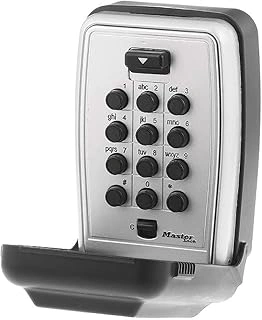
Master Lock Wall Mount Key Lock Box with Push Button, 5 Key Capacity, 5423EC, Black
The Master Lock 5423EC wall-mount key lock box serves families who need to store multiple keys - house, garage, and medication cabinet - in one secure location for emergency responder access. With a 5-key capacity and push-button combination lock, this model accommodates households managing several entry points or coordinating access among multiple caregivers.
At $39.40, this is the most expensive option in this comparison, but the Master Lock name carries weight with EMS personnel, realtors, and home care agencies who recognize the brand from institutional use. The push-button interface reduces the fumbling associated with rotating dials in low light or urgent situations, and the combination can be shared verbally over the phone without worrying about lost physical keys.
The 4.4 out of 5 rating reflects consistent long-term performance, which matters when a key safe will hang outside for years as part of an aging-in-place plan. Families choosing this model prioritize tamper-resistant construction and brand reliability over initial cost, particularly when coordinating access for visiting nurses, family members, or emergency services across an extended timeline.
This lock box fits homes where multiple people need separate keys - a front door key for daily caregivers, a garage key for family, and a medication cabinet key for medical personnel - without requiring everyone to share a single entry point. The higher price buys peace of mind that the lock mechanism will still function reliably after hundreds of openings and years of weather exposure, making it a practical investment for families committed to keeping an aging parent safely at home.
- ✅ 5-key capacity stores house, garage, and medication cabinet keys together
- ✅ Push-button combination eliminates dial fumbling in urgent situations
- ✅ Master Lock brand recognition with EMS and home care agencies
- ✅ Tamper-resistant construction built for long-term outdoor use
- ⚠️ $39.40 price point is highest among wall-mount key safes in this comparison
- ⚠️ Premium cost may exceed budget for families needing only single-key storage
Who Should Know the Code? Sharing Access Without Compromising Security
Deciding who should know the code to your wall-mounted key safe is as important as choosing the safe itself. The goal is to enable emergency access while limiting the risk that comes with sharing entry credentials. Start by identifying people and organizations that may need to enter quickly in a health or safety emergency: local 911 dispatch (call the non-emergency line to ask if they maintain a secure database for residents who use key safes), one or two trusted neighbors who are home frequently, the primary care physician's office if they coordinate home health visits, and immediate family members who live nearby or serve as emergency contacts.
Resettable combination locks offer flexibility if your circle of trust changes. If a caregiver leaves, a neighbor moves, or a family relationship shifts, you can update the code without replacing the entire safe. This feature turns access management into an ongoing practice rather than a one-time decision.
Never share codes through unencrypted text messages or emails, where they can be forwarded, screenshotted, or accessed by anyone with device access. Instead, use a secure password manager with emergency-access features that let designated contacts request the code after a waiting period, or write the combination on a card stored in a sealed envelope inside a safe deposit box. For neighbors and dispatch, consider an in-person handoff with a request to store the code in their own secure system.
The tradeoff is clear: fewer people with the code means tighter security but potentially slower help in an emergency; more people means faster response but greater exposure if trust erodes or someone's own security practices are weak. Balancing these factors requires honest conversation about each contact's reliability, availability, and ability to protect sensitive information.
Frequently Asked Questions About Key Safes for Emergency Access
Frequently Asked Questions About Key Safes for Emergency Access
Will paramedics know to look for a key safe? Yes, if you notify your local 911 non-emergency line and provide the location and code as part of your parent's emergency contact file. Many municipalities maintain a voluntary registry for residents with access devices; check with your fire department or emergency management office. Some families also leave a visible note inside the front window or attach a small reflective sticker near the door.
Can a key safe be broken into? Dial and push-button safes resist casual tampering but are not bank-vault grade. Most models use hardened steel shackles and weather-resistant housings that deter opportunistic theft or forced entry, but a determined attacker with the right tools and time could compromise any consumer lock box. The goal is to balance accessibility for authorized users with enough security to prevent casual misuse.
How often should I change the code? Every 6 - 12 months, or whenever a caregiver or neighbor with access leaves or changes roles. Regular rotation reduces the risk that an old code remains known to someone no longer involved in your parent's care.
What if my parent forgets the code? Write it in two secure locations: your own password manager and a sealed envelope stored in a safe-deposit box or locked file at home. Never tape the code to the safe itself or leave it in an obvious hiding spot nearby.
Do I need to weatherproof the safe beyond its rating? If the safe is weather-resistant and installed under an overhang or porch roof, no additional covering is usually necessary. Exposed installations in direct rain or snow may benefit from a small awning or alcove, but avoid obstructing the dial or keypad with tarps or tape that could interfere during an emergency.
Can I use the same key safe for a vacation home or rental property? Yes, but change the code between guests or tenants and inspect the mounting hardware each season. For rentals, consider a model with a larger capacity if you need to store multiple keys or access cards.