We may earn a commission when you buy through links on this page, at no extra cost to you. How this works.
Mini GPS Tracker for Vehicles, Portable Magnetic Tracking Device
Compare hidden GPS options for loved ones at risk of wandering
Fit and safety come first
Use the comparison as a shortlist, but keep fit, comfort, and any health or safety constraints ahead of price.
When a loved one with dementia or Alzheimer's begins to wander, every moment of uncertainty becomes a test of nerves. You balance their dignity and independence against the very real risk that they might leave home confused, unable to find their way back, or place themselves in danger. The solution many families turn to is a GPS tracker - but the question is never just whether it works. It's whether they will actually wear it.
Two categories dominate the conversation: GPS smart sole insoles that slip inside a familiar pair of shoes, and wristband trackers worn like a watch or fitness band. Both promise real-time location tracking, but they differ sharply in how visible they are, how long the battery lasts, how comfortable they feel, and whether the person wearing them will tolerate the device day after day.
Discreteness matters because resistance is common. A person with cognitive decline may remove or refuse a device that feels unfamiliar or stigmatizing. Comfort and fit determine whether the tracker stays in place during a walk or ends up discarded. Battery life dictates how often you must intervene to recharge, and accuracy defines whether you can locate your loved one quickly when it counts.
This guide walks through the practical tradeoffs between insole-based and wrist-worn GPS trackers. You'll see how each handles the daily realities of dementia care - acceptance, wearability, charging routines, and the reliability of the location signal - so you can choose the option that fits your family's specific situation and your loved one's habits.
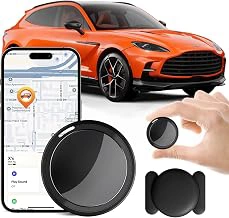
Mini GPS Tracker for Vehicles, Portable Magnetic Tracking Device
For caregivers who find wristbands too visible or sole inserts impractical, a small portable GPS tracker offers a third path. The Mini GPS Tracker for Vehicles is a compact magnetic device priced at $15.99 with a 4.3/5 rating, designed to slip into a purse, walker bag, or jacket pocket without drawing attention.
The magnetic mount lets you attach it discreetly to the inside of a coat lining or bag frame, and its small footprint makes it easy to tuck into everyday items your loved one carries. This approach works well when the person regularly takes a bag with them or wears outerwear with deep pockets, giving you flexibility that neither a wristband nor an insole can match.
The tradeoff is reliance on the carrier item. If your loved one sets down their purse or changes jackets, the tracker goes with the item rather than the person. You'll need to consider how consistently they keep specific Mini GPS Tracker for Vehicles, Portable Magnetic Tracking Device with them throughout the day. Battery life and recharge frequency will depend on usage, so plan for routine checks to keep the device active.
At under multiple, this tracker offers an accessible entry point for families testing hidden GPS monitoring or those who need a backup option alongside another device. It suits situations where the person at risk has predictable routines with consistent accessories, but it requires more caregiver involvement to confirm placement and charge status than a wearable device would.
- ✅ Compact size fits easily in bags, pockets, or clothing
- ✅ Magnetic mount enables discreet attachment to fabric or metal surfaces
- ✅ Low $15.99 price point accessible for trial or backup use
- ✅ Flexible placement options for those who resist wearables
- ⚠️ Tracks the carrier item, not the person directly
- ⚠️ Requires the loved one to consistently carry the item containing the tracker
- ⚠️ Battery maintenance and placement checks fall to the caregiver
- ⚠️ No wrist or foot attachment means it can be easily separated from the person
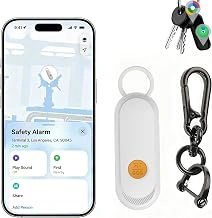
Personal Safety Alarm & GPS Tracker Keychain with Find My, 120dB Siren
This $23.99 keychain combines a 120dB audible siren with Find My integration, offering a lower-cost alternative to wristband trackers for caregivers who want both location visibility and an emergency alert tool. The device attaches to a bag, belt loop, or zipper rather than wrapping around the wrist, which can work well for someone who resists wearable technology or frequently removes bracelets.
The 120dB siren serves two purposes: it can help you locate a loved one who has wandered into a nearby room or yard by sound alone, and it provides an audible deterrent if the wearer feels confused or unsafe. Find My integration means the keychain appears in the same app you use for other Apple devices, so you can check its last known location without learning a new platform. Because Find My relies on Bluetooth proximity from nearby Apple devices rather than cellular or GPS satellites, accuracy depends on how many iPhones and iPads are in the area - urban and suburban neighborhoods will show more frequent updates than rural settings.
At 5.0 out of multiple early ratings, users appreciate the dual function and the fact that the keychain does not require a monthly subscription. The tradeoff is that this device does not offer continuous real-time tracking like a cellular wristband; instead, it pings location when another Apple device comes within range. For a loved one who stays close to home or frequents busy public spaces, that may be enough. For someone with a history of long-distance wandering or who lives in a low-traffic area, a cellular tracker will provide more reliable updates.
The keychain form factor also means it can be clipped to clothing or a bag rather than worn on the body, which reduces the chance of skin irritation but increases the risk that it will be set down and forgotten. Pairing the siren with Find My location data gives you two ways to respond: you can check the app for the last known position, or you can listen for the alarm if the person is nearby. That combination makes this option useful for caregivers who want a budget-friendly backup tracker or who need an audible alert more than continuous GPS precision.
- ✅ 120dB siren helps locate wandering person by sound and provides audible alert
- ✅ Find My integration works within Apple ecosystem without new app or subscription
- ✅ $23.99 price point is lower than most cellular wristband trackers
- ✅ Keychain attachment fits belt loops, bags, or zippers for those who resist wrist devices
- ⚠️ Find My relies on Bluetooth proximity, so updates are less frequent in low-traffic areas
- ⚠️ No continuous real-time tracking like cellular GPS trackers
- ⚠️ Keychain can be unclipped and left behind more easily than a wristband
- ⚠️ Location accuracy depends on density of nearby Apple devices
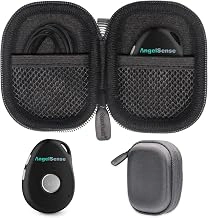
Case for AngelSense Personal GPS Tracker
If your loved one already wears an AngelSense tracker or you're planning to add one to your care routine, a protective case can make daily use more practical. The Case for AngelSense Personal GPS Tracker is priced at $12.99 and carries a 5.0/5 rating, offering a straightforward way to extend the device's working life and improve how it feels during wear.
A case shields the tracker from everyday bumps, moisture, and fabric wear when clipped to a belt, tucked in a pocket, or attached to clothing. This extra layer can reduce the need for repairs or replacements, which matters when continuity is important for someone at risk of wandering. The case also softens edges and adds a bit of bulk that some wearers find easier to tolerate than bare plastic against skin or fabric.
For caregivers who want the tracker to blend into daily routines without drawing attention, a case in a neutral color or fabric finish can help the device feel less clinical. It's a small investment that addresses two common pain points: durability and wearer comfort. If your loved one is sensitive to how devices look or feel, this accessory may make the difference between consistent use and resistance.
Because the case is designed specifically for AngelSense devices, it fits without blocking charging ports or interfering with GPS signal strength. That means you don't have to remove the tracker from the case for routine charging or worry about reduced location accuracy.
At under thirteen dollars, this case is a practical add-on for anyone who wants to protect their tracking investment and make the device more acceptable to the person wearing it.
- ✅ Protects tracker from bumps and moisture during daily wear
- ✅ Improves comfort when clipped to belts or placed in pockets
- ✅ Fits AngelSense devices without blocking ports or signal
- ✅ Can make the tracker feel less clinical or conspicuous
- ✅ Affordable at $12.99
- ⚠️ Only compatible with AngelSense trackers
- ⚠️ Adds slight bulk to the device
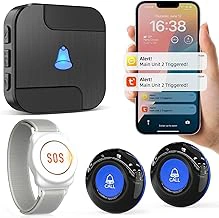
CallToU Wi-Fi Wireless Caregiver Pager Call Button with APP Emergency Alert System
When wandering happens primarily at night or inside the home, a GPS tracker may not be the most practical solution. The CallToU Wi-Fi Wireless Caregiver Pager offers a different approach: instead of tracking location, it provides instant alerts when your loved one needs help. Priced at $59.99 with a 4.2/5 rating, this call button system connects to your smartphone via Wi-Fi, sending immediate notifications when the button is pressed.
The CallToU works as a stationary alert system rather than a wearable tracker. Your loved one wears or carries the small call button, and pressing it triggers an app notification on your phone. This setup makes sense for parents who experience confusion at night, need bathroom assistance, or wander within the house but don't leave the property. The Wi-Fi connection means no monthly fees, though range is limited to your home network coverage.
Setup requires a stable Wi-Fi connection and smartphone access. The button itself is lightweight and can be worn on a lanyard or wristband, or placed on a bedside table. Response time depends on your phone's notification settings and whether you're within hearing range. Unlike GPS trackers, this system won't help locate someone who has left the home or wandered outside Wi-Fi range.
The CallToU works best alongside other safety measures. If your loved one primarily needs help during nighttime bathroom trips or experiences confusion in familiar spaces, the single-button simplicity may be easier to use than a wristband tracker with multiple features. However, families dealing with outdoor wandering risk will still need a GPS-based solution. Consider this call button as part of a layered approach: GPS tracker for outdoor safety, call button for in-home assistance.
- ✅ No monthly subscription fees with Wi-Fi connection
- ✅ Simple one-button operation for confused users
- ✅ Instant smartphone app alerts when pressed
- ✅ Affordable $59.99 price point
- ⚠️ Does not track location or prevent wandering
- ⚠️ Limited to Wi-Fi range within the home
- ⚠️ Requires caregiver to have phone nearby and notifications enabled
- ⚠️ Not useful for outdoor wandering situations
What Are GPS Smart Sole Insoles? How They Work, Pros, and Cons
GPS smart sole insoles are thin tracking devices designed to slide into the bottom of everyday shoes, typically replacing or sitting beneath the existing insole. A cellular transmitter built into the insole communicates location coordinates to a monitoring app or web portal, refreshing position data at intervals - usually every five to fifteen minutes, depending on the model and battery settings.
The core appeal is discretion. Because the tracker lives inside the shoe rather than on the wrist or clipped to clothing, a person with dementia is far less likely to notice it, remove it, or leave it behind. For caregivers managing wandering risk, that hidden placement can mean the difference between finding someone quickly and discovering an abandoned device on a nightstand.
Battery life remains the primary constraint. Most GPS insoles run between twenty-four and forty-eight hours on a single charge, which means nightly removal and recharging becomes part of the routine. The insole itself adds thickness - sometimes a quarter-inch or more - so shoes need enough interior volume to accommodate the device without causing pressure points or an unstable fit. Footwear with a removable factory insole and a roomy toe box works best; slim dress shoes or tight sneakers often won't fit the tracker comfortably.
Cellular connectivity also introduces a recurring cost. GPS insoles require an active data plan, typically ten to thirty dollars per month, to transmit location updates. Coverage depends on the carrier network the device uses, so rural areas or buildings with poor signal may report stale or missing position data.
Another practical consideration: the person must wear the designated pair of shoes. If they choose different footwear in the morning - or kick off their shoes indoors - the tracker stays behind. That limitation makes smart soles less reliable for individuals who rotate shoes frequently or prefer to go barefoot at home.
When the fit and routine align, GPS insoles deliver consistent this product tracking without the visibility or reminder that wrist-worn devices carry, making them a strong option for someone who resists or forgets accessories but reliably wears the same pair of shoes.
What Are Wristband GPS Trackers? How They Work, Pros, and Cons
Wristband GPS trackers are worn around the wrist like a watch or fitness band and use cellular or GPS signals to report location data to a smartphone app or web dashboard. Most models refresh position every few minutes and send alerts when the wearer crosses a predefined boundary, known as a geofence. Charging is straightforward - many units use a magnetic dock or USB cable and hold a charge for three to seven days depending on how often location updates are requested.
The design is lighter and less bulky than older pendant-style devices. Many wristbands are water-resistant enough for handwashing or light rain, and some include a button the wearer can press in an emergency to send an immediate alert. Setup usually involves installing a companion app, pairing the device, and drawing geofence zones around the home or neighborhood on a map.
The clearest advantage is battery endurance. Because the electronics sit in a dedicated case on the wrist rather than inside a thin insole, engineers can fit a larger battery without adding uncomfortable thickness. You charge once or twice a week instead of every night, which reduces the daily routine and the risk of forgetting to plug it in.
Visibility is the primary tradeoff. A band on the wrist is easy to see, and a person experiencing confusion may pull it off, undo the clasp, or leave it on a nightstand. Some wristbands use breakaway clasps for safety, which solves one problem but makes removal even simpler. If the wearer dislikes anything on the wrist or has a history of removing jewelry or watches, compliance becomes a daily challenge.
Geofencing accuracy depends on both GPS signal quality and how tightly you draw the boundary. In open areas, most wristbands can pinpoint location within thirty feet. Indoors or in dense urban blocks, the margin widens, and you may receive an alert only after the wearer has walked a block or two past the invisible line. Emergency-button features work well when the wearer understands the purpose and remembers to press it, but that assumption does not always hold in mid-stage dementia.
App integration is typically more polished than older tracking systems. You can share access with multiple family members, review location history on a timeline, and receive push notifications or text messages when a geofence is breached. Battery-status warnings arrive a day or two before the charge runs out, giving you time to remind the wearer to dock the device overnight.
Which Tracker Type Fits Your Parent's Routine and Personality?
Choosing the right tracker depends less on the technology itself and more on whether your parent will actually keep it on. A sole tracker works best if they wear the same pair of shoes every day, rarely change footwear, and resist wrist accessories. This works particularly well for someone who leaves their watch or jewelry on the dresser, or who pulls off anything unfamiliar.
Wristbands suit parents who change shoes frequently, wear sandals or slippers at home, or already tolerate a watch. They also make sense if the shoes in regular use don't have removable insoles or enough depth to accommodate a GPS insert without causing discomfort.
Acceptance plays a large role. Some people with dementia are less likely to remove something that looks like a familiar watch, especially if it resembles one they've worn for years. Others will tug at anything new on their wrist but ignore something hidden in their shoe. Watch how your parent reacts to new items: if they tolerate glasses or a wedding ring without fuss, a wristband may blend in. If they're sensitive to anything on their skin, a sole tracker stays out of sight and out of mind.
Consider their mobility and balance as well. If they shuffle or have gait instability, even a thin insole can change the fit of a shoe and increase fall risk. In that case, a lightweight wristband with a soft silicone strap avoids adding bulk where stability matters most.
How to Introduce a Tracker Without Causing Distress
Introducing a GPS tracker to someone with cognitive decline requires sensitivity and planning. Many families worry that their loved one will feel monitored or lose trust, but a thoughtful approach can preserve dignity while adding an important safety tool.
Start by framing the tracker as a health or wellness device rather than a surveillance tool. Many wristband trackers include heart rate or step counting features, so you can introduce it as a way to stay active or monitor overall health. Phrases like "This will help us know you're doing okay" or "Your doctor suggested we keep an eye on your activity" often feel less intrusive than "We need to track where you are."
Consider presenting the tracker as a gift. Choose one in their favorite color or a style they might naturally wear. Let them participate in the decision if their cognitive state allows it - selecting between two wristband colors or feeling the comfort of an insole can give them a sense of control. For GPS smart soles, mention that the insoles provide extra cushioning or support, which is both true and less alarming than emphasizing the GPS function.
Gradual introduction works better than sudden adoption. Ask them to wear the device for just an hour or two at first, perhaps during a daily walk or outing. Build up to longer periods as they grow accustomed to it. If they resist a wristband, an insole-based tracker may be easier since it's out of sight and feels like a normal part of getting dressed.
Involve other trusted family members or their doctor in the conversation. Hearing the same message from multiple caring voices can reduce suspicion. Avoid lengthy explanations or repeated justifications, which can increase anxiety. Keep the tone warm and matter-of-fact: "We got you this to help us feel better when you're out for your walks."
Respect their autonomy wherever possible. If they ask questions, answer honestly but briefly. If they refuse initially, give them time and try again later with a different approach. Some families find success by wearing a matching device themselves - "We're both wearing these now" - which normalizes the tracker and reduces the feeling of being singled out.
The goal is to make the tracker feel like a natural part of their routine, not a loss of independence. A compassionate introduction protects both their safety and their sense of self.
How to Choose the Right Tracker for Your Parent's Safety and Dignity
The right tracker depends less on technology specs and more on what your parent will tolerate wearing every day. Sole inserts disappear inside shoes, which makes them ideal for someone who refuses visible devices or tries to remove anything worn on the wrist. That discreteness comes with tradeoffs: you'll need to charge the insoles every night, and they only work if your parent wears closed-toe shoes consistently. If your loved one prefers sandals, slippers, or walking barefoot indoors, a sole tracker loses much of its value.
Wristband trackers sit in plain view, which can feel stigmatizing for some wearers but also makes daily checks simpler. Battery life stretches several days to a week, reducing the nightly charging routine, and most wristbands work regardless of footwear choice. The visibility cuts both ways: a band can serve as a visual reminder that help is nearby, or it can become a target for removal if your parent feels monitored.
Start by observing your parent's daily habits. Do they wear the same pair of sneakers from morning to night, or do they switch between multiple shoe types? Will they remember to place insoles on a charger each evening, or does that add one more task that will be forgotten? Compare subscription costs across both categories, since monthly fees vary widely and can double the total ownership cost over a year. The best tracker is the one that fits seamlessly into the routine your parent already follows, not the one with the longest feature list.
Head-to-Head Comparison: Discreteness, Comfort, Battery Life, and Accuracy
- Discreteness: sole inserts are nearly invisible; wristbands are visible but can look like a watch
- Comfort: wristbands are lighter and don't affect shoe fit; insoles may feel bulky in some footwear
- Battery life: wristbands typically last 3 - 7 days; sole inserts often need daily or every-other-day charging
- Accuracy: both use GPS and cellular; accuracy depends on signal strength, not device type
- Acceptance: sole inserts work if your parent wears the same shoes daily; wristbands require the wearer to tolerate something on their wrist
- Waterproofing: many wristbands are water-resistant; sole inserts may not survive wet conditions
Questions to Ask Before You Buy a GPS Tracker
- Does the device require a monthly subscription for cellular service and app access?
- How long does the battery last on a full charge, and how easy is it to recharge?
- Can you set up geofencing alerts so you're notified if your parent leaves a safe zone?
- Is the tracker waterproof or water-resistant enough for daily wear?
- Will your parent tolerate wearing or using this device, based on their habits and preferences?
- Does the tracker work indoors, or does it rely only on outdoor GPS signals?