We may earn a commission when you buy through links on this page, at no extra cost to you. How this works.
Home health aides often arrive on tight schedules, sometimes before sunrise or during emergencies when no family member is home. A key lockbox mounted near the front door lets them unlock the door themselves, without waiting for someone to hand off a key or hiding a spare under a mat where anyone can find it.
The right lockbox balances three practical tradeoffs. First, the combination mechanism needs to be simple enough for aides with gloves or limited dexterity to open quickly, yet secure enough that neighbors or strangers can't guess the code. Second, the materials and shackle must survive weather and repeated daily use without rusting or jamming, but heavy-duty construction usually costs more. Third, you or your parent should be able to change the combination without tools or confusing diagrams, because rotating aides and family turnover mean codes need updating.
Lockboxes designed for home health aides differ from realtor models in two ways: they see far more frequent use, and they're accessed by people who may be carrying medical bags, wearing nitrile gloves, or working in low light. A box with large buttons, a bright dial, or a lever-style shackle release will save time and frustration compared to a tiny tumbler or a tight pull-tab.
This guide walks through combination styles, weather resistance, mounting methods, and code-change processes so you can match a lockbox to your household's specific schedule and security needs.
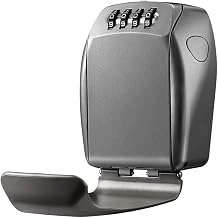
Master Lock Heavy Duty Wall Mount Key Lock Box, Holds 5 Keys, 5415D
The Master Lock 5415D offers families a recognizable name and capacity for up to five keys, making it a practical choice when multiple aides, family members, or backup visitors need access. The wall-mount design installs directly on exterior trim or siding near the door, keeping the key within reach but off the ground where a portable lockbox might be kicked or moved.
This model uses a four-digit combination dial rather than a push-button grid. Users rotate the dial to the correct sequence, then pull the shackle to open the compartment. For aides with arthritis or limited hand strength, the rotating motion can be easier than pressing small buttons, though it does require enough dexterity to align numbers precisely. The dial is large enough to read in outdoor light, and the metal construction resists weathering better than plastic housings.
At $37.64, the 5415D sits above basic portable lockboxes but below commercial-grade vault units. The price reflects the heavy-duty steel body, tamper-resistant shackle, and Master Lock's warranty support. Families who want a lockbox that will stay put through seasons of use and who need room for spare keys, garage remotes, or a second house key often find the capacity and durability worth the cost. Budget options may work for a single key and short-term care, but the 5415D is built for longer care arrangements where the lockbox will be opened daily.
Before mounting, confirm that your door frame or exterior wall has a flat, sturdy surface and that the hardware included will penetrate siding or trim securely. The shackle needs clearance to swing open, so measure the space around mailboxes, light fixtures, or overlapping trim. If your aide visits in low light, consider adding a small motion-sensor light nearby so the dial is visible at dusk.
The combination can be reset by the homeowner, so you can update access if an aide leaves or if you want to rotate the code periodically. Write the combination down in a secure place separate from the lockbox itself, and share it only with current caregivers. The 5415D does not offer a key override, so if the combination is forgotten, the box will need to be cut off and replaced.
- ✅ Holds up to five keys, garage remotes, or backup access cards
- ✅ Four-digit rotating dial may be easier for users with arthritis than small push buttons
- ✅ Heavy-duty steel construction resists weather and tampering
- ✅ Wall-mount design stays in place and frees up porch space
- ✅ Resettable combination allows homeowner to update access as needed
- ⚠️ At $37.64, costs more than basic portable lockboxes
- ⚠️ Rotating dial requires precise alignment and steady hand control
- ⚠️ No key override if combination is forgotten - lockbox must be removed
- ⚠️ Mounting hardware must penetrate siding or trim securely; not all surfaces are suitable
- ⚠️ Shackle clearance and dial visibility in low light require planning during installation
What Makes a Lockbox Work for Home Health Aides
Home health aides need quick, reliable access without fumbling with tiny dials or complicated sequences. The right lockbox balances security with usability, particularly when caregivers rotate shifts or visit multiple homes each day.
Combination dial size and clarity matter more than many families realize. Large, high-contrast numbers reduce mistakes during evening or early-morning visits. A dial at least an inch in diameter allows gloved hands to turn smoothly in winter, while recessed buttons prevent accidental resets when the lockbox sits near a doorframe.
Code length directly affects how easily aides remember and share access. A 4-digit combination offers 10,000 possible codes - enough to deter casual tampering - while remaining simple enough for agency schedulers to communicate by phone. Longer 10- or 12-digit sequences add security but increase the chance of lockouts when a caregiver misremembers a single number, delaying care and creating frustration.
Shackle strength determines whether the lockbox stays put. Hardened steel shackles resist bolt cutters and prying, while thin or soft-metal shackles bend under pressure. Look for shackles rated at least 3/16 inch thick if the lockbox will hang from an exposed railing or gate.
Weatherproofing protects the mechanism when mounted outdoors. Rubber gaskets and corrosion-resistant housings prevent rain, snow, and humidity from jamming the dial or rusting internal pins. Lockboxes without weather seals may work for a covered porch but often fail within months on an open fence post.
Key capacity ranges from one to six keys. A single-key slot works if only the front door needs sharing, but many families store a back-door key, garage remote, or mailbox key for aides who handle errands. Compact interior layouts keep multiple keys organized without requiring a bulky box.
Mounting hardware separates fixed-access designs from portable shackle-only models. Wall-mounted lockboxes use screws or adhesive plates to attach beside a door, offering stability and consistent placement. Shackle-mount options loop onto railings or knobs, providing flexibility but less security if someone can lift the entire unit. For a predictable location that aides can find in the dark, a wall mount near the front door works better than a movable shackle tucked behind a planter.
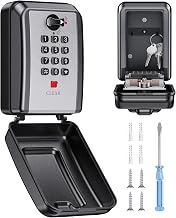
Wall-Mounted 12-Digit Combination Key Lock Box, Weatherproof
Families in neighborhoods where porch security is a concern often look for stronger code protection than the typical four-digit dial provides. This wall-mounted lockbox uses a 12-digit combination that makes unauthorized guessing far more difficult, while a weatherproof zinc-alloy housing resists rust and tampering year-round.
The extended code format works best when the aide agency uses digital code-sharing systems - most aides will save the sequence in their phone or agency portal rather than trying to memorize twelve numbers. Resetting the combination takes a few extra steps compared to shorter dials, so confirm the agency has a reliable process for storing and updating access codes before you choose this option.
Mounting hardware allows installation on brick, wood, or vinyl siding, and the shackle opens wide enough to hold house keys, mailbox keys, and a garage remote if needed. The 4.5/5 rating reflects consistent performance in rain, snow, and sun exposure. At $27.99, the lockbox delivers stronger code security without the expense of electronic models, though the twelve-digit format may feel cumbersome for aides who work with multiple clients and prefer simpler combinations.
The main tradeoff is ease of use: aides comfortable with technology and agency code systems will appreciate the added protection, while those who rotate among many homes may find shorter codes faster to enter during tight schedules.
- ✅ 12-digit combination offers stronger security than standard four-digit locks
- ✅ Weatherproof zinc-alloy construction resists rust and outdoor wear
- ✅ Wide shackle holds multiple keys and small remotes
- ✅ Mounts securely on brick, wood, or vinyl siding
- ⚠️ Longer code sequence harder to memorize without digital storage
- ⚠️ Resetting the combination takes more steps than simpler dials
- ⚠️ May slow entry for aides managing many client codes on tight schedules
Key Features to Compare Before You Buy
- Combination type: 4-digit codes are easier for aides to remember; 12-digit codes offer more security
- Dial or button style: large, high-contrast buttons or dials help aides with arthritis or vision challenges
- Weather resistance: outdoor mounting requires waterproof seals and rust-proof materials
- Mounting hardware: wall-mount kits with tamper-resistant screws provide better security than shackle loops
- Key capacity: most hold 1-5 keys; consider how many aides or family members need access
- Reset process: some require tools or complicated steps; simpler resets help when you need to change codes quickly
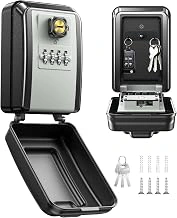
Wall-Mounted 4-Digit Combination Key Lock Box with Resettable Spare Key, Weatherproof
When home health aides rotate shifts or your parent wants to update access codes without outside help, this wall-mounted 4-digit combination box offers the simplest path forward. The resettable code takes seconds to change, and the four-number sequence is short enough for caregivers to remember between visits without needing to reference paper notes or phone logs.
The weatherproof casing protects the mechanism from rain and humidity, which matters if you're mounting the box near an exterior door or under a porch overhang. At $27.98, this lockbox balances budget and function for families who prioritize ease of use over maximum security layers. The 4.8-star rating reflects feedback from buyers in similar caregiver-access scenarios.
The tradeoff is straightforward: a four-digit code is easier to manage but offers fewer possible combinations than a multiple-digit model. For most home health aide situations, where the risk profile involves occasional unauthorized guessing rather than determined break-in attempts, the simplicity advantage outweighs the narrower security margin. If you live in a building with shared entryways or near high foot traffic, consider whether that tradeoff fits your comfort level.
Check reader reviews to see how other families describe the dial clarity and code-reset process, and confirm the weatherproof rating matches your installation location before you buy.
- ✅ 4-digit code is easy for rotating aides to remember
- ✅ Resettable design lets seniors or family change codes independently
- ✅ Weatherproof casing protects against rain and humidity
- ✅ Budget-friendly at $27.98
- ✅ 4.8-star rating reflects positive caregiver-access feedback
- ⚠️ Four-digit combination offers fewer possible codes than 12-digit models
- ⚠️ Simpler code may not suit high-traffic or shared-entry locations
How to Install and Set the Combination on Your Lockbox
Most lockboxes take about ten minutes to mount and set up, and the process requires only a drill, a screwdriver, and the included hardware. Start by choosing a location near the front or side door where an aide can reach the box comfortably without bending or stretching. Avoid placing it directly in front of street-facing windows or in the brightest spot on the porch - look for a spot that's accessible but not the first thing visible from the curb.
Mark the screw holes with a pencil, then drill pilot holes if you're mounting into wood or siding. Use the screws provided in the lockbox kit to secure the bracket or shackle mount firmly to the wall. Loose mounting is one of the most common mistakes: if the box wiggles, someone can twist it or pry it off more easily. Tighten each screw fully and give the box a firm tug to confirm it won't move.
Setting the combination comes next. Most models ship with a default code - often 0-0-0-0 or 1-2-3-4 - printed on an instruction card inside the packaging. Open the box using that code, then locate the small reset lever or button on the inside of the door or back panel. Slide or press the reset mechanism, enter your new four-digit code by turning the dials, then release the lever to lock in the new combination. Write down the new code and store it somewhere secure, separate from the lockbox itself.
Before you close the shackle or load your house key inside, test the new code at least twice with the door open. Turn the dials away from the correct numbers, then dial back to your code and confirm the latch releases smoothly. This simple check prevents the frustrating scenario where the box locks with the wrong code set or the reset lever was never fully engaged. Once you've verified the code works, place the key inside, close the shackle, and scramble the dials. Have the aide or a family member test the box from scratch to confirm they can open it on the first try.
How to Share the Code Securely with Your Aide Agency
Once your lockbox is installed, sharing the code with the aide agency requires a balance between accessibility and security. Text messages and email leave a permanent, unsecured trail that can be forwarded or screenshotted without your knowledge, so use a more controlled method whenever possible.
Many home health agencies prefer you share codes through their secure patient portal or app, where the information is encrypted and logged in the client file. If your agency offers this option, use it - the code stays within their system and is accessible only to authorized schedulers and supervisors. If no portal exists, call the office directly and provide the code verbally to the scheduler, who can then enter it into the agency's internal records.
Confirm with the agency how codes are stored and distributed to aides. Ask whether the code is given only to assigned aides or if it's available to any on-call staff. Some agencies maintain a shared code list; others restrict access to the specific aide on your parent's schedule. Understanding their protocol helps you decide how often to rotate the code.
When aide assignments change - whether due to shift rotation, staffing turnover, or the end of a care contract - change the lockbox code. Resetting a combination lockbox typically takes less than two minutes, and it ensures that only current caregivers have access. Keep a private written record of code changes in a secure location at home, separate from any documents the agency holds.
If you manage multiple caregivers or vendors (such as a physical therapist and a weekly cleaning service), consider using different access methods or rotation schedules. Some families change the code monthly as a precaution, while others update it only when personnel change. Choose a routine that fits your family's comfort level with security risk and the frequency of caregiver turnover.
Tips for Talking to Your Parent About Using a Key Lockbox
Bringing up a key lockbox with your parent works best when you frame it around convenience rather than vulnerability. Instead of saying "We need this for safety," try "This means you won't have to get up and answer the door every time your aide arrives - you can stay comfortable in your chair." Many older adults value their routine and independence, so position the lockbox as a tool that protects both. You might say, "Your aide can let herself in quietly, and you won't be interrupted during your morning coffee or nap."
If your parent resists, don't push for an immediate yes. Acknowledge their feelings: "I know it feels like a big change. How about we try it for two weeks and see if it makes mornings easier?" Some families find it helpful to involve the home health aide in the conversation, since hearing directly from the caregiver can make the benefit feel more real. If your parent worries about security, walk through how the combination works, where the lockbox will hang, and who will know the code. Let them choose the location and even pick the combination if they're able - small choices preserve dignity. Building acceptance takes patience, but most parents adjust once they experience fewer disruptions and see that their independence stays intact.
What to Do If the Lockbox Gets Jammed or the Code Stops Working
A lockbox that won't open when a home health aide arrives can delay care and create real stress. Most problems stem from dial misalignment, forgotten codes, or exposure to weather rather than catastrophic failure.
If the combination won't release the shackle, start by rotating each dial slowly back to the set code. Rushing through the sequence or stopping between numbers can leave the internal mechanism partially engaged. Once all dials show the correct digits, pull the shackle straight up with steady pressure instead of twisting or jerking it sideways.
Sticky dials often respond to a small amount of graphite powder or silicone spray inserted through the gap around each wheel. Avoid oil-based lubricants, which attract dust and gum up the works faster. If the lockbox lives outdoors year-round, check the compartment for ice buildup in winter or spider webs and dirt in summer - both can block the latch from retracting fully.
Code-reset errors usually happen when someone turns the dials while the shackle is partially open or presses the reset button without following the exact factory sequence. Consult the instruction sheet that came with the unit; most manufacturers require the shackle to be open at ninety degrees and held in place while you rotate to the new combination. If you've lost the manual, the model number printed on the back often leads to a PDF on the manufacturer's website.
Weather damage shows up as rust on the shackle hinge, cracks in the plastic housing, or a latch that no longer snaps into place. A lockbox with visible corrosion or a loose shackle should be replaced rather than repaired, since the compromise affects both security and reliability.
Preventable maintenance takes less than five minutes every few months. Wipe down the exterior, clear debris from the keyhole and dial gaps, and test the combination when you're not in a hurry. Keeping a backup access plan in place - such as a neighbor who holds a spare key or an agency master key stored at the care coordinator's office - means a jammed lockbox becomes an inconvenience rather than an emergency.
Final Thoughts: Matching the Right Lockbox to Your Situation
The right lockbox depends on how many people need access, the security level in your parent's neighborhood, and who will be managing the code. If you want the reassurance of a well-known brand with room for multiple keys and a straightforward setup, the Master Lock model offers proven durability and a reputation for reliable hardware. When simplicity is the priority - especially if your parent or multiple aides will be entering codes daily - the 4-digit combination strikes the best balance between ease of use and adequate security for most residential settings. For homes in higher-risk areas or situations where you need audit-style control over who has the current code, the 12-digit option delivers the strongest defense against unauthorized entry, though it asks more of every user.
Before you mount any lockbox, confirm that the shackle diameter fits your door handle or railing, and walk through the code-setting steps in daylight when you're not rushed. A model that feels intuitive in the store can still trip up an aide arriving at dawn if the buttons are stiff or the reset sequence is unclear. Test the code yourself at least twice, then have someone else try it to catch any confusion in your instructions.
A dependable lockbox removes the worry of lost keys, late-night lockouts, and the awkward key-under-the-mat compromise. When Sandra knows her mother's aide can get in safely every morning and that the code stays private, both of them sleep better. Choose the lockbox that matches your real-world access patterns and security needs, and you'll turn daily entry from a potential problem into a reliable routine.