We may earn a commission when you buy through links on this page, at no extra cost to you. How this works.
GE Ultrabrite Motion-Activated LED Light, 2 Pack - Best for Hallways
Simple lighting that turns on automatically when your parent gets up at night-no switches, no fumbling.
Fit and safety come first
Use the comparison as a shortlist, but keep fit, comfort, and any health or safety constraints ahead of price.
Here's the thing about nighttime falls: they're completely preventable in most cases, but they happen constantly. Your mom gets up to use the bathroom at 2 a.m., doesn't want to wake herself up fully with a bright overhead light, tries to navigate in the dark, and misjudges that step or catches her foot on the rug.
I learned this the hard way when my own mother-in-law took a tumble reaching for the bathroom light switch. Nothing broken, thank goodness, but enough of a scare to make me realize how vulnerable that 15-foot walk from bed to toilet really is.
Motion-sensor night lights solve this problem elegantly. They turn on automatically when movement is detected, provide just enough light to see clearly without disrupting sleep, and turn off on their own. No switches to find. No fumbling in the dark. No arguments about 'I don't need help.'
The best part? They're genuinely simple. We're not talking about complex smart home systems that require Wi-Fi passwords and app downloads. Most of these just plug in or stick on with adhesive tape. Your mom won't even notice them during the day, but when she needs them at night, they'll be there.
We've vetted these five options based on brightness, ease of installation, and how well they work in the specific places where falls happen most: hallways, bedrooms, and bathrooms.
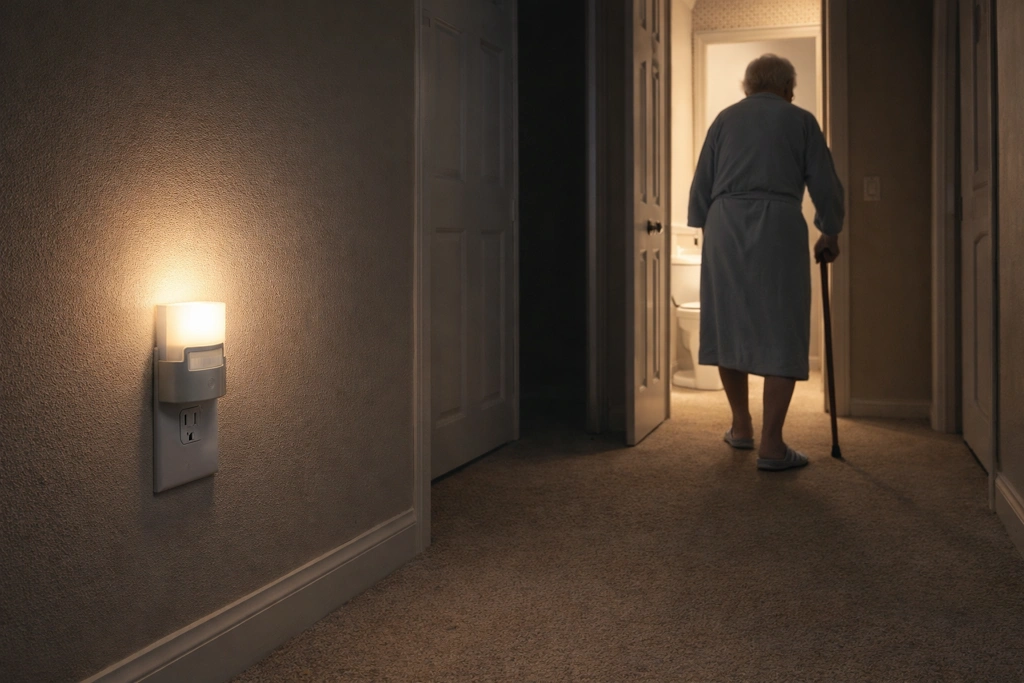
GE Ultrabrite Motion-Activated LED Light, 2 Pack - Best for Hallways
If your parent has a long hallway leading to the bathroom-which is basically fall-risk central-the GE Ultrabrite is probably your best bet. This is a plug-and-play solution that requires absolutely zero technical skill. You just plug it into any standard outlet, and it immediately starts working.
What makes this one stand out is the motion detection range. It picks up movement from up to 25 feet away, which means the light comes on before your mom even reaches the dark part of the hallway. That's huge. The 40-lumen output is bright enough to clearly illuminate the floor and any obstacles-no squinting, no guessing.
The built-in light sensor is another smart feature. It won't activate during the day, so you're not wasting electricity or dealing with unnecessary light triggers when the sun's already doing the job.
The main downside? It's bulky. If you've got one of those older outlets where things are already plugged in tight, this unit can block the second socket. And the brightness isn't adjustable, which can be a problem if it's installed near a bedroom where someone needs total darkness to sleep. But for hallways, living rooms, or the area just outside the bathroom door? It's hard to beat.
- ✅ Extremely simple setup; just plug it into any standard wall outlet with no wiring or apps needed.
- ✅ The motion sensor detects movement from far away, lighting up hallways or bathrooms well before she enters the room.
- ✅ A built-in light sensor prevents it from turning on during the day, saving energy automatically.
- ✅ Its 40-lumen brightness provides a clear, wide beam of light to illuminate the floor and any potential obstacles.
- ⚠️ The brightness is not adjustable and may be too intense for light-sensitive sleepers if used in a bedroom.
- ⚠️ The unit is bulky and can block the second outlet, which is inconvenient in areas with limited plugs.
- ⚠️ Best for hallways or living spaces, but may be disruptive for those who need total darkness to sleep.
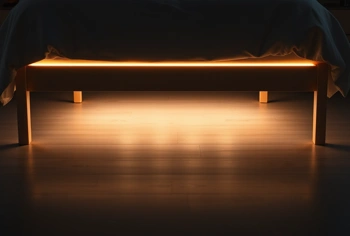
Vansky Motion Activated Bed Light, LED Strip - Best for Bedrooms
The bedroom is tricky. You need light to safely get out of bed, but you absolutely don't want something bright shining directly into anyone's eyes at 3 a.m. That's where the Vansky under-bed light strip shines-literally, but in the right direction.
This light installs underneath the bed frame using adhesive tape backing, and it only turns on when feet actually touch the floor. That's key. It won't activate if your mom just rolls over or sits up in bed. It waits until she's standing and moving, which means fewer false triggers and less sleep disruption.
The warm white glow (2700K) is soft and indirect, lighting up the floor without blasting light across the room. It's perfect for someone who shares a bedroom and doesn't want to wake their partner. The adjustable timer is another nice touch-you can set it to stay on anywhere from 30 seconds to 6 minutes, which gives plenty of time for a bathroom trip and back.
Installation is genuinely easy. The strip has 3M adhesive tape already attached, so you just peel and stick. That said, if your parent has a bed frame with a delicate finish, you might want to test the adhesive in a small spot first. And this does require a nearby outlet for the power adapter, so placement flexibility is somewhat limited.
One more thing: this is not a bright light. It's a guide light. If someone has significant vision impairment, they may need something more powerful in combination with this.
- ✅ Provides a soft, indirect glow from under the bed, lighting the floor without shining harshly into sleepy eyes.
- ✅ Activates only when her feet touch the floor, preventing it from turning on unnecessarily if she just rolls over in bed.
- ✅ Installation is tool-free using adhesive tape, making it a simple project for Sandra to handle in one visit.
- ✅ The timer can be adjusted to stay on long enough to safely complete a round trip to the bathroom.
- ⚠️ Relies on adhesive tape, which may damage certain bed frame finishes or lose stickiness over time.
- ⚠️ It is powered by a wall adapter, requiring a nearby outlet, which can limit placement options.
- ⚠️ This is not a bright light; individuals with very poor eyesight may need a more direct, powerful light source.
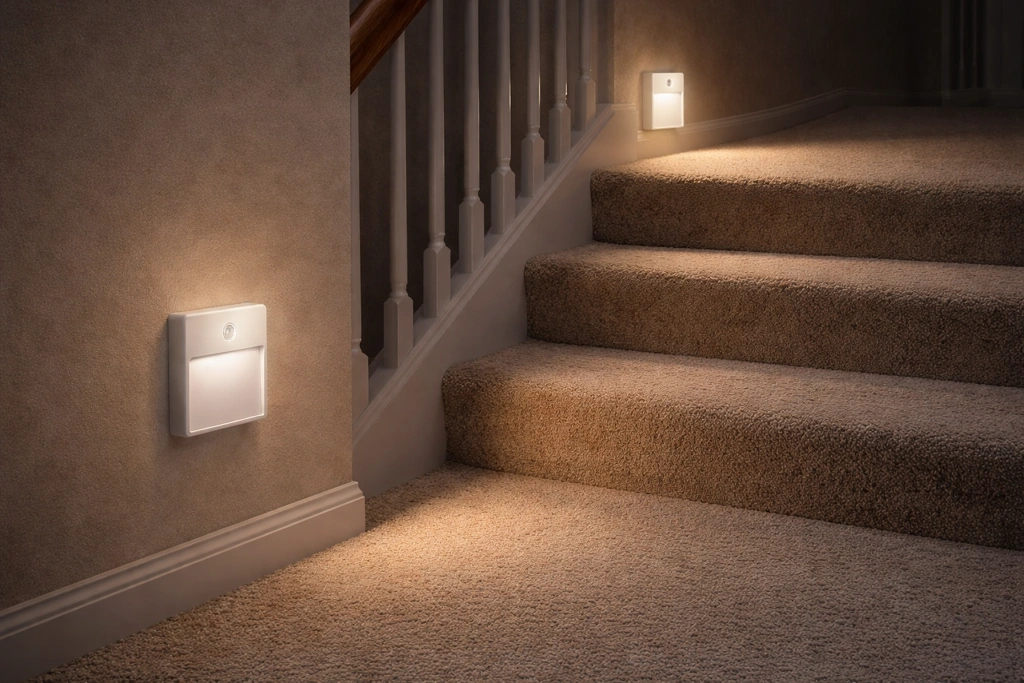
Mr. Beams MB720A Night Light
If your parent is a light sleeper or has trouble falling back asleep after waking up, the color of the light actually matters. Blue and bright white light can suppress melatonin and make it harder to get back to sleep. The Mr. Beams MB720A uses amber light specifically designed to minimize sleep disruption.
This is a battery-powered, wireless light, which means you can stick it literally anywhere. Stairways with no outlets? Done. Inside a dark closet? Perfect. A bathroom with inconvenient outlet placement? No problem. It mounts with screws or adhesive strips, and once it's up, it just works.
Battery life is surprisingly good-up to a year with average use, which Mr. Beams defines as 8 to 10 activations per day. That's realistic for a nighttime-only light. You'll need to supply your own AA batteries (4 per unit), which is a small recurring cost, but the convenience of wireless placement often outweighs that.
The 20-lumen output provides a gentle, 120-square-foot glow. It's enough to see where you're going, but it's not going to light up an entire room. Think of this as a guide light, not a task light. For someone who needs just enough illumination to navigate safely without fully waking up, it's ideal.
The amber light takes a little getting used to visually-it's definitely more orange than white-but for sleep-sensitive individuals, that trade-off is worth it.
- ✅ The amber-colored light is specifically designed to be less disruptive to natural sleep cycles than standard white or blue light.
- ✅ Being battery-powered and wireless, it can be placed anywhere instantly-on stairs, in dark closets, or in bathrooms without outlets.
- ✅ A single set of batteries provides up to a year of light with average use (8-10 activations a day), minimizing maintenance.
- ✅ Provides a soft, 120-square-foot glow that is bright enough to see by but not jarring in the middle of the night.
- ⚠️ Requires battery replacements, which creates a small, recurring cost and maintenance task.
- ⚠️ The 20-lumen output is a gentle guide light, not a bright, room-filling light.
- ⚠️ Those who prefer a one-time, plug-in solution and want to avoid dealing with batteries should choose another option.
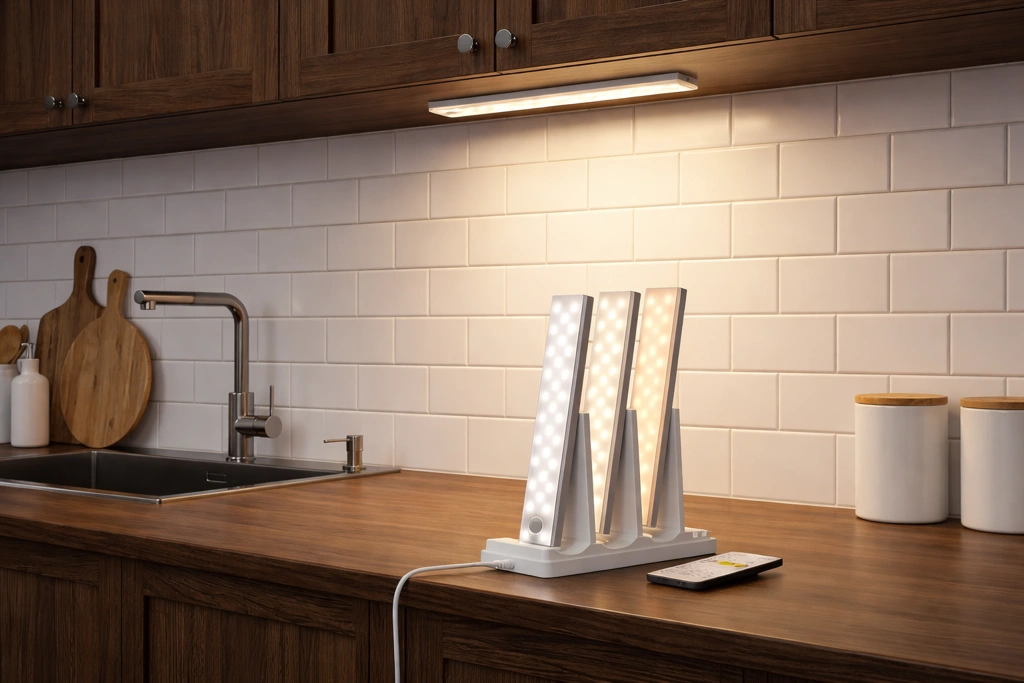
EZVALO Under Cabinet Lighting with Charging Station
Sometimes you need more than just a gentle glow. If your parent has a particularly dark kitchen, a tricky set of basement stairs, or a bathroom counter where medication is sorted at night, the Brilliant Evolution light bar delivers significantly more brightness-80 lumens, to be exact.
The bar shape is what makes this useful in ways puck lights aren't. It's thin, discreet, and designed to be mounted under cabinets, along baseboards, or inside pantries. The motion sensor activates from about 3 feet away, which is perfect for targeted lighting in specific work areas or narrow pathways.
Installation options are flexible: it comes with both adhesive tape and mounting screws, so you can choose based on the surface and permanence you want. The 3000K warm white light is pleasant and not harsh, even at higher brightness.
The catch? It runs on 6 AA batteries, which is a lot. If you place this in a high-traffic area where it's triggering constantly, you'll be changing batteries more often than you'd like. The 20-second auto-off timer helps preserve battery life, but it's not adjustable-and for some users, that's too short, causing the light to turn off mid-task.
This isn't a room-flooding light. It's designed for focused, directional illumination. Use it where precision matters, not where you need ambient coverage.
- ✅ Rechargeable USB-C batteries last 13-40 days, eliminating the need for disposable batteries
- ✅ Three color temperature options (3000K/4500K/6500K) let you customize lighting for different tasks and rooms
- ✅ Magnetic mounting with adhesive metal plates makes installation and removal completely tool-free
- ✅ Motion sensor with 10-foot range activates automatically in darkness for safe nighttime navigation
- ⚠️ Remote control required for changing settings—no onboard controls, and lost remotes mean you're stuck with last settings
- ⚠️ Managing six separate rechargeable units means tracking which lights need charging across multiple rooms
- ⚠️ Motion sensor only works in low light/darkness, so these won't activate during the day even if motion is detected
How to Choose the Right Motion-Sensor Light for Your Parent's Home
Not all motion-sensor lights are created equal, and the 'best' one really depends on where it's going and what problem you're trying to solve. Here's how to think through the decision:
For hallways and open spaces: Go with a plug-in light like the GE Ultrabrite. You want good brightness, long detection range, and no maintenance hassle.
For bedrooms: Choose something with soft, indirect light like the Vansky bed strip. It should activate only when feet hit the floor, and it absolutely cannot shine into anyone's face.
For stairs or areas without outlets: Battery-powered options like the Mr. Beams give you placement flexibility. Just make sure the brightness is adequate for the risk level of the area.
For task areas like kitchens or bathrooms: A brighter, directional light like the Brilliant Evolution bar works well. Look for at least 60-80 lumens if someone is doing more than just walking through.
One more thing: don't overthink this. Even an imperfect light is infinitely better than no light at all. I've seen people spend weeks researching the perfect solution while their parent continues shuffling around in the dark. Pick one, install it this weekend, and adjust later if needed.
Before You Install: Quick Safety Checklist
- Walk the nighttime route yourself in the dark to identify the highest-risk areas
- Check outlet locations and availability before buying plug-in models
- Test battery-powered lights in place temporarily before permanent mounting
- Make sure lights illuminate the floor, not just the walls or ceiling
- Consider placing lights at both ends of hallways for continuous coverage
- Keep a small flashlight or backup light source in the bedroom as a failsafe
A Few Things Motion-Sensor Lights Won't Fix (And What Will)
Let me be clear: motion-sensor lights are fantastic, but they're not a complete fall-prevention plan on their own. They won't help if there are tripping hazards like loose rugs, clutter in walkways, or electrical cords stretched across the floor. They won't fix balance issues that need medical attention or footwear problems like slippery socks.
Think of these lights as one layer in a broader safety strategy. Combine them with other simple fixes: remove throw rugs or secure them with non-slip pads, keep a clear path from bed to bathroom, make sure your parent has sturdy footwear with good grip, and encourage them to use any prescribed mobility aids at night.
According to the Centers for Disease Control and Prevention, falls are the leading cause of injury-related deaths among adults 65 and older, and the vast majority happen at home. The National Institute on Aging specifically recommends adequate lighting as a key fall prevention measure. The American Geriatrics Society's clinical practice guidelines also emphasize environmental modifications, including improved lighting, as evidence-based interventions.
Lighting is low-hanging fruit. It's affordable, non-invasive, and effective. But it's most powerful when paired with other thoughtful changes. If your parent has had a fall already or has significant balance issues, it's worth having a physical therapist or occupational therapist do a home safety assessment. They'll spot risks you might miss.
Final Thoughts: Just Do It This Weekend
Here's my advice after years of watching families hesitate on simple safety upgrades: stop waiting for the 'right time' or the 'perfect product.' Nighttime falls are preventable, and motion-sensor lights are one of the easiest, most dignified ways to reduce that risk.
Your mom won't feel like you're hovering. She won't feel like her independence is being taken away. She'll just have light when she needs it, automatically, without thinking about it. That's the kind of safety upgrade that actually gets used.
Pick one or two of these lights based on where the biggest risks are in her home-usually the path from bed to bathroom-and install them this weekend. Seriously. Order them today, bring them over on Saturday, and spend 20 minutes getting them set up. It's one of those small actions that delivers outsize peace of mind.
And if she asks why you're suddenly installing lights everywhere? Just say you read that they save electricity by only turning on when needed. Which is true. You don't have to make it about falls or aging or risk. Sometimes dignity is just letting people accept help without making a big deal out of it.