We may earn a commission when you buy through links on this page, at no extra cost to you. How this works.
A personal medication list is more than a record - it's a decision tool that helps emergency responders, pharmacists, and specialists act quickly and safely when your elderly parent cannot speak for themselves. In high-pressure situations, incomplete or outdated lists create risk: duplicate prescriptions, dangerous drug interactions, or delays in treatment while providers piece together a medication history.
The difference between a useful list and a risky one comes down to completeness and accessibility. A complete list answers the questions that matter most in both emergencies and routine care: What is this person taking? At what dose? When did they start? Are there known allergies or past reactions? Who prescribed it, and why?
Emergency responders need to know what medications are active right now and which ones might interact with life-saving treatments. Pharmacists cross-check for duplicates, contraindications, and dosing errors across multiple prescribers. Specialists who see your parent for the first time rely on this list to avoid repeating trials of drugs that failed or caused problems in the past.
An incomplete list - one missing over-the-counter medications, supplements, dosing changes, or discontinued drugs - forces providers to guess or delay care. A well-maintained list enables fast, informed decisions and reduces the chance of preventable medication errors.
This guide explains what information to include, how to organize it for different users, and which tools make it easier to keep the list current as prescriptions change. The goal is a single, portable reference that works in an ambulance, at a pharmacy counter, and in a specialist's office.
Basic Personal and Emergency Contact Information
Every personal medication list should begin with basic identifying and emergency contact information. This section sits at the top of the document so that first responders, emergency room staff, or caregivers can quickly verify who they are treating and whom to call if the patient is unable to communicate.
Start with your parent's full legal name exactly as it appears on their insurance card and identification. Include their date of birth in a standard format, such as MM/DD/YYYY. This combination ensures accurate identification and helps prevent medication errors when multiple patients share similar names.
Next, list at least two emergency contacts with their full names, relationship to your parent, and current phone numbers. The primary contact is typically the person who manages day-to-day care or lives closest. The secondary contact serves as a backup when the first person cannot be reached. Include both mobile and home numbers when available.
If your parent lives with a caregiver or in an assisted living facility, record that caregiver's name and contact information as well. Note whether this person has legal authority to make medical decisions, such as through a healthcare power of attorney.
Adding your parent's home address is also useful, especially if the list will be carried outside the home or stored digitally. In emergency situations, responders may need to know where the patient normally resides or where medications are stored.
This foundational layer of information takes only a few minutes to compile but can save critical time when every second matters. It transforms a medication list from a simple inventory into a complete reference tool that protects your parent's safety and ensures the right people are notified quickly.
Comprehensive Medication Details: Name, Dosage, and Frequency
The most critical part of any personal medication list is the detailed record of each drug your parent takes. Every medication entry should include both the brand name (such as Tylenol) and the generic name (acetaminophen). Generic names are especially important because they remain consistent across pharmacies and insurance formularies, reducing confusion when prescriptions are filled at different locations or during hospital transfers.
Document the strength of each medication in milligrams (mg), micrograms (mcg), or other units exactly as printed on the prescription label. This matters because many drugs come in multiple strengths - metoprolol might be 25 mg, 50 mg, or 100 mg - and mixing them up can lead to dangerous dosing errors. Next to strength, record the dosage: how many pills, tablets, or milliliters your parent actually takes at each administration. For example, "one tablet" or "two capsules."
The frequency tells caregivers and medical professionals when the medication is taken. Use clear language: "twice daily," "every morning," "at bedtime," or "as needed for pain." Distinguishing between scheduled medications and as-needed (PRN) medications is important. Scheduled drugs like blood pressure or diabetes medications must be taken at specific times to maintain steady therapeutic levels, while PRN medications - such as pain relievers or anti-nausea drugs - are taken only when symptoms appear. This distinction helps anyone reviewing the list understand adherence patterns and identify potential gaps in symptom management.
Finally, include the reason or indication for each medication. Listing "for high blood pressure" or "to prevent blood clots" provides context that can prevent medication errors, especially when multiple drugs treat overlapping conditions. It also helps emergency responders and new clinicians quickly understand your parent's health priorities without sifting through pages of medical records.
Together, these five fields - generic and brand name, strength, dosage, frequency, and reason - form the backbone of a usable medication list. They provide enough detail to prevent dosing mistakes, support medication reconciliation during care transitions, and give every caregiver a clear, actionable snapshot of what your parent takes and why.
Doctor and Pharmacy Contact Information
A complete personal medication list should include contact information for every provider who manages prescriptions. This section becomes critical when a new doctor needs to verify medications, when an emergency room physician asks who prescribed a specific drug, or when a pharmacy transfer is required during travel.
Start with the primary care physician's full name, office phone number, and practice address. If your parent sees specialists who prescribe medications - such as a cardiologist, endocrinologist, neurologist, or psychiatrist - list each one separately with the same level of detail. Include the specialty next to each name so emergency providers understand which doctor manages which condition.
Record the pharmacy name, location, and phone number. If your parent uses multiple pharmacies or a mail-order service for maintenance medications and a local pharmacy for urgent prescriptions, list both. Include the pharmacy's street address, not just the chain name, because prescriptions are tied to a specific store location and transfers require precise details.
This information becomes essential during hospital discharge planning, when scheduling follow-up appointments after an ER visit, or when a caregiver needs to call the prescribing doctor to clarify dosing instructions. It also speeds up pharmacy transfers during vacations, temporary relocations, or when switching to a new provider network. Keep this section updated whenever a specialist is added, a primary care physician retires, or a preferred pharmacy changes.
Known Allergies and Past Adverse Reactions
A complete personal medication list must include every known allergy and any past adverse reaction your elderly parent has experienced. This section helps prescribers and pharmacists avoid medications that could trigger harmful responses, from mild discomfort to life-threatening emergencies.
Allergy versus adverse reaction: An allergy involves an immune system response - hives, swelling, breathing difficulty, or anaphylaxis. An adverse reaction or side effect may be unpleasant but does not involve the immune system; examples include nausea, dizziness, or drowsiness. Both matter, but the distinction helps clinicians decide whether to avoid a drug entirely or simply adjust the dose or timing.
Record each allergen or problem medication by name, along with the specific reaction your parent experienced. For example: "Penicillin - severe rash and hives" or "Codeine - nausea and confusion." Even mild reactions deserve a place on the list; a mild rash from one drug may signal a risk of a more serious reaction to a chemically similar medication.
Include reactions to any substance that might appear in prescriptions: antibiotics, pain relievers, anesthetics, contrast dyes used in imaging, and even inactive ingredients such as dyes or preservatives. If your parent has experienced a reaction during a hospital stay or procedure, ask for documentation and add it to the list.
Keep this section near the top of the medication list so it is immediately visible to any healthcare provider. Update it whenever a new reaction occurs, and make sure your parent's primary care physician, specialists, and pharmacy all have the current version. Accurate allergy documentation is one of the simplest, most effective ways to prevent medication errors and protect your parent's safety.
Additional Details That Strengthen Your Medication List
- Over-the-counter medications and supplements with dosages
- Medical devices (insulin pump, pacemaker, oxygen) with settings or model numbers
- Immunization history, especially flu, pneumonia, and shingles vaccines
- Recent hospitalizations or surgeries with dates
- Advance directive or healthcare proxy contact information
- Pharmacy prescription numbers for quicker refill coordination
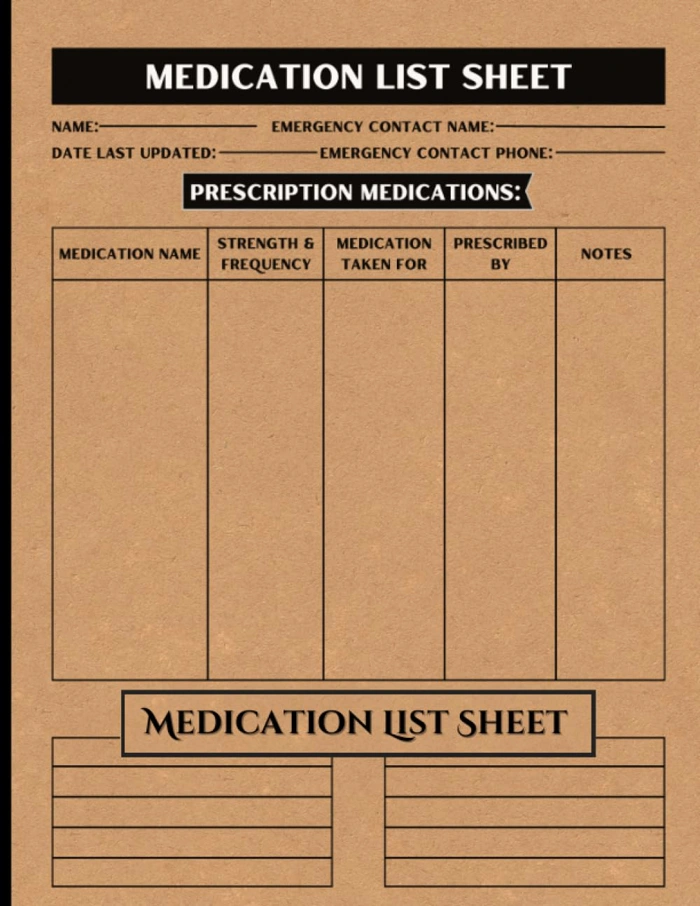
Medication List Sheet by Silva, Rayan
The Medication List Sheet by Silva, Rayan offers a structured, single-page format designed to capture essential medication details in a compact layout. This sheet provides dedicated fields for medication name, dosage, frequency, and prescriber information, helping you organize critical drug information without searching through multiple documents.
The single-page design fits easily into a wallet, purse, or emergency binder, making it practical for parents who travel frequently or see multiple doctors. When an emergency room physician, new specialist, or pharmacist asks for a current medication list, you can hand over one complete, legible page rather than reciting from memory or scrolling through phone notes.
The structured field layout encourages consistent entry - each medication occupies its own row with clearly labeled columns. This organization reduces the risk of missing details like "twice daily" or "Dr. Chen, cardiology" and makes it easier for healthcare providers to scan quickly during intake or discharge conversations.
Because the sheet is a physical format, you can keep a printed copy in each location where medication questions arise: taped inside a medical binder, folded in a purse, or stored in a glove compartment. For parents managing five or more prescriptions across different specialists, having one standardized reference page simplifies coordination and ensures every provider sees the same information.
The trade-off is that single-page sheets require manual updates. Each time a dose changes or a new prescription starts, you'll need to print a fresh copy or handwrite the revision clearly. If your parent's regimen changes monthly, a digital tool may save time - but for stable medication lists that change quarterly, the simplicity of a printed sheet often outweighs the update effort.
At around €8.62 and rated 4.8 out of 5, this format delivers a straightforward, no-frills solution. It won't sync across devices or send reminders, but it will sit reliably in a wallet and answer the question "What medications are you taking?" every time it's asked.
- ✅ Single-page format fits in wallets, purses, and emergency binders
- ✅ Structured fields for medication name, dosage, frequency, and prescriber
- ✅ Easy for healthcare providers to scan quickly during intake
- ✅ Practical for parents who travel or see multiple doctors
- ⚠️ Requires manual updates each time medication changes
- ⚠️ Physical format does not sync across devices or send reminders
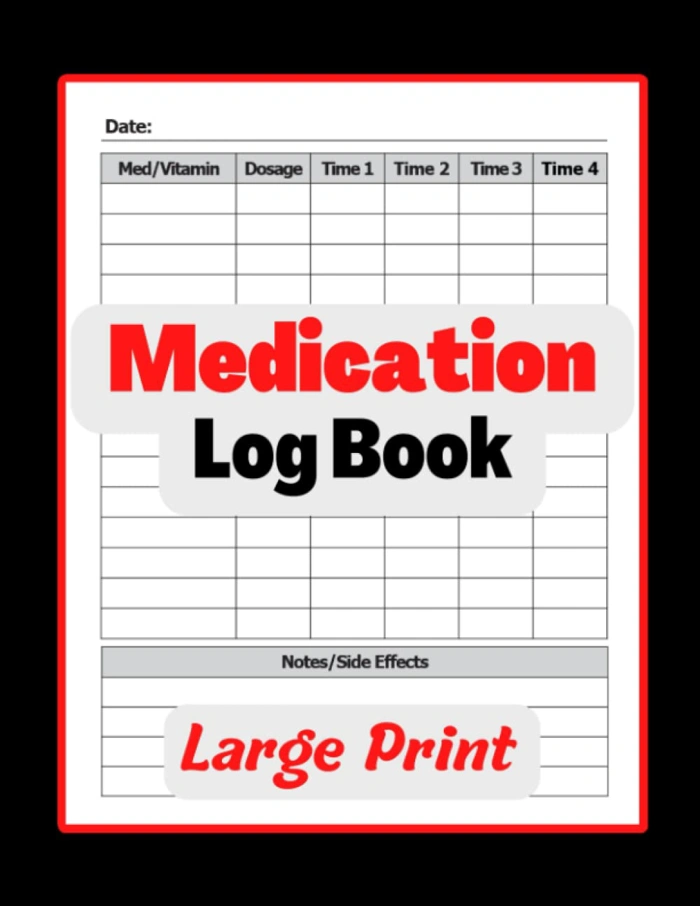
Medication Logbook and Pill Tracker: Daily Log for Doses and Side Effects
A Medication Logbook and Pill Tracker offers a daily tracking format that goes beyond a static list. Instead of simply recording what medications your parent takes, this logbook allows you to capture each dose as it happens, note the time taken, and document any side effects or symptoms that emerge throughout the day.
This approach is particularly valuable when your parent starts a new prescription, undergoes a dose adjustment, or manages chronic conditions where symptom patterns provide important clues for their care team. By logging each dose in real time, you create a detailed record that helps doctors spot trends, identify adverse reactions early, and fine-tune treatment plans based on actual day-to-day experience rather than memory alone.
The tradeoff is clear: a daily logbook requires consistent effort and discipline. Unlike a master medication list that you update only when prescriptions change, this tracker asks for entries every day - sometimes multiple times per day. For caregivers and parents willing to invest that time, the reward is a comprehensive picture of how medications perform in practice, including timing patterns, missed doses, and correlations between specific drugs and symptoms.
This logbook works best as a companion to your static medication list, not a replacement. The master list remains your go-to document for emergency responders and new providers, while the daily log becomes a working tool for ongoing care management. When your parent's doctor asks whether a new medication caused dizziness or when symptoms started, you'll have documented evidence instead of vague recollections.
Consider this format if your parent takes medications with narrow therapeutic windows, experiences frequent side effects, or participates in active treatment adjustments. The daily discipline pays off when precise information matters most.
- ✅ Captures real-time dose timing and side effects for accurate tracking
- ✅ Helps care teams identify patterns and correlations between medications and symptoms
- ✅ Useful for managing new prescriptions and dose adjustments
- ✅ Creates documented evidence for medical consultations
- ⚠️ Requires daily entries and consistent discipline to maintain
- ⚠️ More time-intensive than a static medication list
- ⚠️ May feel redundant if medication routine remains stable

Personal Undated Medication Log Book and Daily Pill Tracker
The Personal Undated Medication Log Book offers a flexible tracking solution for caregivers managing parents whose medication needs shift over time. Unlike dated logbooks that leave blank pages if a parent is hospitalized or a regimen is paused, this undated format lets you start and stop as circumstances change without wasting space.
Each page provides columns for medication name, dosage, time, and caregiver initials, alongside a notes field for tracking side effects or dose adjustments. The undated structure works especially well for parents transitioning home after hospital stays, where medication routines may be restarted gradually, or for those with seasonal or intermittent prescriptions that don't require year-round daily logging.
The logbook is compact enough to travel between home and appointments, and the simple layout avoids the complexity of apps or digital tools - helpful when multiple family members share caregiving duties and prefer a shared paper record everyone can reference.
If your parent's medication list stays consistent month to month, a dated log may offer quicker compliance verification at a glance. But if regimens fluctuate due to health changes, specialist rotations, or care transitions, the undated format helps reduce the chance of the frustration of skipping forward through pre-printed dates and reduces the need to purchase a new logbook mid-year when routines shift.
- ✅ Undated format eliminates wasted pages during hospitalization or medication pauses
- ✅ Compact design travels easily to appointments and between caregivers
- ✅ Simple paper layout accessible to family members who prefer non-digital tracking
- ⚠️ Requires manual date entry on each page
- ⚠️ May be less efficient than dated logs for stable, long-term medication routines
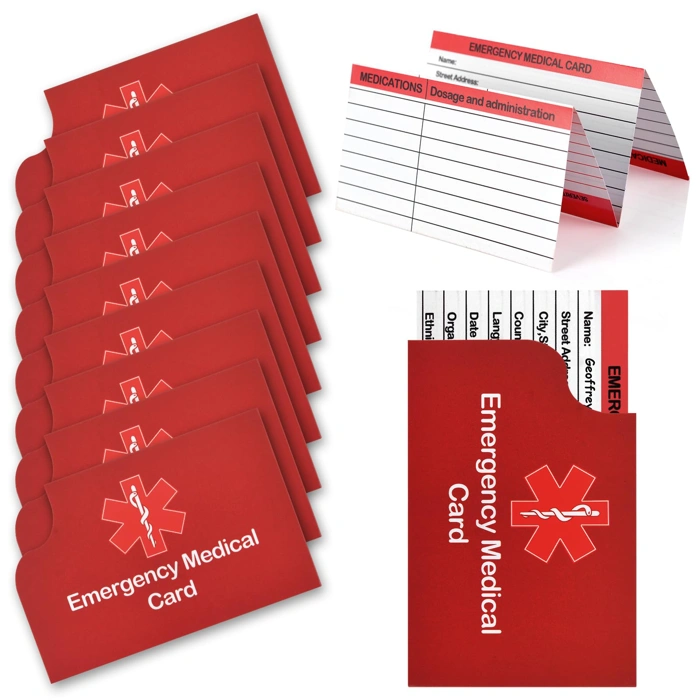
24 Pack Red Emergency Medical ID Wallet with Medication List and Caretaker Cards
The 24 Pack Red Emergency Medical ID Wallet cards offer a compact, wallet-friendly way to carry medication and emergency contact information. Each card is bright red, making it easier for first responders and medical staff to identify quickly in a wallet or purse during an emergency.
This set includes both medication list cards and dedicated caretaker cards, so you can record detailed medication information on one side and list family or caregiver contact details on the other. The wallet-card format fits into standard credit card slots, meaning your parent can keep critical health information alongside their driver's license and insurance cards without needing to carry extra items.
The 24-card multi-pack is particularly useful for families managing care for multiple elderly relatives or for those who need to update cards regularly as prescriptions change. Instead of buying single cards repeatedly, you have enough on hand to refresh the list when dosages shift, new medications are added, or doctors' contact information changes. You can also keep backup cards in different locations - one in your parent's primary wallet, another in a travel bag, and spares at home for updates.
Because the cards are designed to fit standard wallets, check that the font size and field layout work with your parent's vision and handwriting. If they have difficulty reading small print or writing in tight spaces, consider filling out the cards yourself or using large, clear handwriting. The cards are rated 4.7 out of 5, suggesting users find them practical and easy to use.
This format works best when your parent already carries a wallet or purse regularly and prefers a low-profile solution over bulkier organizers or digital tools. For families who want a simple, familiar way to keep medication details accessible in an emergency, these cards provide a straightforward option that fits into existing routines.
- ✅ Bright red color helps first responders locate cards quickly
- ✅ Wallet-card size fits standard credit card slots in wallets and purses
- ✅ Includes both medication list and caretaker contact cards
- ✅ 24-card multi-pack allows for regular updates and backups across multiple locations
- ✅ Low-profile format integrates into existing wallet routines
- ⚠️ Small card size may be difficult for those with vision or handwriting challenges
- ⚠️ Requires manual updates each time medications or contact details change
- ⚠️ Not a digital or app-based solution for families preferring electronic records
Tips for Keeping the List Updated and Accessible
A medication list only works when it stays current and is easy to find during an emergency. Many families create a thorough list but let it grow outdated after doctor visits or forget where they stored it when seconds count.
The simplest habit is to update the list immediately after every medical appointment, hospital discharge, or pharmacy change. Set a recurring calendar reminder for the day after scheduled doctor visits so the task doesn't slip through the cracks. If your parent sees multiple providers, confirm changes with the primary care physician to catch duplicate prescriptions or interactions before they cause problems.
Store copies in multiple locations where caregivers and emergency responders will look: one in your parent's wallet or purse, one on the refrigerator door held by a magnet, one in a home emergency binder, and one with a trusted neighbor or family member who has a key. Keep both a printed version and a digital copy - paper doesn't require passwords or battery life during a crisis, while a digital file stored in the cloud or emailed to family members ensures someone always has access even if the house is inaccessible.
Review the entire list at least once every three months, even when nothing has changed. Quarterly reviews catch discontinued medications that never made it off the list, over-the-counter additions your parent forgot to mention, and expired emergency contact phone numbers. When multiple caregivers are involved, designate one person as the list owner responsible for collecting updates and redistributing the revised version to everyone who needs it.
Label each version with the date it was last reviewed so emergency responders know how reliable the information is. If your parent resists carrying a paper copy, photograph the list on their smartphone and set it as a locked-screen wallpaper, or store it in a medical ID app that paramedics know to check.
Using the List for Better Communication and Safety
A complete, up-to-date personal medication list becomes most valuable the moment it's needed - during a hospital admission, an urgent care visit, or a consultation with a new specialist. When an elderly parent can hand a provider a clear, accurate list, it eliminates guesswork, reduces the risk of duplicate prescriptions, and helps catch potentially dangerous drug interactions before they happen.
In emergency situations, when stress is high and memory may falter, the list speaks for your parent. Paramedics, ER staff, and admitting nurses rely on this information to make fast, safe decisions. A printed or digital copy that includes medication names, dosages, frequencies, and the prescribing doctor ensures continuity of care even when your parent is unable to recall every detail.
The list also serves as a conversation starter during routine appointments. It gives your parent - and you, if you're accompanying them - a structured way to ask questions: "Is this combination still appropriate?" "Can we simplify the schedule?" "Are there cheaper alternatives?" Providers appreciate when patients arrive prepared, and the list signals that your family is engaged and organized.
For caregivers coordinating care across multiple providers, the medication list becomes a shared reference point. It helps the primary care doctor understand what the cardiologist prescribed, ensures the pharmacist can screen for interactions, and gives adult children visibility into changes over time. This transparency supports better teamwork and reduces the chance that one provider's update goes unnoticed by the rest of the care team.
Beyond safety, the list reinforces your parent's independence. When they can confidently present their own medication history, they remain an active participant in their care rather than a passive recipient. It empowers them to advocate for themselves, ask informed questions, and make decisions alongside their providers.
Make it a habit to bring the list to every appointment - primary care, specialist, dentist, or pharmacy consultation. Keep a copy in your parent's wallet, another in their home medical file, and a digital version accessible to trusted family members. After each visit, review the list together and update it immediately if anything changes. This shared task turns medication management into a collaborative effort, reinforcing communication and vigilance across the entire care circle.