Last February, my neighbor's mother had a close call. Her furnace developed a small crack, and carbon monoxide started seeping into her home. She felt 'tired' and 'foggy' but didn't connect it to a serious problem. Thankfully, her daughter had just installed a smart CO detector a few weeks prior, and the alert on her phone prompted an immediate call to 911. The levels weren't fatal yet, but the fire chief told them she would have gone to sleep that night and never woken up.
That story still rattles me.
Winter is when carbon monoxide poisoning spikes. Furnaces, space heaters, and gas appliances run constantly. A cracked heat exchanger, a blocked flue, or even just an aging appliance can turn your parent's warm, cozy home into a dangerous place-and the terrifying part is that CO is completely invisible and odorless.
You can't rely on your mother to 'notice something wrong.' By the time symptoms appear, confusion is often one of them, and she may not be able to call for help.
That's exactly why smart smoke and carbon monoxide detectors exist. They send an alert straight to your phone the moment a problem is detected. You don't have to call and ask if 'everything is okay.' You don't have to drive over to check on a hunch. You just know.
I'm going to walk you through the four best options I'd actually recommend for an aging parent's home. Not every smart detector on the market is worth your money-some are frustrating to set up, some have clunky apps, and some are too complex for what you actually need. These four pass the real-world test.
Fit and safety come first
Use the comparison as a shortlist, but keep fit, comfort, and any health or safety constraints ahead of price.
What Makes a Smart Detector Different (and Worth It)
A traditional smoke detector just screams when it detects smoke or CO. That's helpful if your mother is home, awake, and able to respond. But what if she's hard of hearing? What if she's out for a walk? What if she's confused by the alarm and doesn't know what to do?
A smart detector connects to Wi-Fi and sends a notification to your phone. You see the alert in real time, no matter where you are. You can call her, call 911, or call a neighbor. You're in the loop immediately.
Most of these devices also tell you where the problem is ('smoke in the kitchen') and what type of threat it is (smoke vs. carbon monoxide). That clarity is invaluable when you're trying to make a fast decision from 20 miles away.
Some models also give a gentler 'heads-up' warning before the full alarm blares, which is great for reducing those heart-stopping false alarms from burnt toast. Your mother gets a voice alert, and you get a notification. Everyone stays calm.
The other big benefit? You can check the status of the detector remotely. No more asking 'Mom, when did you last test the smoke alarm?' You can see it in the app. You can even run a test yourself.
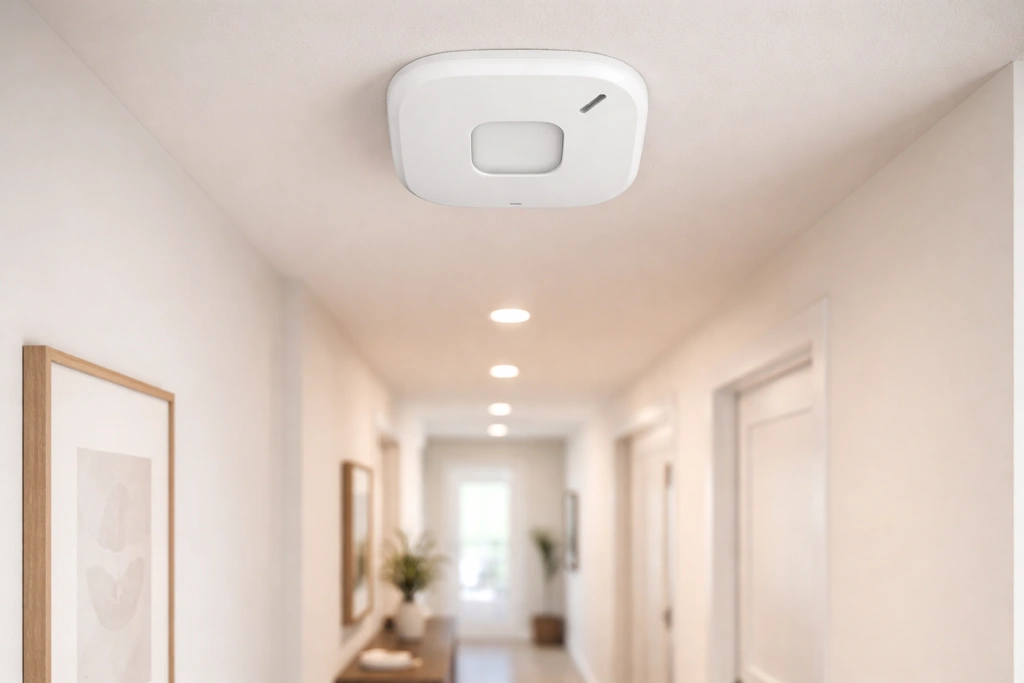
First Alert SC5 Smart Smoke & Carbon Monoxide Alarm
The First Alert SC5 is the logical successor to the discontinued Google Nest Protect—it works with the Nest app, interconnects with existing Nest Protects, and delivers the same smart features. If you already have Nest devices in your parent's home, this integrates seamlessly.
You get phone alerts the moment smoke or carbon monoxide is detected, so you know immediately even if your parent can't call. Voice announcements clearly state the specific danger ("Smoke detected in living room") before the loud alarm sounds, eliminating confusion about what's happening.
The "hush" button silences nuisance alarms from cooking smoke with one press—critical for preventing your parent from disconnecting the alarm entirely out of frustration with false alarms. Interconnection means when one alarm sounds, all compatible alarms sound together, important for parents with hearing loss who might not hear a distant detector.
Low battery notifications go to your phone instead of chirping at 3 a.m. It's not as sleek as the Nest Protect was—more utilitarian than beautiful—but it's a similar size and delivers identical functionality where it matters.
- ✅ Integrates with Nest app and existing Nest Protects for seamless smart home compatibility
- ✅ Phone alerts notify you instantly of smoke or CO detection
- ✅ Voice alerts announce danger type and location before the loud siren
- ✅ Available as both in both wired and wireless models
- ⚠️ Less attractive design than the discontinued Nest Protect
- ⚠️ Requires Wi-Fi setup and app configuration
- ⚠️ Hardwired version needs professional installation if replacing battery units
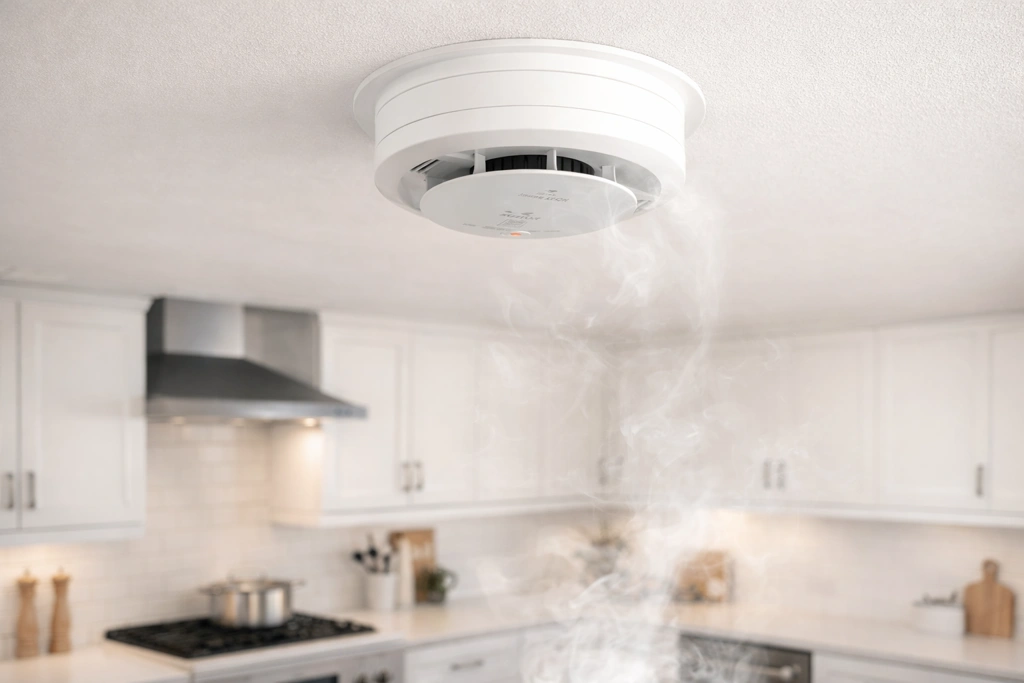
Kidde Smoke + Carbon Monoxide Alarm with Smart Features, Hardwired with Battery Backup
If your mother's home already has hardwired smoke detectors (most homes built after 1990 do), the Kidde smart alarm is an excellent, affordable upgrade. It's from a brand that's been in the fire safety business for over a century, and it's designed to be a no-nonsense, reliable workhorse.
This model connects to your home's 120V electrical system and has a sealed 10-year lithium battery backup. That means even if the power goes out, the detector keeps working. And your mother never, ever has to climb a ladder to change a battery. That alone is worth the upgrade.
Setup is refreshingly simple. You scan a QR code on the detector with your phone, and it connects to the Kidde app. No hub, no complicated pairing process. Just scan and go.
You get phone notifications for smoke, CO, and low battery warnings. The voice alert tells you the specific danger ('Fire!' or 'Warning: Carbon Monoxide!'), which is helpful for your mother to know what she's dealing with.
If you install multiple Kidde alarms in the house and interconnect them, the app will tell you which specific alarm went off. That's a smart feature if you're dealing with a larger home.
The downside is that this model requires hardwired connections. If your mother's home only has battery-powered detectors, you'll need an electrician to install this, which adds to the cost. And the app is pretty basic-it sends alerts, but it doesn't have the extra polish or features you'll find in the Nest Protect.
Like all smart detectors, it needs a stable Wi-Fi connection. If her internet is spotty, this won't work reliably.
- ✅ Provides reassurance by sending critical safety alerts from a trusted, century-old fire safety brand to your phone.
- ✅ Setup is simple for you; just scan a QR code on the alarm to connect it to the app with no complex hubs needed.
- ✅ The hardwired power with a 10-year battery backup ensures it is always working, eliminating any worry about your mother needing to change batteries.
- ✅ If you have multiple interconnected Kidde alarms, a notification will tell you exactly which alarm initiated the warning.
- ⚠️ This model requires existing 120V hardwired connections, making it unsuitable for homes without the necessary ceiling wiring.
- ⚠️ The app is focused solely on alerts and lacks the extra features, like a nightlight, found in more premium models.
- ⚠️ Alerts are dependent on your mother's home Wi-Fi network. Avoid if her internet connection is unreliable.
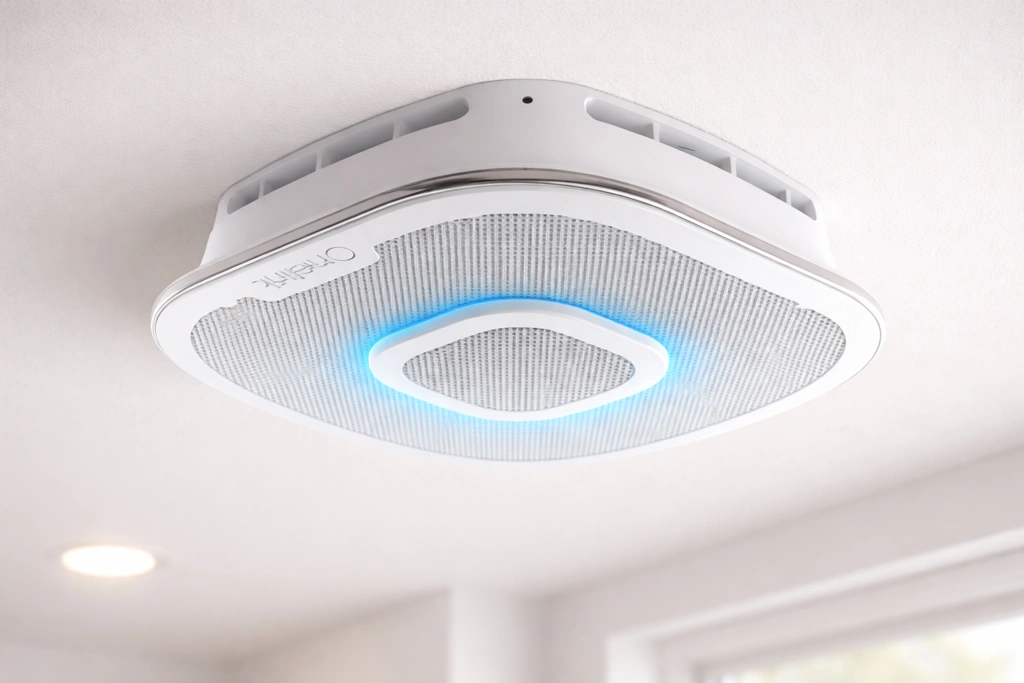
First Alert Onelink Safe & Sound
The First Alert Onelink Safe & Sound combines a smoke and carbon monoxide detector with a premium speaker and Alexa integration—turning your safety device into a smart home hub. You get phone alerts when smoke or CO is detected, plus voice announcements before the alarm sounds, but you also get genuinely good audio quality for music, audiobooks, and hands-free calling.
The hands-free calling is the key feature for elderly parents. "Alexa, call my daughter" works from anywhere in the room without finding a phone. Your parent can also ask Alexa to set medication reminders, play music, or control other smart devices, all from a detector that's already ceiling-mounted in a central location.
It's hardwired with a 10-year battery backup and interconnects with other First Alert or BRK detectors. The app sends low-battery notifications to your phone, eliminating confusing 3 a.m. chirps.
For tech-comfortable seniors, this is excellent multi-function device. For those who struggle with technology, you're paying for features they may never use.
- ✅ Premium speaker quality for music and audiobooks, plus hands-free Alexa calling
- ✅ Phone alerts and voice announcements for smoke/CO detection
- ✅ Hardwired with 10-year battery backup maintains operation during outages
- ✅ Medication reminders and smart home control through Alexa voice commands
- ⚠️ Expensive at $300 compared to standard smart detectors
- ⚠️ Requires setup of both First Alert and Alexa apps
- ⚠️ Smart features depend on reliable Wi-Fi connection
Smart Detector Installation Checklist
- Check if your mother's home has hardwired detectors (most homes built after 1990 do). If yes, consider the Kidde model. If no, choose a battery-powered option.
- Test her Wi-Fi signal strength in the areas where detectors will be installed. Smart detectors need a reliable 2.4 GHz connection.
- Download the detector's app on your phone before you visit to streamline setup.
- If installing multiple detectors, buy the same brand so they can interconnect and share alerts.
- Install at least one detector on every floor, including the basement. Place one outside each sleeping area.
- Mount detectors on the ceiling or high on the wall (within 12 inches of the ceiling), as smoke and CO rise.
- Avoid installing detectors near windows, doors, or vents where drafts can interfere with sensors.
- Run a test after installation to confirm you receive the phone alert. Do this with your mother present so she hears the alarm sound.
- Add a reminder to your calendar to test the detectors every six months (many apps will remind you automatically).
- Write down the installation date and 10-year replacement date on the detector itself with a permanent marker.
Which One Should You Choose?
Here's how I'd make the decision:
If you want the best overall experience and budget isn't a major constraint, get the Google Nest Protect. The voice alerts, the pathway light, and the intuitive app make it the most thoughtful option. It's the one I'd install for my own mother.
If your mother's home has hardwired detectors and you want a reliable, affordable upgrade from a trusted brand, go with the Kidde. It's a smart choice that won't break the bank, and you'll never worry about battery changes.
If you want a simple, no-frills option from a well-known name, the First Alert Onelink is solid. It's not flashy, but it works, and the 10-year sealed battery is convenient.
If budget is tight and you just need the core functionality-alerts on your phone-the X-Sense SC07-W is the smart pick. It's affordable, easy to install, and gets the job done.
No matter which one you choose, the important thing is to act. Winter is when carbon monoxide poisoning spikes, and every week you wait is another week of unnecessary risk.
You can't be at your mother's house 24/7. But with a smart detector, you don't have to be. You'll know the moment something goes wrong, and that peace of mind is priceless.
A Few Final Thoughts on Carbon Monoxide Safety
Installing a smart detector is the single most important step, but it's not the only thing you should do this winter.
Schedule a furnace inspection if your mother hasn't had one in the last year. A cracked heat exchanger is one of the most common sources of CO leaks, and a qualified HVAC technician can spot it before it becomes dangerous.
If she uses space heaters, make sure they're modern models with automatic shut-off features. Old, unvented space heaters are a significant CO risk.
Check that all gas appliances (stove, dryer, water heater) are vented properly. If you see soot around the appliance or a yellow, flickering flame instead of a blue one, call a professional.
And remind your mother-gently-that symptoms like headaches, dizziness, nausea, or confusion, especially if they improve when she leaves the house, could be a sign of CO exposure. Those symptoms are easy to dismiss as 'just feeling under the weather,' but they're worth taking seriously.
The smart detector gives you the alert. These other steps reduce the chances you'll ever get one.