The decision comes down to three variables: how much information you need, how much intrusion your parent will tolerate, and how quickly you need to be alerted. Cameras feel invasive. Constant phone calls erode trust. But silence breeds anxiety-especially overnight when falls are most dangerous.
Bed and chair sensors for elderly parents sit in the middle ground. They answer one critical question: Is Mom up? That single data point-knowing she's risen from bed at 2 a.m. or hasn't left her chair in six hours-can be the difference between preventable harm and timely intervention.
This guide compares sensor types, decodes what alerts actually mean, and walks through four proven systems that balance effectiveness with dignity. No complex smart home integration required. No subscription fees. Just straightforward elderly activity monitoring that works the day you plug it in.
Beyond Cameras: A Better Way to Keep Tabs With Dignity
The core tension: Your mother needs monitoring. She refuses to be watched. Cameras capture everything-which is precisely the problem. They record bathroom trips, private conversations, and moments of vulnerability no adult wants witnessed.
Pressure sensors eliminate the surveillance feeling while preserving the safety function. They detect presence or absence, not activity details. Your parent sits down-sensor knows. They stand up-sensor alerts. What they're wearing, who they're talking to, what they're doing: invisible to the system.
This narrow data stream serves a narrow purpose: fall prevention and activity confirmation. You gain reassurance. They keep privacy. The exchange feels fair, which matters when convincing independent seniors to accept any monitoring at all.
How Do Bed and Chair Sensors Actually Work? (The Simple Version)
Three components: pad, cord, alarm unit. The pad goes under the mattress sheet or chair cushion. When your parent sits or lies down, their weight completes a circuit. When they rise, the circuit breaks-triggering the alarm within 1-3 seconds.
No batteries in the pad itself. No calibration screens. No app pairing. The technology is deliberately simple: pressure on equals circuit closed, pressure off equals alert. Most systems use a corded connection between pad and alarm, eliminating wireless interference or connectivity troubleshooting.
Range matters for placement flexibility. Alarm units typically need to stay within 6-10 feet of the sensor pad unless you choose a pager-style system with extended range. Check cord length before committing-moving furniture to accommodate a 3-foot tether defeats the non-intrusive purpose.
What a Sensor Can Tell You (and What It Can't)
Sensors detect: Exit from bed or chair. Duration of absence (if alarm remains active). Return to seated/lying position (when pressure resumes).
Sensors do NOT detect: Direction of movement after standing. Whether a fall occurred. Health emergencies while seated. Activity in other rooms. The difference between a bathroom trip and a fall in the hallway.
Understanding these limits shapes realistic expectations. A bed exit alarm for seniors tells you your mother got up at 3 a.m.-not whether she made it safely to the bathroom. That's still more information than you had, and enough to prompt a check-in call or in-person visit if the timing seems unusual.
False positives happen: pets jumping on furniture, someone sitting briefly to deliver mail, restless sleepers shifting position. Most systems allow sensitivity adjustment to reduce nuisance alerts.
The Main Types of Occupancy Sensors to Consider
Wired alarm systems: Corded connection between pad and alarm unit. Loudest alert options (some exceed 90 decibels). Typically the most affordable. Best for situations where the caregiver is in the same home or nearby room.
Wireless pager systems: Sensor pad connects to a small alarm unit; caregiver carries a separate pager. Extended range (100+ feet in some models) allows monitoring from different floors or even neighboring properties. Higher cost but greater flexibility.
Dual-pad bundles: One alarm unit supports both bed and chair sensors. Efficient for comprehensive coverage. Requires checking which input triggered the alert-usually indicated by different tones or LED lights.
Standalone smart home sensors for seniors exist but require WiFi, app management, and smartphone comfort-dealbreakers for many aging parents and their caregivers seeking plug-and-play simplicity.
How to Talk to Your Parent About Using a Sensor (Without a Fight)
Start with your anxiety, not their limitation: 'I'm having trouble sleeping because I worry about you at night' positions the sensor as solving your problem, not fixing their deficiency. This framing reduces defensiveness.
Emphasize the minimal intrusion: Compare it explicitly to cameras or scheduled check-in calls. 'This just tells me you're up-it doesn't watch you or interrupt your day' clarifies the boundary.
Offer a trial period: 'Let's try it for two weeks. If you hate it, we'll return it' removes the feeling of permanent surrender. Many parents discover they don't notice the sensor after initial adjustment.
Let them control the narrative: If they want to tell friends it's for your peace of mind rather than their safety, agree enthusiastically. Pride protection matters more than whose idea it was.
Timing matters: Introduce the conversation days or weeks after an incident when emotions have settled but memory remains fresh. Immediately after a fall reads as opportunistic. Six months later loses urgency.
Replacing Anxiety with Reassurance
Non-intrusive senior monitoring doesn't eliminate every risk-nothing does short of 24-hour in-person supervision, which carries its own costs to independence and dignity. But bed and chair sensors for elderly parents address the specific anxiety that haunts dutiful daughters at 3 a.m.: Is she okay right now?
The answer arrives as data, not speculation. You know she got up. You know she returned to bed after 8 minutes, suggesting a successful bathroom trip. Or you know she's been in her chair for five hours straight, prompting a phone call to suggest a walk. These aren't invasions-they're information.
Compare the four systems based on your specific situation: dual-sensor bundle for comprehensive coverage, single-pad system for focused monitoring, portable chair alarm for wheelchair users, wireless pager for multi-floor homes. All accomplish the same core function with different trade-offs in coverage, flexibility, and complexity.
Order, install, test the alert, then breathe slightly easier. You still can't prevent every fall. But you've closed the gap between incident and awareness-and that margin often determines outcome.

Smart Caregiver Bed and Chair Exit Alarm System with Bed and Chair Sensor Pads
A dual-sensor bundle that covers both sitting and sleeping positions with a single alarm unit. The system includes two pressure pads-one 10x15 inch for beds, one smaller for chairs-both connecting to a central monitor with adjustable volume control. The alarm sounds when pressure releases from either pad, with distinct tones identifying which location triggered the alert.
Setup requires no tools: slide the bed pad under the fitted sheet near where hips rest, place the chair pad under the seat cushion, plug cords into the monitor. The unit runs on AC power with 9V battery backup for brief outages. Cord length limits placement to within roughly 6 feet of an outlet, which works for most bedroom and living room configurations but may require extension cords in larger spaces.
At $79.95 with a 4.3/5 rating, this represents the comprehensive option for caregivers monitoring multiple rest locations without investing in separate systems.
- ✅ Two sensor pads with single alarm unit for full coverage
- ✅ Distinct alert tones identify bed vs. chair exits
- ✅ Battery backup maintains function during power interruptions
- ⚠️ Corded design limits placement flexibility
- ⚠️ Alarm only alerts within hearing range-no remote notification

Smart Caregiver Bed and Chair Sensor Pad with Alarm
This single-pad system focuses on one monitoring location-you choose bed or chair based on where falls pose the greatest risk. The 10x30 inch pad works equally well under mattresses or seat cushions, with a pressure threshold that accommodates users from 70 to 300+ pounds. The alarm monitor offers four volume settings from gentle chime to 90+ decibel alert, plus an optional vibration mode for hearing-impaired caregivers.
The monitor includes a delay function (0-45 seconds) that prevents false alarms when your parent briefly shifts weight or stands momentarily before sitting back down. This feature significantly reduces nuisance alerts compared to instant-trigger systems, though it also means a 45-second window before you're notified of an actual exit.
Rated 4.4/5 at $89.95, this costs slightly more than the dual-pad bundle but offers additional customization for single-location monitoring needs.
- ✅ Adjustable delay reduces false alarms from brief movements
- ✅ Vibration mode aids caregivers with hearing limitations
- ✅ Large pad size fits most beds and oversized chairs
- ⚠️ Monitors only one location per unit
- ⚠️ Delay function may postpone urgent alerts by up to 45 seconds
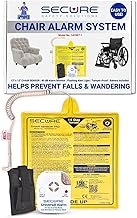
Chair Exit Alarm and Wheelchair Monitor with Pressure Sensor Pad for Fall Prevention
Designed specifically for chair and wheelchair monitoring, this compact system weighs just 4.6 ounces and mounts directly to furniture or wheelchair frames using an included bracket. The thin sensor pad slides under any seat cushion, detecting exits within 2 seconds of pressure release. The alarm unit emits a 100-decibel alert-loud enough to hear from adjacent rooms.
The lightweight design suits wheelchairs that move between rooms, as the entire system travels with the chair without adding bulk. A single AAA battery powers both sensor and alarm for approximately 2-3 months, eliminating outlet dependency but requiring periodic battery changes. The unit automatically resets once your parent returns to the seated position.
At $42.99 with a perfect 5.0/5 rating, this represents the budget-conscious option for dedicated chair monitoring, particularly valuable for wheelchair users or recliners where bed sensors aren't relevant.
- ✅ Portable design ideal for wheelchairs that move between rooms
- ✅ Battery-powered operation requires no outlet access
- ✅ Lowest price point among reviewed systems
- ⚠️ Chair-only functionality-no bed monitoring option
- ⚠️ Requires battery replacement every 2-3 months
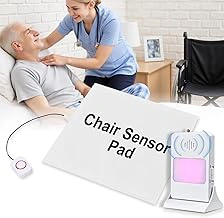
Chair Motion Sensor Pad and Pager for Fall Prevention
The pager system extends monitoring range up to 150 feet through walls and floors, allowing caregivers to move freely throughout a home or even into yards while remaining alerted. The chair sensor pad connects wirelessly to a small alarm unit, which then transmits to a belt-clip pager carried by the caregiver. When your parent stands, the pager vibrates and beeps, displaying which sensor triggered the alert if you're monitoring multiple locations.
This wireless architecture eliminates visible cords that some seniors find institutional-looking, and the extended range solves the common problem of not hearing alarms from different floors. The tradeoff: higher complexity with three devices requiring battery management (sensor, alarm base, pager). Interference from thick walls or metal structures can occasionally disrupt the signal.
At $39.99 with a 4.4/5 rating, this offers remote alerting capability at a competitive price point for caregivers needing mobility.
- ✅ 150-foot range enables monitoring from different floors or outdoors
- ✅ Wireless pager provides mobile alerts wherever caregiver moves
- ✅ Eliminates visible cords between sensor and alarm unit
- ⚠️ Requires managing batteries in three separate devices
- ⚠️ Wireless signal can be disrupted by thick walls or metal framing