We may earn a commission when you buy through links on this page, at no extra cost to you. How this works.
You're facing a decision matrix with three competing priorities: your parent's safety, their independence, and your own ability to sleep at night. Cameras feel intrusive, daily phone calls become stressful checkboxes, and unannounced visits strain everyone. Motion sensor systems occupy the middle ground.
These devices detect movement in key areas without recording images. You learn whether your parent is up and moving at expected times. If the bathroom sensor hasn't triggered by 10 AM on a Tuesday, or the bedroom shows activity at 3 AM nightly, you receive an alert. Your parent avoids feeling watched, and you gain actionable information.
The systems below range from simple entry alerts to pattern-learning networks. Compare based on installation complexity, alert methods, coverage needs, and ongoing costs.
Fit and safety come first
Use the comparison as a shortlist, but keep fit, comfort, and any health or safety constraints ahead of price.
How Do Camera-Free Monitoring Systems Actually Work?
Motion sensors use passive infrared (PIR) technology to detect heat signatures when someone moves through a zone. Unlike cameras, they can't identify who moved or what they're doing - they simply register that movement occurred in a specific location at a specific time.
Basic systems trigger immediate audible or phone alerts. More sophisticated options log activity patterns and notify you only when routines deviate. Place sensors near the bed, bathroom entrance, kitchen, and exits to map daily rhythms. If the kitchen sensor normally triggers between 7 - 8 AM but stays quiet until noon, you receive notification.
Most systems communicate wirelessly to a hub or directly to your phone. Battery-powered sensors avoid electrical work. Range limits and physical barriers affect reliability, so check specifications against your parent's floor plan before purchasing.
Our Top 4 Motion Sensor Systems for Independent Seniors
These four options represent different approaches to passive monitoring. The first integrates with a broader security ecosystem. The second provides immediate local alerts. The third focuses specifically on bed and bathroom safety. The fourth offers the simplest possible entry monitoring.
None require cameras or monthly fees to function, though some offer optional paid features. All use battery power and wireless communication. Compare them side-by-side based on which rooms you need to monitor, whether you want smartphone integration, and your parent's receptiveness to technology.
How to Talk to Your Parent About a Monitoring System
The technology matters less than the conversation. Your mother likely fears these sensors represent the first step toward losing her home and independence. Frame the discussion around her goals, not your anxiety.
Ask what would help her feel safer living alone. Does she worry about falling and not being found? Does she want confirmation that she locked the door? Position sensors as tools that support her autonomy, not surveillance you're imposing. Emphasize that these systems don't record images or track details - they simply confirm activity.
Offer a trial period with one or two sensors in agreed-upon locations. Let her experience the system without commitment. Respect refusal, but revisit after the next concerning incident when she may be more receptive. Involve her in choosing sensor placement so she maintains control over which areas remain private. The goal is collaborative problem-solving, not covert monitoring.
Finding the Right Balance of Safety and Autonomy
The best motion sensor system is the one your parent accepts. If they resist smartphone-connected devices but tolerate a simple door chime, start there. A partial monitoring solution they approve beats a comprehensive system they unplug.
Match the technology to the actual risk level. Recent falls demand more immediate alert systems. General anxiety about daily welfare suggests simple activity confirmation. Adjust as circumstances change - the system appropriate today may need expansion if mobility declines.
Review settings periodically. Alert thresholds that made sense initially may need adjustment as routines evolve. These systems work best as collaborative tools in ongoing conversations about aging in place, not surveillance imposed by worried children. Check side-by-side to see which features align with your family's specific needs and communication style.
Key Features to Compare in a Senior Motion Sensor System
- Alert delivery method: audible chime only, smartphone notifications, or both
- Detection range and sensor placement flexibility for your parent's home layout
- Battery life and low-battery warnings to prevent coverage gaps
- Hub requirements versus direct Wi-Fi connection to reduce failure points
- Multiple sensor support if monitoring several rooms or entry points
- Adjustable sensitivity to reduce false alarms from pets or HVAC airflow
- Monthly subscription fees versus one-time purchase costs
- Setup complexity and whether professional installation is needed
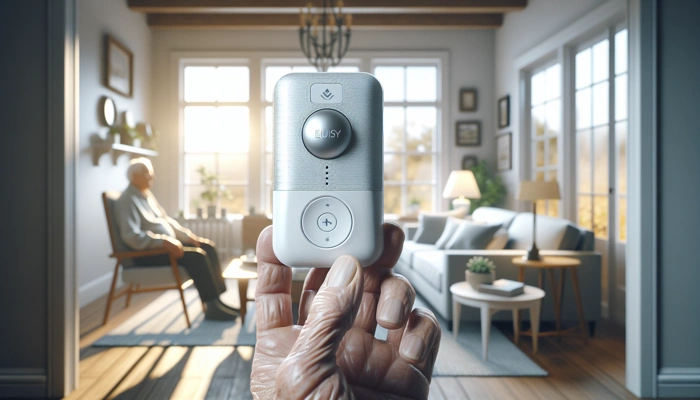
eufy Security Motion Sensor for Home Alarm System
This sensor works as part of the eufy Security ecosystem, connecting to a HomeBase hub that manages alerts and automation. The motion detector uses PIR technology with adjustable sensitivity and integrates with eufy's app for remote notifications. Battery life extends up to two years depending on activity levels.
The system shines when you want expandable coverage. Add door sensors, keypads, or other eufy devices to the same hub. Imagine your mother's apartment with sensors at the bedroom, bathroom, and front door - all reporting to one dashboard on your phone. You set quiet hours so nighttime bathroom trips don't wake you, but receive alerts if the front door opens after 10 PM.
The tradeoff is complexity. You need the HomeBase hub and familiarity with app configuration. If your parent already uses eufy products or you want a system that grows with changing needs, the integration justifies the learning curve. For monitoring just one or two zones without smartphone features, simpler options may suffice.
- ✅ Integrates with eufy ecosystem for expandable multi-room coverage
- ✅ Two-year battery life reduces maintenance visits
- ✅ Adjustable sensitivity minimizes false alarms
- ⚠️ Requires HomeBase hub adding cost and setup complexity
- ⚠️ App configuration may overwhelm less tech-savvy family members
- ⚠️ Works only within eufy product family limiting flexibility
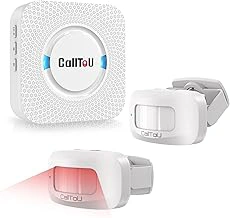
CallToU Wireless Motion Sensor Alarm & Door Chime
This system provides immediate audible alerts through a wireless receiver when motion is detected. The receiver plugs into a standard outlet and chimes whenever the sensor triggers. Multiple sensors can pair with one receiver, and volume adjusts across five levels. The sensor detects movement up to 26 feet away with a 110-degree field of view.
The appeal is simplicity. Your father hears a chime in his bedroom when someone enters the living room or approaches the front door. If he lives with a caregiver who arrives mornings, the chime confirms their presence without him needing to get up. For you as the distant adult child, this system won't send smartphone alerts - it's designed for local awareness.
This works best when your parent has good hearing and wants to know when movement occurs in their home, or when a live-in aide needs alerts about wandering. It won't help you monitor remotely from across town. Pair it with scheduled check-in calls rather than expecting digital notifications.
- ✅ No hub or app needed for immediate plug-and-play operation
- ✅ Multiple sensors connect to one receiver for whole-home coverage
- ✅ Adjustable volume suits different hearing levels and room sizes
- ⚠️ Provides only local audible alerts without smartphone notifications
- ⚠️ Requires recipient to hear and recognize the chime meaning
- ⚠️ No activity logging or pattern tracking for routine monitoring
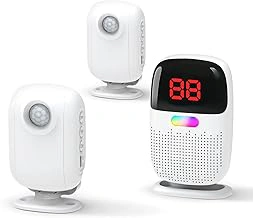
PILSAMAS Wireless Bed Alarms with Digital Sensor Display, Pager & Motion Sensors
This system focuses specifically on fall prevention and nighttime safety. The kit includes pressure sensors for beds or chairs, motion sensors for rooms, and a wireless pager that vibrates or sounds when triggered. The receiver displays which sensor activated, helping caregivers respond appropriately. Range extends up to 500 feet in open space.
Picture your mother recovering from hip surgery, unsteady during nighttime bathroom trips. Place the pressure sensor on her bed and a motion sensor in the hallway. When she stands up, the pager vibrates in your guest room down the hall, giving you seconds to assist before she navigates stairs alone. The system targets specific high-risk moments rather than general monitoring.
The setup assumes someone is nearby to respond - either you staying temporarily or a live-in caregiver. It won't send alerts to your phone across town. The focus on pressure sensing and immediate response makes this ideal for short-term recovery periods or situations where fall risk demands split-second intervention.
- ✅ Combines pressure and motion sensing for comprehensive fall prevention
- ✅ Pager vibration allows silent nighttime alerts without waking parent
- ✅ 500-foot range covers most single-family homes and apartments
- ⚠️ Requires caregiver physically present to respond to alerts
- ⚠️ No smartphone integration or remote monitoring capabilities
- ⚠️ More sensors and components than needed for simple activity awareness
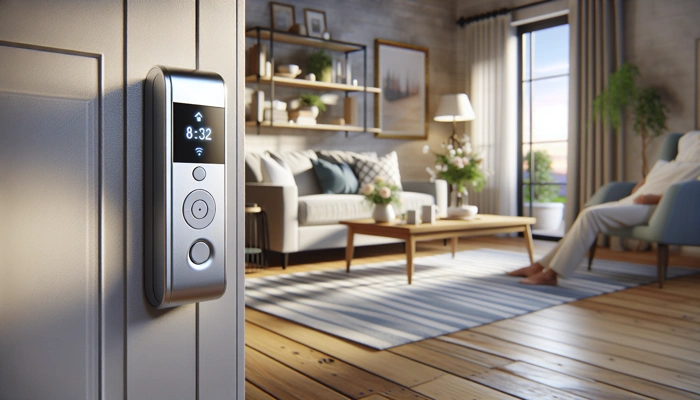
Wireless Motion Sensor Door Chime Business Entry Doorbell
Originally marketed for retail use, this straightforward system pairs a motion sensor with a plug-in chime that sounds when someone enters the detection zone. The sensor mounts easily with adhesive or screws, detects movement up to 26 feet away, and offers 38 chime sounds. The receiver operates within 1,000 feet line-of-sight range.
The strength is extreme simplicity at minimal cost. Your father with early dementia sometimes forgets he left through the back door. Mount this sensor by that exit, and when he passes through, the distinctive chime alerts him or his daytime companion. It serves as a gentle reminder system rather than sophisticated monitoring.
This won't track patterns or send you data. It's an audible indicator that movement occurred in one specific spot. Use it to reinforce awareness at key thresholds - medication cabinet, exit doors, or the basement stairway. For remote adult children needing digital updates on daily routines, other options provide more information. For local alerts about specific boundaries, this delivers at the lowest price point.
- ✅ Lowest cost entry point for basic motion detection alerts
- ✅ 1,000-foot range covers large properties and multi-story homes
- ✅ 38 chime options help distinguish between multiple sensor locations
- ⚠️ Designed for entry detection not comprehensive activity monitoring
- ⚠️ Local alerts only with no smartphone or remote caregiver notifications
- ⚠️ Single-purpose functionality without pattern learning or logging