We may earn a commission when you buy through links on this page, at no extra cost to you. How this works.
Advertised vacuum weight rarely matches the feeling you get when you actually push, lift, or maneuver the machine around furniture. A stick vacuum marketed as "ultra-light" might quote a 4-pound spec, but that number often excludes the battery - or reflects only the handheld unit without the wand attached. When you pick it up to clean stairs or reach under a bed, the full assembly can feel significantly heavier.
Balance matters more than the number on the box. A vacuum with the motor mounted near the floor glides easily and requires minimal wrist effort to steer. If the motor and dustbin sit above the handle, that same 5-pound vacuum pulls your arm down and tires your shoulder faster. Grip placement also shifts the load: a trigger-style handle forces constant finger pressure, while a loop or top-mount grip lets you guide with an open palm.
Lifting is not the same as maneuvering. You might lift a vacuum once to carry it upstairs, but you push, pivot, and tilt it dozens of times during a single cleaning session. A well-balanced model with a low center of gravity will feel lighter in use than a top-heavy design, even when both weigh the same on a scale. Throughout this guide, we compare vacuums on total weight with battery installed, the location of the motor and dustbin, and how the handle design affects control during real-world tasks.
Quick comparison
| Bissell 3061 Featherweight Cordless Self-Standing Stick Vacuum | Check current price and availability |
| Cordless Stick Vacuum with Auto-Adjust Suction and 110-Min Runtime | Check current price and availability |
| Cordless Stick Vacuum with Hurricane Mode, 70-Min Runtime, Self-Standing | Check current price and availability |
Fit and safety come first
Use the comparison as a shortlist, but keep fit, comfort, and any health or safety constraints ahead of price.
Key Specs to Compare Side by Side
- Total weight including battery and main floor head attachment
- Battery runtime on lowest suction setting (where most daily cleaning happens)
- Self-standing design or requires wall mount and bending to store
- Trigger hold versus single-press toggle power button
- Dustbin release mechanism: button location and force required
- Swivel head range and whether it locks for control or spins freely
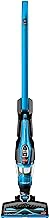
Bissell 3061 Featherweight Cordless Self-Standing Stick Vacuum
The Bissell 3061 Featherweight weighs less than most cordless stick vacuums on the market, making it the easiest option to carry up stairs or move between rooms without strain. At $144.99, it costs significantly less than heavier models while delivering the core benefit many seniors prioritize: minimal physical effort during use.
This vacuum stands upright on its own, so you don't need to lean it against furniture or hold it between passes. The controls are straightforward - one button to power on, no modes to cycle through or settings to remember. For someone managing a small apartment or vacuuming one room at a time, the simplicity removes unnecessary decision points.
The tradeoff for the reduced weight is a smaller dustbin that fills quickly on larger jobs, and the runtime is shorter than heavier competitors. Suction power is adequate for low-pile carpet and hard floors but won't match the deep-cleaning capability of bulkier cordless models. If you vacuum daily in short bursts rather than tackling an entire home in one session, these limitations matter less.
Balance feels neutral because the motor and battery sit low in the handle. Your wrist doesn't fight to keep the head down on flat surfaces, and the reduced weight means less fatigue even if you need to reach under furniture or clean above floor level. The smaller footprint also makes storage easier in closets with limited space.
This model fits best when weight is the deciding factor and your cleaning routine involves frequent, shorter sessions across smaller square footage. It won't replace a full-size vacuum for deep weekly cleaning of a large home, but it handles daily maintenance without the arm and shoulder strain that heavier cordless sticks can cause.
- ✅ Lightest option in this comparison, easiest to carry and maneuver
- ✅ Self-standing design - no need to prop against walls
- ✅ Simple one-button control with no complicated settings
- ✅ Priced lower at $144.99 compared to heavier models
- ⚠️ Smaller dustbin requires more frequent emptying
- ⚠️ Shorter runtime limits whole-home cleaning in one session
- ⚠️ Less suction power than heavier cordless vacuums
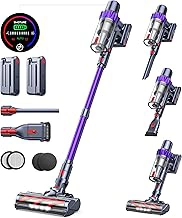
Cordless Stick Vacuum with Auto-Adjust Suction and 110-Min Runtime
A cordless vacuum that runs for 110 minutes between charges makes sense when memory or routine habits become inconsistent. This model delivers nearly two hours of runtime and uses auto-adjust suction to match carpet pile or hard flooring without pressing a mode button each time you move between rooms.
Auto-adjust works through a sensor that detects floor type and adjusts motor speed automatically. The feature adds a small amount of circuitry but doesn't noticeably increase weight or motor noise during operation. Instead of toggling settings mid-clean, the vacuum shifts power on its own when it rolls from tile onto a rug.
At $159.99, this vacuum sits in the same price range as the Bissell but trades some in-hand nimbleness for extended battery life. The longer runtime means your parent can vacuum multiple rooms or forget to dock the unit for a day without ending up with a dead battery at the start of the next cleaning session. If they tend to leave the vacuum in a closet rather than on a charging stand, the 110-minute capacity offers a practical buffer.
The tradeoff comes down to how often charging becomes a friction point. Shorter runtime models require consistent docking habits. This vacuum reduces that pressure but may feel slightly less maneuverable in tight corners because of the larger battery pack. Compare grip diameter and balance when you hold it at waist height - some users find the extra rear weight tiring during extended use, while others appreciate the stability it provides when pushing forward.
The auto-adjust feature proves most useful for households with mixed flooring. If your parent moves between hardwood, low-pile area rugs, and tile without pausing to think about suction settings, the sensor handles those transitions smoothly. For homes with only one floor type, the feature becomes less critical, and a simpler manual model may suffice.
- ✅ 110-minute runtime reduces charging frequency
- ✅ Auto-adjust suction removes need to toggle settings between floor types
- ✅ Useful buffer if charging is forgotten for a day
- ⚠️ Larger battery pack may shift balance toward the rear
- ⚠️ Auto-adjust feature adds little value in single-surface homes
- ⚠️ Slightly less maneuverable in tight spaces compared to shorter-runtime models
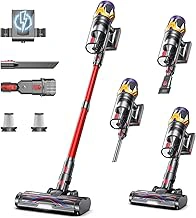
Cordless Stick Vacuum with Hurricane Mode, 70-Min Runtime, Self-Standing
This cordless stick vacuum carries a 4.7 rating and markets a "Hurricane Mode" suction setting alongside a 70-minute runtime and self-standing design. For seniors evaluating whether higher suction power justifies the choice, the practical question is whether that extra mode adds weight to the body, strain during use, or grip difficulty when switching settings.
Hurricane Mode typically refers to a maximum suction boost intended for deep pile carpet or pet hair embedded in fabric. Most senior users vacuuming hardwood, low-pile carpet, or area rugs will find standard suction adequate and less taxing on the wrist. The feature becomes relevant if your parent manages a home with pets that shed heavily or thicker wall-to-wall carpet that traps debris. In those cases, the option to increase power occasionally can reduce the need for multiple passes.
The 70-minute runtime stands out in this category, offering enough battery life to cover larger single-story homes or multiple rooms without returning to the charger mid-task. Longer runtime also means less frequent charging cycles, which can help if your parent forgets to dock the vacuum after use. Confirm that the battery weight does not shift the balance point too far back, making the handle feel heavier during overhead reach or under-furniture angles.
Self-standing capability addresses a common frustration: needing to lean the vacuum against furniture or lay it flat when pausing to move an object. A stable upright stance lets users release the handle without bending to set it down or worrying about it tipping. Check that the self-standing mechanism engages easily and does not require a forceful click or foot lever that could be awkward on carpet.
At $159.99, this model sits in the mid-range for cordless stick vacuums. The 4.7 rating suggests general user satisfaction, but ratings alone do not confirm whether the unit feels light in hand or whether the handle grip suits arthritic fingers. Before choosing based on the high rating and hurricane label, verify the actual weight specification, measure the grip diameter if possible, and consider whether your parent will realistically use the maximum suction mode or simply appreciate the longer runtime and hands-free standing feature for everyday cleaning.
- ✅ 70-minute runtime covers larger spaces without mid-task recharging
- ✅ Self-standing design lets users release the handle without bending or propping
- ✅ Hurricane Mode option available for homes with heavy pet shedding or thick carpet
- ⚠️ Maximum suction mode may add wrist strain and is often unnecessary for typical senior cleaning tasks
- ⚠️ Actual weight and balance not specified; battery size for long runtime may shift center of gravity
- ⚠️ High rating does not confirm grip comfort or ease of control for users with arthritis
What Makes a Cordless Vacuum Actually Easy to Use
Total weight matters less than you'd think once you start using a cordless stick vacuum for more than a few minutes. A five-and-a-half-pound model with the motor positioned low near the floor head often feels lighter in your hand than a four-pound unit with the battery and motor stacked up near the grip. That difference comes down to balance point - the spot where the vacuum naturally wants to pivot when you lift it.
Center of gravity plays a bigger role in day-to-day comfort than the number on the box. When the heaviest components sit closer to the floor, you spend less energy holding the handle upright, and your wrist stays in a more neutral position during use. Models with top-mounted batteries or motors require constant upward pressure to keep the cleaning head flat against the floor, which adds up quickly if you're moving between rooms or reaching under furniture.
Trigger versus toggle power control becomes important if you have arthritis or reduced grip strength. A squeeze trigger demands continuous finger pressure for the entire cleaning session, which can cause hand fatigue within five or ten minutes. A toggle switch lets you click the motor on and leave it running while you move naturally, shifting your grip as needed without losing suction. Some users prefer the control of a trigger; others find the toggle essential for comfort.
Self-standing capability means you can pause mid-task without bending down to lay the vacuum flat or searching for a wall to lean it against. Vacuums that balance upright on their own let you answer the door, move a chair, or take a short break without the extra step of propping the unit somewhere stable. If you clean in stages or need to rest your hand between rooms, a model that stands independently makes the process less disruptive and reduces the number of times you bend or stoop during a session.
How to Test a Vacuum Before You Buy (Or Within the Return Window)
Before you commit to a cordless vacuum, spend ten minutes running a few simple maneuvers that reflect how you'll actually use it at home. Start by lifting the vacuum from the floor to waist height five times in a row - this reveals whether the weight distribution feels manageable or if your wrist or shoulder begins to tire. Next, push it under a coffee table or dining chair to see how the swivel head responds and whether you need to bend or crouch awkwardly. Then extend the wand and reach toward a ceiling corner or curtain rod to check whether the balance shifts uncomfortably or the motor housing feels front-heavy.
Pay attention to your fingers during these moves. If the vacuum uses a trigger-style power control, hold it for thirty seconds to see if your index finger cramps or if the grip angle causes strain. Check the dustbin latch while you're at it - some require a firm pinch or thumb-press that can be frustrating if your hands are stiff or less dexterous. Finally, empty the bin once to confirm the release mechanism is intuitive and that dust doesn't puff back at you.
If your budget allows, consider ordering two models at the same time from retailers that offer 30-day return windows. Comparing them side by side on your own floors and furniture makes differences in weight, balance, and button placement immediately obvious. All three models featured in this guide are sold through retailers with flexible return policies, so you can test with confidence and send back the one that doesn't suit your grip or routine.
The Conversation: How to Suggest a New Vacuum Without Starting a Fight
Sandra knows her mother needs a lighter vacuum, but the moment she suggests it, the conversation turns into a referendum on independence. Many adult children face this same tension: you see a real safety issue, but your parent hears criticism.
The key is to shift the frame away from capability and toward the tool itself. One approach is to position the vacuum as a gift for yourself that you happen to be storing at her house. "I bought this for my place, but I don't have room right now - would you mind if I kept it here and you gave it a try?" This removes the implication that she can't manage her current setup.
Another option is to recruit her as an advisor. Mention your own wrist discomfort or shoulder fatigue and ask her to test the new model so you can get her honest opinion before you commit. Most parents respond well when their experience is valued rather than questioned.
If those feel too indirect, name the problem with the old vacuum rather than her ability to use it. "That corded canister is a tripping hazard for anyone" or "Lifting that heavy base up the stairs is a pain - this cordless stick stays upright and weighs under six pounds." You're critiquing the equipment, not her strength.
Timing matters too. Bring it up after she mentions being tired from cleaning, or when you're already helping with a household task. Avoid the conversation right after a fall or a doctor's visit, when emotions run high and any suggestion feels like proof she's losing ground.
If she resists, let it go for the moment. Plant the idea, then circle back a few weeks later with a specific feature that solves a concrete annoyance she's mentioned. The goal is not to win the argument but to make the switch feel like her choice.
What If She Still Prefers the Old Vacuum?
Some people stay loyal to a vacuum they've used for years, even when a lighter option sits right beside it. If that's the case, the goal isn't to force a switch - it's to make the new cordless stick vacuum the easier choice for everyday pickups.
Rather than storing the old vacuum away, keep it for deep cleaning or carpeted rooms where familiarity matters. Place the lightweight cordless in plain sight - leaning against the kitchen counter, next to the dining table, or in the corner of the most-used room. No mount, no closet, no extra step to retrieve it. When crumbs appear or the floor looks dusty, the cordless becomes the obvious tool within arm's reach.
Acceptance often builds slowly. She may use the old vacuum out of habit the first few times, then reach for the cordless when her wrist is tired or the mess is small. That's normal. Let the lighter weight and simpler setup do the convincing over a few weeks, not a single conversation.
If the cordless still goes unused after a month, revisit the choice together. Weight and balance vary across models, and what feels manageable to one person may still strain another. The right vacuum is the one that actually gets used, even if it takes trial and adjustment to find it.
Frequently Asked Questions
Choosing a lightweight cordless vacuum often raises the same practical questions, especially when comfort and ease-of-use matter most.
What is the actual lightest cordless vacuum currently available?
Among the models covered in this guide, the Bissell Featherweight 3061 carries a stated weight around 3.5 lbs, making it one of the lightest options you can buy. Keep in mind that manufacturer weights sometimes reflect the vacuum body alone, without attachments or a full battery. Even so, this model remains noticeably lighter than most cordless sticks, which typically range from 5 to 7 lbs.
Do cordless vacuums work on thick carpet?
Cordless stick vacuums perform best on hard floors and low-pile rugs. On thick or plush carpet, suction and brush-roll power drop quickly, and the motor may struggle to lift embedded dirt. If you have primarily thick carpet, expect more frequent passes and shorter battery life. For deep-pile surfaces, an upright with stronger suction often delivers better results.
How often do you have to charge them?
Runtime varies by model and power mode. Most lightweight cordless vacuums run between 15 and 40 minutes per charge. If you vacuum a 1,200-square-foot home on standard mode, you may need to recharge every other cleaning session. Using high-power or motorized-brush modes cuts runtime in half. Charging time typically spans 3 to 5 hours, so many users leave the vacuum on the charger between uses.
Can someone with arthritis empty the dustbin?
Dustbin design matters as much as vacuum weight. The Bissell 3061 uses a bottom-release trap door that requires a firm squeeze and downward push; stiff or painful fingers may find that latch uncomfortable. Other models feature one-button ejection or swing-out bins that demand less grip strength. Before you buy, check whether the release mechanism requires thumb pressure, a sliding collar, or a simple push button.
Is a robotic vacuum a better choice?
Robotic vacuums suit scheduled maintenance on hard floors and thin rugs, but they do not replace a stick vacuum. Most robotic models lack the suction to handle debris along this product or under furniture lips, and they require regular emptying and brush cleaning. A lightweight cordless stick offers faster spot cleaning and direct control. For some households, using both tools together works well: the robot maintains daily upkeep, and the stick handles spills and edges.