We may earn a commission when you buy through links on this page, at no extra cost to you. How this works.
Choosing a step stool for an aging parent means balancing two competing needs: reducing fall risk while protecting their independence in the kitchen. The right stool delivers stable reach without creating new hazards, but the tradeoffs are real. A tall handrail offers better support but makes storage awkward. A lightweight frame is easier to move but may feel less stable under weight. Premium models add features like locking mechanisms and wide platforms, yet budget options can still meet core safety requirements when chosen carefully.
This guide compares five kitchen step stools with handrails and non-slip treads, focusing on the attributes that matter most: platform size, weight capacity, handrail design, and storage footprint. Each product serves a different profile. Some prioritize maximum stability with heavy-duty construction. Others emphasize portability for parents who still move confidently around the kitchen. A few split the difference with folding designs that don't compromise platform width.
The decision matrix is straightforward. If your parent reaches overhead cabinets daily and has mild balance concerns, a stool with a fixed handrail and wide platform will feel more secure than a compact folding model. If they need the stool only occasionally and value floor space, a lighter folding design with a removable or swing-away rail makes more sense. Weight capacity matters when the user is larger or when the stool will hold items during use. Tread texture and platform depth affect confidence during the step-up, especially for users with limited ankle mobility.
Each review below includes the specific dimensions, materials, and design choices that define how the stool performs in real use. The goal is to make the tradeoffs visible so you can match the right stool to your parent's current mobility, kitchen layout, and how often they'll actually use it.
Quick comparison
| Arbusb 3-Step Folding Steel Ladder with Wide Anti-Slip Pedals and Handrail | Check current price and availability |
| SocTone 3-Step Folding Steel Ladder with Handle, White | View detailed specs and pricing |
| 3-Step Folding Heavy Duty Ladder with Handrails | See handrail configuration details |
Fit and safety come first
Use the comparison as a shortlist, but keep fit, comfort, and any health or safety constraints ahead of price.
Key Features to Look for in a Senior-Friendly Step Stool
- Non-slip tread surface with raised texture or ribbing for grip even in socks
- Handrail height between 32 - 36 inches for natural arm reach while stepping
- Weight capacity of at least 300 pounds for confident support
- Wide tread depth (10+ inches) to accommodate full foot placement
- Folding mechanism that locks securely and releases without pinching
- Rubber foot caps to prevent floor scratching and stool sliding
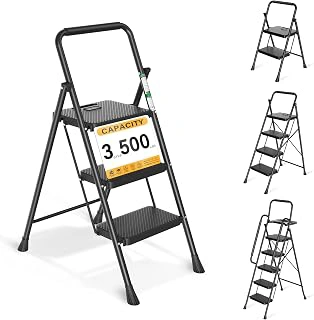
Arbusb 3-Step Folding Steel Ladder with Wide Anti-Slip Pedals and Handrail
The Arbusb 3-Step Folding Steel Ladder offers wide anti-slip pedals and a fixed handrail at $46.97, making it a budget-friendly option for aging parents who need extra stepping surface and lateral support. The steel frame provides a stable base, and the folding design allows it to tuck into a pantry or utility closet when not in use.
Each pedal measures wider than standard step-stool treads, giving users more room to position their feet during ascent and descent. The textured, non-slip surface covers the full width of each step, which helps reduce the chance of a foot sliding during weight transfer. The handrail runs vertically along one side, offering a grip point at multiple heights as you climb.
The three-step configuration reaches cabinet shelves and upper storage without requiring a taller ladder, and the folding mechanism locks open with a simple latch. When folded, the unit stands upright and occupies less floor space than non-folding models, though the wider pedal design does add a few inches to the overall footprint compared to narrower stools.
The steel construction keeps the frame rigid under load, but the trade-off is weight - this stool is heavier to move from room to room than aluminum or plastic alternatives. The handrail is fixed rather than adjustable, so users who prefer a taller grip or a rail on both sides will need to evaluate whether the single-side placement works for their kitchen layout.
At 4.8 out of 5, user feedback highlights the pedal width and frame stability, making this a practical choice for aging parents who value secure footing and a fold-away design over ultra-light portability.
- ✅ Wide anti-slip pedals provide extra foot room and stability
- ✅ Steel frame offers rigid support under load
- ✅ Folding design saves storage space when not in use
- ✅ Fixed handrail gives grip points at multiple heights
- ✅ Budget-friendly at $46.97
- ⚠️ Heavier than aluminum or plastic models, reducing portability
- ⚠️ Handrail is fixed on one side only, not adjustable
- ⚠️ Wider pedal footprint takes up more floor space when open
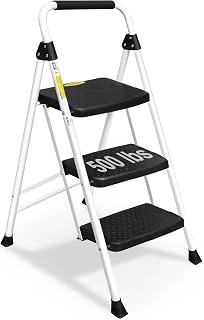
SocTone 3-Step Folding Steel Ladder with Handle, White
The SocTone three-step ladder ships in white steel, a finish that matches many modern kitchens without the industrial look of bare metal or black powder coat. At $55.99, it sits in the middle of the price range for folding kitchen step stools with handles, and the 4.8 out of 5 rating suggests most buyers find it delivers on stability and ease of use.
The handle extends high enough to provide a secure grip during ascent and descent, and the folding mechanism collapses the frame flat for storage in a pantry or alongside the refrigerator. Because it folds, you can tuck it away when counter space is tight, then pull it out when your parent needs to reach upper shelves or change a light bulb. The white finish resists showing fingerprints as quickly as darker coatings, though any scuff or scratch will be more visible than on textured black models.
Steel construction usually weighs more than aluminum, so expect this ladder to stay planted when someone steps onto it but also require two hands to carry from room to room. The trade-off works well if your parent will leave the stool in one spot most of the time and values a solid feel over frequent portability. If the kitchen layout demands moving the stool between the pantry, stove area, and sink several times a day, a lighter aluminum option may reduce strain.
The three-step height offers enough reach for standard eight- or nine-foot ceilings without requiring a large footprint. Step depth and tread width matter more than color, but because verified details on those dimensions are thin, judge stability by the overall rating and compare the folding hinge design if you can inspect it in person or through return-policy trial.
At this price point, you're paying partly for the white finish and partly for the brand's approach to hinge durability. Whether that premium is justified depends on how often the stool will be folded and unfolded; frequent use puts stress on pivot points, and a well-engineered joint will outlast a budget version by years.
- ✅ White finish blends with modern kitchen décor
- ✅ Folding design stores flat in narrow spaces
- ✅ Handle provides secure grip during use
- ✅ Steel frame offers solid footing
- ⚠️ Steel weight makes frequent repositioning harder
- ⚠️ White surface shows scuffs more than textured finishes
- ⚠️ Mid-range price may reflect finish more than added durability
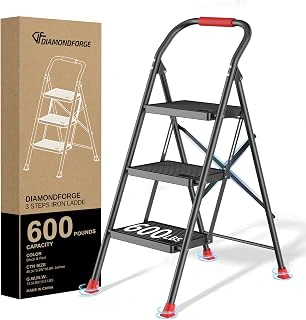
3-Step Folding Heavy Duty Ladder with Handrails
The 3-Step Folding Heavy Duty Ladder with Handrails addresses the need for bilateral support when reaching upper cabinets or pantry shelves. Priced at $49.49 with a 4.6 out of 5 rating, this model features dual handrails that provide grip points on both sides of the frame, which can help users maintain balance while stepping up or down.
Dual handrails offer symmetrical support, allowing your parent to choose their stronger side or switch hands depending on the task. This configuration works well for users who prefer a two-handed ascent or who need reassurance that a rail is always within reach. The three-step height reaches typical upper storage without requiring overextension, and the heavy-duty frame is designed to handle regular kitchen use.
The tradeoff comes with portability and storage. Dual handrails add width and weight compared to single-rail or no-rail step stools, so folding and moving the unit between rooms requires more effort. If your parent's kitchen has limited floor space or narrow aisles, measure the footprint when open and confirm the folded dimensions fit your storage spot.
This model suits households where the step stool stays in one primary location and stability outweighs the need for frequent repositioning. Users who value having a rail on each side for confidence during multi-step climbs will find the dual-handrail design worth the extra bulk. If your parent mainly needs a quick boost for single-step tasks and prefers lighter equipment they can carry easily, a single-handrail or rail-free stool may serve better.
- ✅ Dual handrails provide grip points on both sides for symmetrical support
- ✅ Three-step height reaches upper cabinets without overextension
- ✅ Heavy-duty frame designed for regular kitchen use
- ✅ 4.6 out of 5 rating reflects solid user satisfaction
- ⚠️ Dual handrails add width and weight, reducing portability
- ⚠️ Requires more storage space than single-rail or compact models
- ⚠️ Folding and moving between rooms takes extra effort
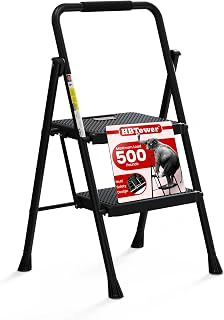
HBTower Folding Steel Step Ladder with Wide Anti-Slip Pedal and Handrail
The HBTower Folding Steel Step Ladder delivers reliable access at a price that undercuts most handrail-equipped competitors. At $39.99, it pairs a steel frame with a wide anti-slip pedal and vertical handrail, offering the core safety features aging parents need without premium finishes or extra height options.
The wide pedal surface provides stable footing, and the textured platform reduces slip risk when reaching overhead cabinets or shelves. The steel construction holds up to regular kitchen use, while the folding design lets you tuck the ladder into a pantry or narrow closet when not in service. User ratings average 4.7 out of 5, suggesting consistent performance across a range of households.
Lower cost here reflects simplicity rather than compromised stability. You won't find padded handrails, adjustable height settings, or tool trays, but the frame remains rigid during ascent and the pedal width accommodates full foot placement. If your parent primarily needs a single step for countertop tasks and prefers straightforward operation, the HBTower meets that need without unnecessary complexity.
Portability is straightforward: the folded profile fits beside a refrigerator or under a counter overhang, and the weight remains manageable for moving between kitchen and laundry room. The handrail extends high enough to support grip during the step up, though taller users may find the rail shorter than models with telescoping grips.
This step ladder suits budgets that prioritize proven essentials over feature variety. The combination of steel durability, non-slip tread, and handrail support covers the functional checklist, making it a practical choice when cost and user feedback both matter.
- ✅ Budget-friendly at $39.99
- ✅ Wide anti-slip pedal for stable footing
- ✅ Steel frame provides durable structure
- ✅ Folding design for compact storage
- ✅ High user rating of 4.7/5
- ⚠️ No padded handrail or height adjustment
- ⚠️ Handrail may feel short for taller users
- ⚠️ Limited to single step height
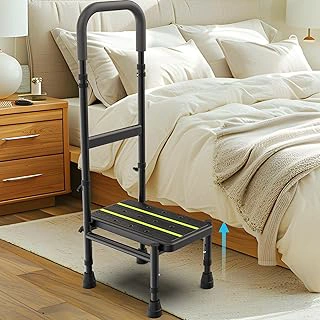
Medical Step Stool with Adjustable Handle and Leg
The Medical Step Stool with Adjustable Handle and Leg offers two features most kitchen step stools skip: a handle that adjusts in height and a leg leveler that compensates for uneven floors. Priced at $56.99 with a 4.4 out of 5 rating, this single-step design trades the reach of multi-step models for flexibility in setup and stability on tile that slopes toward drains or laminate that settles unevenly near appliances.
The adjustable handle accommodates different users without requiring a second stool. Someone five feet tall can lower the grip for comfortable support, while a taller family member raises it to hip height. The leg leveler addresses a common kitchen problem: cabinets and older flooring rarely sit perfectly flat, and a rigid stool will wobble. Twist the leveler to match the surface, and the stool plants securely.
This is a single-step stool, so the platform sits lower than the third step on models reviewed earlier in this guide. That height works well for reaching the second shelf in a standard upper cabinet or accessing the top of a refrigerator, but not for ceiling-mounted storage or high pantry shelves. The design favors frequent, quick tasks over maximum reach.
The tradeoff centers on versatility versus simplicity. If your kitchen floor has noticeable variation or multiple people with different heights need the same stool, the adjustment features justify the price and single-step limitation. If the floor is level and one handle height serves everyone, a fixed three-step model provides more reach for similar cost. Measure the height of the items you access most often and check your floor with a level before deciding.
- ✅ Handle adjusts to different user heights
- ✅ Leg leveler stabilizes stool on uneven flooring
- ✅ Single-step design simplifies entry and exit
- ⚠️ Single step limits reach compared to three-step models
- ⚠️ Adjustment features add setup time for first use
How We Chose the Best Step Stools for Safety and Stability
Selecting a step stool for an aging parent means prioritizing stability over every other feature. We focused on models that pair a fixed or fold-down handrail with a wide, textured tread surface, since both elements work together to reduce wobble and provide secure grip underfoot. Handrail design mattered most when it offered a full loop or bilateral bars that remain firm during weight transfer, rather than ornamental handles that flex or sit too low to assist balance.
Tread width and surface texture determined whether a user could stand squarely with both feet planted. We looked for platforms at least ten inches deep with raised ribs, rubberized coatings, or molded patterns that channel moisture away. Weight capacity served as a confidence benchmark: stools rated for three hundred pounds or more typically use thicker steel frames and reinforced joints that resist lateral sway when someone reaches overhead or shifts their center of gravity.
Folding mechanisms received scrutiny for pinch points and latch reliability. A hinge that locks audibly and requires deliberate force to release offers better peace of mind than spring-loaded designs that can close unexpectedly. Step height ranged from seven to nine inches in the models we considered, a span that balances cabinet access with the reduced hip and knee flexion many older adults need when climbing.
We excluded stools with narrow bases, smooth plastic treads, or handles mounted only on one side, since those compromises introduce unnecessary risk. The selection process centered on real kitchen scenarios: reaching a top shelf while holding a dish, stepping down with a bag of flour, or standing for a minute to wipe a cabinet door.
Comparing Handrail Design: Single Bar vs. Dual Rails
Handrail design affects how securely an aging parent can hold on during step-up and step-down movements, and whether the stool fits comfortably in the kitchen when not in use.
Single-bar handrails attach to one side of the stool and offer a vertical post or U-shaped grab point. Most kitchen step stools use this design because it keeps the footprint narrow, making the stool easier to slide beside a counter or store in a pantry corner. A single rail works well for parents with good grip strength in at least one hand and enough balance to step up while holding one side. The open opposite side also makes it simpler to approach the stool from either direction, though users need to be mindful of which side offers support.
Dual-rail configurations place handrails on both sides of the platform, creating a more enclosed feel. This setup gives parents two grab points, which can be helpful for those who prefer bilateral support or have uneven strength between hands. Dual rails add width to the overall footprint, so the stool takes up more floor space and may feel bulky in a compact galley kitchen. The tradeoff is added confidence: users can grip both rails during ascent and descent, reducing the need to rely on balance alone.
Grip comfort depends on rail diameter and surface texture. Tubular steel rails between one and one-and-a-quarter inches in diameter typically suit most hand sizes, while rubberized or powder-coated finishes reduce slippage when hands are damp. Single-bar designs sometimes include a wider top cap or contoured grip zone to compensate for the lack of a second rail.
If your parent's kitchen has limited floor space and they retain good single-hand grip, a single-bar model keeps storage simple without sacrificing core stability. If bilateral support is a priority or balance is more of a concern, a dual-rail stool offers symmetry and reassurance, provided the kitchen layout can accommodate the extra width.
Folding and Storage: What Fits in a Pantry or Behind a Door
A step stool that stays out all the time can become a tripping hazard, but one tucked too far away won't be used when it's needed most. The best kitchen step stools for aging parents fold compact enough to store in a pantry, utility closet, or behind a door, yet remain accessible for daily tasks like reaching upper cabinets or changing light bulbs.
Stools with handrails typically fold in one of two ways: side-folding frames that collapse flat, or top-down designs where the handrail folds over the platform. Side-folding models usually measure between 4 and 6 inches deep when closed, fitting easily into a narrow gap beside a refrigerator or inside a pantry. Top-down styles often require 8 to 10 inches of clearance because the handrail and platform stack together, though they may still slide under a counter or behind a door.
Weight plays a role in storage decisions. A 15-pound aluminum stool is easier for an older adult to lift and reposition than a 25-pound steel frame, especially if the stool needs to move between kitchen and bathroom. Look for models with a carry handle built into the frame or rail - this small feature makes a real difference when relocating the stool after each use.
Check the base footprint when the stool is folded. Some models remain stable enough to lean upright against a wall without additional support, while others need to lie flat or hook onto a wall-mounted bracket. If floor space is tight, consider a vertical storage option: a slim profile that stands in a 12-inch-wide gap works better than a horizontal stool that must slide under furniture.
Avoid storing the stool in a garage or basement if it will be used daily in the kitchen. Extra steps and stairs defeat the purpose of having a stable aid nearby. A coat closet near the kitchen, a pantry shelf at waist height, or a dedicated hook on the back of a door keeps the stool within easy reach while maintaining clear walkways.
Making the Right Choice for Your Parent's Peace of Mind
Choosing the right step stool means matching your parent's specific needs to real product differences. If budget matters most and your parent needs stable vertical reach in a standard kitchen, the HBTower model delivers reliable construction without premium pricing. For parents who prefer wide foot placement or have balance concerns, the Arbusb's broader treads offer more room to adjust stance. When grip strength is limited or your parent reaches overhead frequently, the dual side rails on the Heavy Duty option provide support from multiple angles. Uneven kitchen floors call for the Medical stool's adjustable feet, which eliminate wobble that can undermine confidence. If cabinet finish and a cleaner look matter in your kitchen, the SocTone's design fits more seamlessly into modern spaces.
Before you order, measure three things: the height from floor to the cabinet shelf your parent reaches most often, the levelness of the floor where the stool will sit, and the clearance in the spot where it will be stored. A stool that's two inches too tall or won't fit behind the pantry door creates friction that discourages use. Match tread width to your parent's stride and comfort zone - narrower treads work for confident steppers, while wider platforms suit those who shift weight or pause mid-climb. Handrail shape matters less than whether your parent will actually grip it, so consider their usual hand position when reaching up.
The right step stool reduces hesitation and makes daily kitchen tasks feel manageable rather than risky. Focus on the gap between your parent's current reach and the storage they use every day, then pick the stool that closes that gap with the stability and grip support they'll trust.