We may earn a commission when you buy through links on this page, at no extra cost to you. How this works.
When Sandra noticed scorch marks on her mother's favorite pot for the third time in two months, she faced a question many adult children ask: how do you protect an aging parent from stove-related fire risk without taking away their independence in the kitchen?
Automatic stove shut-off devices fall into two distinct categories, each solving a different problem. Automatic fire suppression systems are passive, flame-activated devices that deploy when they detect open fire - no user action required. Manual prevention devices, such as knob locks and timer shut-offs, require the user or caregiver to engage them and work by limiting stove access or cooking duration.
The right choice depends on three factors: your parent's current cooking habits, their cognitive and physical capabilities, and whether the primary risk is forgetting to turn off the stove or leaving flammable items too close to burners.
This guide walks through both device types in a structured comparison. You'll learn how automatic suppression systems work, when knob locks and timers make sense, and how to match the device to your parent's independence level and your household's risk profile. The goal is not to eliminate cooking - it's to make it safer while preserving as much autonomy as possible.
What Matters Most When Choosing a Stove Safety Device
- Type of stove: gas vs. electric (affects compatibility and risk profile)
- Cooking frequency: daily cook vs. occasional use
- Cognitive status: sharp and independent vs. early forgetfulness
- Installation complexity: plug-and-play vs. requires mounting or professional help
- Activation method: automatic (flame-triggered) vs. manual (requires parent to use correctly)
- Visibility and dignity: discreet vs. obvious safety device
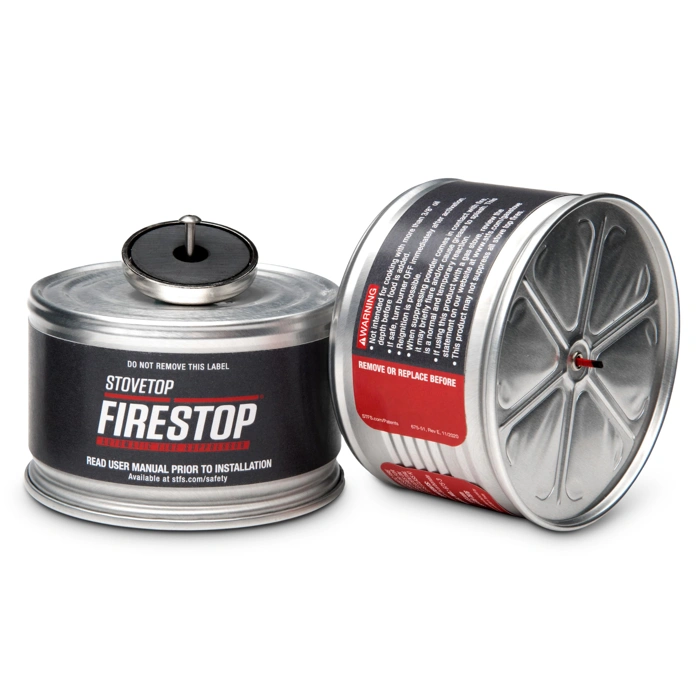
StoveTop FireStop Rangehood® Fire Suppressor – Automatic StoveTop Fire Suppressor for Residential Kitchen Safety – Easy to Install, Direct Flame-Activated, Non-Toxic Fire Suppression System (1 Pair)
The StoveTop FireStop Rangehood Fire Suppressor offers passive, automatic fire suppression without requiring any action from the user. This system mounts to the underside of a rangehood and activates when flames reach the device, releasing a non-toxic suppressant directly onto the stovetop. Priced at $59.49 for a pair, it provides the highest level of intervention among stove safety options.
The flame-activated design makes this device particularly suitable for parents who cook frequently on gas stoves and have memory concerns or cognitive changes. Because activation is entirely automatic - no buttons, timers, or manual steps - it functions even when a parent forgets a burner is on or steps away from the stove. The suppressant deploys on contact with flame, creating a barrier between fire and surrounding materials.
Installation requires a rangehood positioned above the stove. The devices attach with included magnets or adhesive, and you'll need to verify your rangehood has adequate clearance and material compatibility. The product listing on Amazon includes detailed installation requirements and compatibility guidance.
This system suppresses flames but does not shut off the gas supply or electric burner. After activation, the stove will still need to be turned off manually or by another shutoff device. The suppressant is non-toxic, though it will require cleanup and the devices themselves are single-use - they must be replaced after activation.
This option offers the greatest assurance for high-risk cooking situations where a parent may not recognize or respond to a stove fire. The tradeoff is cost per use (replacement after each activation), the requirement for a compatible rangehood, and the need for a complementary solution to actually turn off the heat source. For families seeking maximum fire protection alongside other safety layers, this represents the most comprehensive automatic suppression approach available.
- ✅ Activates automatically on flame contact with no user action required
- ✅ Non-toxic suppressant safe for residential kitchens
- ✅ Mounts easily to most rangehoods with magnets or adhesive
- ✅ Provides passive protection for parents with memory concerns
- ⚠️ Does not shut off gas or electric burners after suppression
- ⚠️ Single-use devices require replacement after activation
- ⚠️ Requires compatible rangehood installation
- ⚠️ Higher ongoing cost if activations occur
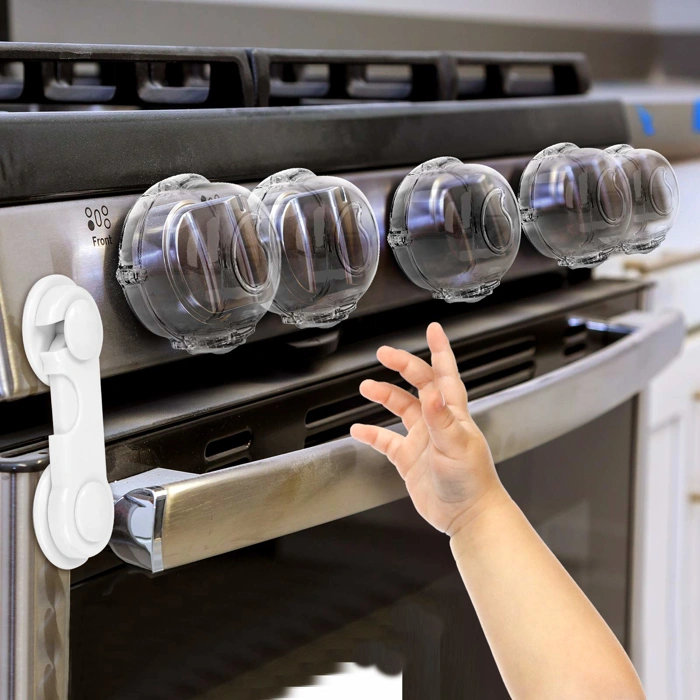
Universal Stove Knob Covers for Child Safety (6 Pack) Double-Key Design
The Universal Stove Knob Covers for Child Safety (6 Pack) offer a manual prevention approach at $15.95 for a six-pack. These clear plastic covers install over existing stove knobs and use a double-key mechanism: the user must press down and turn simultaneously to operate the knob.
This design helps reduce the chance of accidental or impulsive stove activation, but it requires fine motor control and dexterity. If your parent has arthritis, reduced hand strength, or tremor, the press-and-turn motion may prove frustrating or difficult to execute reliably.
The covers are marketed as universal fit, meaning they're designed to work across many stove knob styles. However, successful use depends heavily on parent buy-in. If your parent perceives the covers as infantilizing - they're labeled "child safety" devices - they may remove them or refuse to use them entirely.
This option works best for parents who are cognitively alert, cook infrequently, and understand the safety rationale. It can also serve as a secondary layer when paired with an automatic suppression system, adding a physical barrier that reinforces other safeguards.
Because this is a passive device with no sensors or alerts, it offers no monitoring capability. You won't know whether the stove was left on or whether your parent is struggling with the covers. The six-pack format allows you to cover all burners and the oven knob if needed.
Consider the dignity and independence tradeoff carefully. Some parents appreciate a visible, straightforward lock they control; others may feel the device signals a loss of autonomy. A candid conversation before installation can helps reduce the chance of resistance and ensure the covers actually get used.
- ✅ Affordable at $15.95 for six covers
- ✅ Double-key design prevents accidental or impulsive activation
- ✅ Universal fit works with many stove knob styles
- ✅ Can serve as a secondary layer with automatic systems
- ⚠️ Requires dexterity and fine motor control to operate
- ⚠️ No monitoring, alerts, or automatic shutoff capability
- ⚠️ Labeled 'child safety' may feel patronizing to some parents
- ⚠️ Effectiveness depends entirely on parent buy-in and compliance
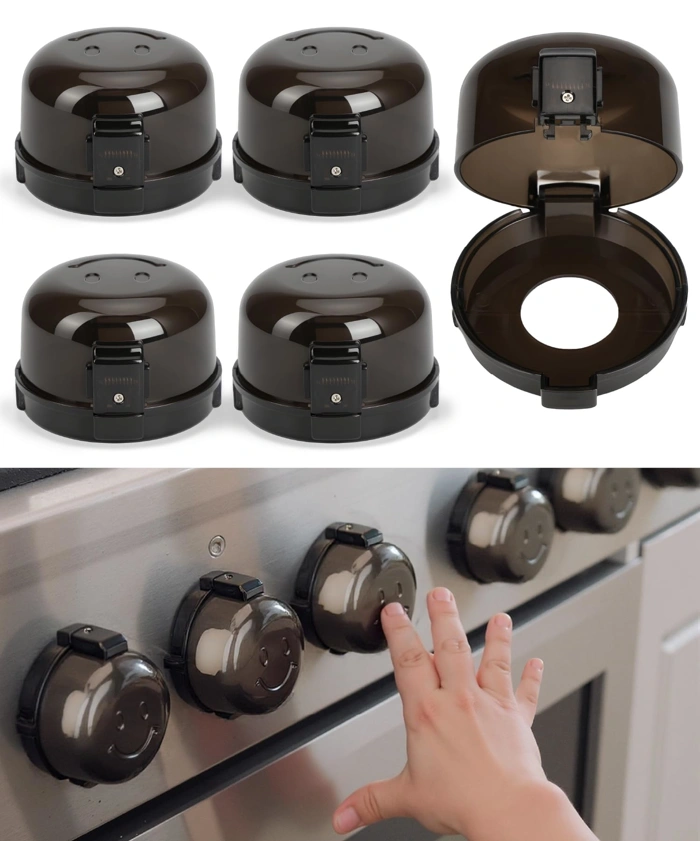
Bates Stove Knob Safety Covers, Universal Size, 5 Pack, Black, Double Key
The Bates Stove Knob Safety Covers offer a low-risk entry point for families exploring manual stove safety solutions. At $8.85 for a five-pack, this option costs less than half the price of the ten-pack Universal model reviewed earlier, making it accessible for budget-conscious households or those unsure whether an elderly parent will accept knob covers.
These covers use the same double-key locking mechanism found in the Universal option: press both side buttons simultaneously to remove the cover and access the knob. The design requires fine motor coordination, which may suit parents in early stages of cognitive decline but could frustrate those with arthritis or reduced hand strength.
The universal sizing fits most standard gas and electric stove knobs, though you should measure your parent's knobs before ordering. Because this pack contains five covers, you'll need to count the burners on your parent's stove - four-burner ranges leave you with one spare, while six-burner cooktops require a second pack or supplemental purchase.
With a 4.8/5 rating, user feedback emphasizes straightforward installation and effective prevention of unintentional knob-turning. The black finish blends into most kitchen color schemes without drawing attention, which can help reduce resistance from parents sensitive to visible safety modifications.
This product works best as a first step for families testing whether physical barriers will be tolerated, or as part of a layered approach alongside motion sensors or automatic shut-off timers. The lower pack count and price point reduce financial commitment while you evaluate fit and acceptance.
- ✅ Lowest-cost option at $8.85 for testing knob cover acceptance
- ✅ Double-key mechanism prevents accidental removal
- ✅ Universal fit works with most standard gas and electric knobs
- ✅ Black finish blends into kitchen without calling attention to safety device
- ⚠️ Five-pack requires burner count confirmation before purchase
- ⚠️ Double-key release demands fine motor coordination
- ⚠️ May frustrate parents with arthritis or reduced hand strength
- ⚠️ Six-burner stoves need additional covers
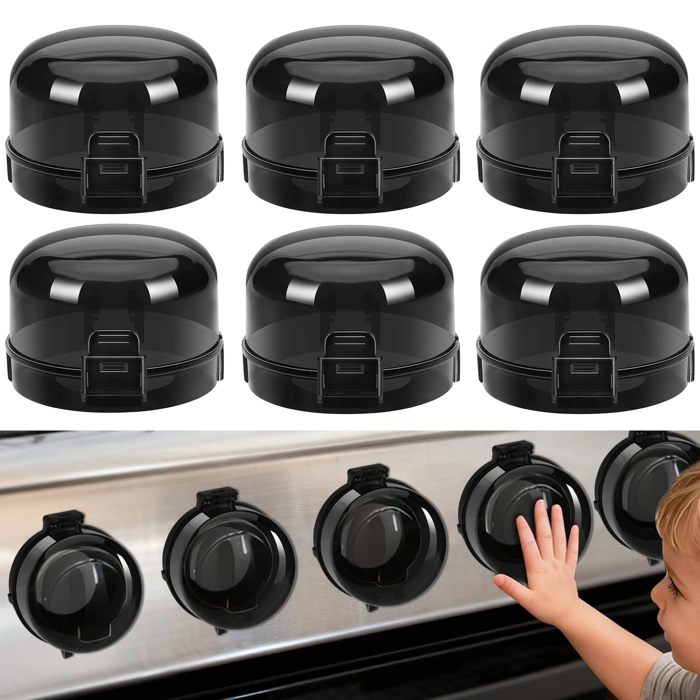
HOIGRBOM Universal Stove Knob Safety Covers, 6 Pack, Heat-Resistant, Black
The HOIGRBOM Universal Stove Knob Safety Covers come in a 6-pack for $9.99 and carry a 4.5/5 rating. The standout feature is the heat-resistant material, which holds up better near burners during active cooking or on gas stoves where radiant heat is a concern.
This set sits between the budget Bates option and the mid-price Universal Stove Guard in both cost per cover and durability. If your parent cooks frequently or uses a gas range, the heat resistance offers an extra margin of safety compared to basic plastic covers that may warp over time.
Like all knob lock designs, the HOIGRBOM covers require your parent to lift or twist them off before turning the burner. That means cooperation is essential - they work well for someone who may forget to check the stove but will still follow the extra step when cooking intentionally. If resistance or confusion is likely, a sensor-based shut-off may be a better fit.
The 6-pack format suits most ranges and gives you spares. Installation is tool-free: stretch each cover over the existing knob. Check that the fit is snug on your specific model, especially knobs with unusual shapes or oversized bezels.
This is a solid middle choice if you want more durability than the cheapest option but don't need the rotating dial feature of higher-end knob guards. It balances cost, heat tolerance, and straightforward usability for families prioritizing long-term reliability.
- ✅ Heat-resistant material suited for gas stoves and heavy cooking
- ✅ 6-pack for $9.99 offers balanced value and spares
- ✅ Tool-free installation over existing knobs
- ⚠️ Requires parent cooperation to lift cover before each use
- ⚠️ Fit may vary on knobs with unusual shapes or large bezels
- ⚠️ Does not prevent accidental activation if covers are left off
Who This Guide Is For
This guide is written for adult children who are navigating a difficult balance: you want your aging parent to stay independent in the kitchen, but you've noticed signs that make you worry about stove safety.
You might recognize yourself if your parent still cooks regularly but has started to forget a burner was left on, or if they've become less steady on their feet and you're concerned about their ability to respond quickly in an emergency. Maybe you've found scorched pots, smelled gas when you visit, or simply feel a low hum of anxiety every time they mention making dinner.
The scenarios that benefit most from an automatic shut-off device fall along a spectrum. On the higher-risk end: a parent who cooks daily, uses a gas stove, shows early memory lapses, lives alone, and has limited mobility. These situations create multiple opportunities for an unattended burner to become dangerous.
On the lower-risk end: a parent who uses the stove occasionally, has an electric cooktop, remains generally alert, lives with someone else, and moves confidently around the kitchen. Here, the concern is more about planning ahead or adding a layer of reassurance than responding to an urgent threat.
Most families fall somewhere in between. Your mother might be sharp most days but occasionally distracted. She might cook three times a week, not every meal. She might use gas for some burners and electric for others. The key is to assess her cooking habits, the type of stove in her home, her cognitive and physical baseline, and how often someone else is around.
This guide will help you match her specific risk profile to the right type of automatic shut-off device - whether that's a system that detects heat and motion, a timer-based control, a knob lock that prevents unintended activation, or a suppression unit that responds to open flame. Understanding where your parent falls on this spectrum will clarify which features matter most and which devices offer the right blend of safety and independence.
Automatic Fire Suppression vs. Manual Prevention: The Core Choice
When choosing a stove safety device for an elderly parent, you're making a core decision between two approaches: automatic fire suppression and manual prevention. Each addresses a different failure point, and understanding the distinction will help you pick the right fit - or decide to use both.
Automatic fire suppression systems mount above or near the stove and activate when they detect flame or extreme heat. The most common design uses a rangehood-mounted canister that releases suppression agent when a flame makes direct contact with a sensor link. These devices require no action from your parent. If a pot catches fire or a dish towel ignites, the system deploys automatically. The advantage is clear: even if your parent forgets the stove entirely, leaves the kitchen, or becomes disoriented, the device will respond. This addresses the worst-case scenario - an active fire - without relying on memory, cooperation, or physical ability.
The tradeoff is cost and installation. Automatic suppression units typically require professional mounting, may need periodic inspection, and cost more upfront than passive devices. They also address only the fire itself, not the underlying behavior that leads to the hazard.
Manual prevention devices - like knob covers, locks, or removable knobs - physically block unintended stove activation. These tools stop accidental bumps, curious grandchildren, or confused attempts to turn on burners. They work well when the goal is to prevent the stove from being used without supervision or to remind a parent to pause before cooking.
The limitation is cooperation and dexterity. If your parent resists using the lock, forgets to replace a knob cover, or lacks the hand strength to operate the device, protection disappears. Manual systems depend entirely on correct, consistent use. They prevent mistakes but do nothing once a fire has started.
Framing the choice as risk tolerance: Automatic suppression is your backstop when human error or cognitive decline makes oversight unreliable. Manual prevention is your frontline when the parent is still capable but needs a physical reminder or barrier. Many families layer both: knob locks reduce everyday risk, while a suppression canister provides a safety net if prevention fails.
Consider your parent's independence level, willingness to adopt new routines, and the consequences of a missed step. If they live alone, resist reminders, or have a history of leaving burners on, automatic suppression becomes essential. If they cook independently but occasionally forget to turn off a burner after the meal, a combination of reminder devices and manual locks may suffice. The right answer depends on whether you're managing forgetfulness or guarding against true emergency.
How to Decide Which Device Type Fits Your Situation
Your choice comes down to three factors: your parent's cognitive state, cooking habits, and willingness to adjust routines. Use this decision path to narrow the field:
- If your parent has memory issues or cooks daily on gas: Prioritize an automatic fire suppression system. These devices activate without human judgment, making them the safest choice when recall is unreliable or when an unattended burner poses immediate fire risk.
- If your parent is alert but occasionally distracted: Start with knob locks or covers. They add friction to the ignition process and serve as a helpful reminder without taking control away. This approach works well when the goal is gentle reinforcement rather than full automation.
- If budget allows and risk is moderate to high: Layer both device types. A knob lock prevents casual or accidental ignition, while an automatic system provides backup if something is left unattended. This combination offers redundancy and addresses multiple failure points.
- If your parent resists visible devices or perceives them as loss of independence: Begin the conversation with an automatic system. These install above or behind the stove and remain out of sight during daily use, making them less intrusive and easier to accept emotionally.
No single device fits every household. Match the technology to the specific behavior you're trying to manage, and be prepared to adjust as your parent's needs evolve over time.
Common Mistakes to Avoid
Even with the best intentions, it's easy to make choices that backfire when selecting a stove safety device for an aging parent. Understanding common pitfalls ahead of time helps you plan more thoughtfully and avoid unnecessary friction.
One of the most frequent mistakes is assuming a single device type will work for every situation. Fire suppression systems, knob locks, sensor shutoffs, and timers each solve different problems. A parent who forgets to turn off burners needs a different solution than one who accidentally bumps controls or leaves a pot unattended. Matching the device to the specific behavior pattern - not just the budget - prevents wasted effort and frustration.
Another misstep is installing a device without involving your parent in the decision. Surprise installations, no matter how well-meaning, can feel infantilizing and may prompt resistance or workarounds. Talking through the choice together, explaining the "why," and letting your parent participate in the setup preserves dignity and increases the chance they'll actually use the device as intended.
Choosing based on price alone is understandable but risky. A bargain knob lock may seem appealing until you realize your parent simply removes it each morning. A cheap timer might lack the flexibility needed for varied cooking habits. The real cost comes from non-compliance or a device that doesn't fit the stove type, leading you back to square one.
Compatibility is often overlooked until installation day. Not every shutoff sensor works with every burner configuration. Not every suppression canister mounts safely above every range. Before purchasing, confirm the device is designed for your parent's specific stove - gas or electric, freestanding or built-in, knob style and spacing - and verify clearance and power requirements.
Finally, many families skip the test run. Installing a device and walking away means you won't know if your parent understands how to cook with it, override it when needed, or respond if an alarm sounds. Schedule a practice session together. Cook a simple meal, trigger the safety feature intentionally, and walk through what happens next. This rehearsal builds confidence, reveals usability snags, and turns the device from an abstract safeguard into a familiar part of the routine.
These mistakes aren't about blame - they're about learning. Anticipating these friction points lets you plan with empathy, test assumptions early, and choose a solution that both protects your parent and respects their independence.
Installation, Testing, and Parent Buy-In
Even the best device will only work if it's installed correctly and accepted by your parent. A thoughtful rollout can make the difference between a safety tool that's embraced and one that's quietly disabled.
For automatic fire suppression systems, start by verifying rangehood compatibility. Measure the mounting surface and check the manufacturer's installation guide for required clearances and power connections. If the system requires wiring, cutting holes, or mounting brackets that could affect the structure of the hood or cabinetry, consider hiring a qualified installer. Improper installation can compromise both the device's effectiveness and your warranty.
Knob locks and covers are simpler but still require a fit check. Before purchasing a full set, order one unit to test on your parent's stove. Not all knobs are the same diameter or height, and some lock designs work poorly with recessed or angled knobs. Once you've confirmed the fit, practice the locking and unlocking motion with your parent to ensure their hand strength and dexterity are adequate. If they struggle with the mechanism during the test, the device may create more frustration than safety.
How you introduce the device matters as much as which one you choose. Frame the conversation around safety for both your parent and their home, not around their declining abilities. Emphasize that the device is a backup - a second layer of protection that lets them continue cooking independently while reducing worry for everyone. Avoid language that implies you no longer trust them or that cooking privileges are being taken away.
Propose a trial period of two to four weeks. Explain that you'll check in regularly to see how the device is working and whether any adjustments are needed. This collaborative approach respects their autonomy and gives them a voice in the process. During the trial, ask open-ended questions: Is the device easy to use? Does it interfere with their routine? Have there been any false alarms or situations where it didn't work as expected?
Document the installation date, initial settings, and your parent's reaction. Note any concerns they raise and how you addressed them. This record will help you troubleshoot issues, demonstrate the value of the device over time, and provide useful context if you need to involve other family members or caregivers later. Keep a simple log of check-ins and any incidents - even near-misses - so you can assess whether the device is meeting your goals or whether a different approach is needed.
Final Takeaway: Match Device to Risk, Not Fear
The right automatic stove shut off device is not the one that promises total safety - it's the one that matches your parent's actual risk profile and daily habits. If your parent cooks regularly, lives alone, and shows signs of memory lapses or leaves the kitchen mid-task, an automatic fire suppression system offers the most comprehensive protection. It monitors actively and intervenes without requiring your parent to remember or engage. If cooking is infrequent, the stove is still functional, and the primary concern is accidental ignition or wandering hands, a knob lock or cover provides simple, dignified prevention.
Many families find that layering both approaches works best: a knob lock for everyday prevention and a suppression system as a failsafe for high-risk moments. There is no single perfect solution, but taking action - even imperfect action - reduces risk meaningfully and restores peace of mind for both you and your parent.
Focus on the specific behaviors you've observed: Does your parent forget the stove is on? Do they walk away during cooking? Do they turn knobs unintentionally? Match the device to those patterns, not to generalized fear. Every family's situation is different, and the goal is not to eliminate every possible risk, but to create a safer kitchen environment that respects your parent's independence while addressing the vulnerabilities that matter most.
If you're ready to take the next step, consider conducting a broader kitchen safety audit or exploring how to start conversations with aging parents about home safety. Small, thoughtful changes add up, and you're already on the right path by seeking solutions that balance safety with dignity.