Choosing grab bars for a bathroom without damaging tiles starts with understanding a fundamental tradeoff: reversibility versus load capacity. Suction-based grab bars attach to smooth tile surfaces without drilling, making them ideal for renters or anyone reluctant to puncture tile, but they typically support lower weight limits and require regular inspection. Anchor systems - which fasten through grout lines or into wall studs behind tile - offer higher weight capacity and permanent stability, yet they create holes that may be visible or require professional repair if removed.
This decision becomes especially important when safety and property preservation both matter. A caregiver installing support for an aging parent, for example, needs enough strength to prevent falls but may also need to avoid lease violations or expensive tile restoration. The right choice depends on who will use the bar, how much weight it must bear, the condition and type of tile in the bathroom, and whether the installation is temporary or long-term.
Throughout this guide, we compare suction, toggle-bolt, and stud-mounted grab bars on weight capacity, installation complexity, tile compatibility, and removal impact. Each method has clear strengths and limitations, and understanding these tradeoffs makes it possible to add meaningful safety support without regret.
Who This Guide Is For
This guide is for adult children managing bathroom safety upgrades for aging parents who need support but want to avoid damaging existing tile or grout. It's also for renters who cannot drill into walls, homeowners concerned about preserving resale value or the integrity of ceramic, porcelain, or natural stone tile, and anyone who needs a temporary or trial installation before committing to permanent modifications.
If you're weighing the tradeoffs between suction-mounted grab bars, adhesive anchors, and traditional screw-mounted models, this article walks through weight capacity, installation methods, and tile-safe options so you can match the right solution to your situation. Whether you're planning a short-term fix, testing placement before a remodel, or seeking a non-invasive option that still delivers reliable support, the decision framework here helps you compare real attributes and understand what each installation type can and cannot do.
The goal is to add functional support without guesswork, tile damage, or buyer's remorse.
What Matters Most: Weight Capacity vs. Tile Integrity
Choosing a grab bar for your bathroom means balancing two priorities: the support capacity you need and keeping your tile undamaged. Suction-mounted grab bars preserve tile integrity completely because they attach using vacuum pressure rather than fasteners, but they typically support 200 - 300 pounds and work best for light balance assistance during standing or mild steadying. Wall-anchored and permanently mounted grab bars deliver much higher weight capacity - often 500 pounds or more - because they fasten directly into studs or blocking behind the tile, but installation requires drilling through grout lines or tile itself.
If you need grab bars primarily for light balance support while stepping into the tub or standing at the sink, and your mobility is relatively good, suction models offer a practical, damage-free solution. They're also ideal for renters, temporary situations, or bathrooms where you cannot modify the structure. However, if you rely heavily on grab bars for weight-bearing transfers, getting in and out of the shower, or regaining balance after a slip, permanently anchored bars provide the stability and load capacity necessary for safe use. The tradeoff is straightforward: suction bars protect your tile but limit how much force they can handle, while anchored bars require penetration but deliver the strength needed for full body-weight support.
Consider your current and anticipated mobility needs when deciding. Someone recovering from surgery may need only temporary light support, making suction bars a sensible choice. Someone with progressive mobility challenges will benefit from the long-term security of anchored bars, even if it means drilling. Wall structure also matters - if your bathroom has solid blocking behind the tile in shower and tub areas, anchored bars install more securely; if not, you may need to add blocking or choose locations where studs are accessible. Always match the grab bar's rated capacity to the actual forces you'll place on it, and remember that dynamic loads - grabbing suddenly to catch yourself - can exceed static body weight.
Comparing Suction vs. Anchor Installation
Choosing between suction and anchor installation comes down to balancing convenience, weight capacity, and permanence. Suction grab bars attach and release without tools, making them ideal for renters or anyone who wants to avoid drilling into tile. They work only on smooth, non-porous surfaces like glazed ceramic or glass tile, and most models support between 250 and 300 pounds when properly installed. Because suction cups rely on vacuum pressure, they require regular inspection and reseating to maintain grip, and they can fail if the surface is textured, wet during installation, or coated with residue.
Anchor-mounted grab bars require drilling pilot holes and screwing into wall studs or using specialized tile anchors, which means permanent changes to the bathroom. In exchange, they deliver significantly higher weight capacity - typically 500 pounds or more - and work on any tile type, including textured, porous, or natural stone. Installation takes longer and demands a drill, appropriate bits, and attention to stud location or anchor depth, but the result is a grab bar that stays secure under dynamic loads like transferring weight or catching a fall.
Match the installation type to how the grab bar will be used. If the user needs full body-weight support during transfers, showering while standing, or assistance getting up from a seated position, anchor installation is the safer choice. If the grab bar serves as a balance aid during light tasks and the bathroom will return to its original state in the future, a suction model on the right surface offers a practical, reversible solution. Consider the tile condition as well: cracked, uneven, or heavily textured tile reduces suction reliability and may require anchor mounting regardless of permanence concerns.
Before committing, identify whether wall studs are accessible behind the tile at your preferred grab bar location. If studs are not available, toggle bolts or specialty tile anchors can provide the necessary holding power, but installation becomes more involved. For suction models, test the mounting surface by wetting it slightly and pressing a suction cup firmly - if it holds without air bubbles and releases cleanly, the surface is compatible. Choose anchor installation when safety and capacity are non-negotiable, and choose suction when flexibility and surface preservation matter more than maximum load support.
When to Choose Suction, When to Drill
Suction grab bars work best for renters, short-term trials, or situations where you need light steadying support and weigh under 200 pounds with generally good balance. They let you test placement without commitment and can move between locations as your needs change. If you're uncertain about the right height or position, suction models give you room to adjust before making permanent decisions.
Drilling and anchoring becomes necessary when you need full weight-bearing support, plan to stay in your home long-term, or face situations where a fall could cause serious injury. Homeowners with tile bathrooms should prioritize anchored bars in the shower and near the toilet, where slips are most likely and recovery from a fall is hardest. High-traffic bathrooms shared by multiple users - especially those with varying mobility levels - benefit from the reliability of permanent installation.
Starting with a suction bar for initial placement testing, then upgrading to drilled anchors once you confirm the location, is a practical approach that balances caution with safety. This staged method works well when you're adapting a bathroom for changing mobility or want to involve the primary user in testing different configurations before committing to tile work.
Final Takeaway: Match the Method to the Need
The right grab bar for your bathroom depends on balancing three priorities: the level of support your mother needs, preserving your tile, and whether you own or rent. Temporary suction bars work when mobility is good and you need flexibility, but they require smooth, non-porous tile and daily checks. Adhesive anchors offer a middle ground for light support without drilling, though removal may still mark the surface. Permanent toggle-bolt or blocking-mounted bars provide the strongest, most reliable hold when fall risk is higher or transfers require full body weight support.
Start by honestly assessing your mother's current stability and whether she needs the bar for light balance assistance or full weight-bearing transfers. If her mobility is declining or she has a history of falls, prioritize safety over tile preservation - a properly installed permanent bar anchored to studs or blocking will always outperform temporary options. For renters or those in short-term living situations, suction models with verified weight ratings offer a reasonable compromise when checked and maintained correctly.
Professional installation for permanent bars is often worth the investment. An experienced installer can locate studs, avoid plumbing and electrical behind the wall, and ensure the bar is mounted at the correct height and angle for your mother's specific needs. This eliminates guesswork and provides confidence that the anchor points will hold when needed most. Compare the grab bars reviewed in this guide based on your mother's mobility level, your tile type, and how long the solution needs to last, then choose the installation method that matches those realities.
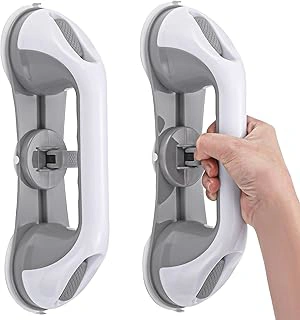
Strong Suction Grab Bars for Shower and Bathroom with 3 Suction Cups, Heavy Duty Safety Handles for Elderly and Seniors – No Drill Removable 2 Pack, Waterproof Non-Slip Bath Handr
If you need a grab bar that won't damage tiles and costs less than most anchored options, this triple-suction model offers a reversible, two-pack solution for light steadying tasks. Each bar uses three suction cups to attach to smooth, non-porous tile without drilling, making it a practical choice for renters or anyone testing placement before committing to permanent hardware.
The waterproof build suits shower and tub surrounds, and the pack includes two bars so you can position one near the entry and another inside the stall. Because suction relies on surface condition and seal integrity, this design works best on flat ceramic or glass tile with no grout lines interrupting contact. Textured, porous, or uneven tile will reduce holding power.
This bar is intended for steadying yourself while standing or shifting position, not for supporting full body weight during a fall or transfer. Always test the suction before each use by pulling firmly on the bar, and reapply if you notice any gap between the cup and tile. The cups can lose grip over time as water residue or soap film builds up, so regular cleaning of both the tile and suction surfaces is necessary.
At this price point, the two-pack delivers good value for situations where you want temporary support without the commitment or tile damage of screw-mounted bars. It's a sensible starting point if you're unsure about long-term placement or if your living situation prohibits permanent installation.
- ✅ No drilling required - installs without damaging tile
- ✅ Two-pack provides coverage for multiple grab points
- ✅ Waterproof design suitable for wet shower environments
- ✅ Reversible installation for renters or trial placement
- ✅ Budget-friendly compared to anchor or permanent systems
- ⚠️ Requires smooth, non-porous tile for reliable suction
- ⚠️ Not suitable for full body-weight support during falls
- ⚠️ Suction must be tested before each use
- ⚠️ Grip can weaken with soap residue or moisture buildup
- ⚠️ Less stable than screw-mounted or toggle-anchor bars
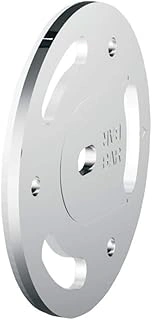
Moen SMA1000CH Home Care SecureMount Anchor, Chrome
The Moen SMA1000CH Home Care SecureMount Anchor offers a tile-friendly alternative to traditional grab bar installation by anchoring into grout lines rather than drilling through tile faces. This chrome-finished anchor is designed to pair with compatible Moen Home Care grab bars, providing a secure foundation while minimizing visible surface disruption.
Each anchor installs into the grout joint between tiles, which preserves the tile itself and reduces the risk of cracking during installation. The system requires precise placement along grout lines and pairs only with Moen grab bars that feature the SecureMount compatibility - the anchor alone does not include the grab bar, so plan to purchase both components separately.
At $14.59 per anchor, this product sits between adhesive suction options and full stud-mounted installations in both cost and stability. The grout-line approach offers stronger support than suction models while leaving smaller, more repairable holes than drilling through tile centers. This makes it a practical middle ground for renters or homeowners who want added strength without committing to permanent tile alterations.
Installation requires a rotary hammer drill, appropriate masonry bit, and careful alignment along grout seams. Because the anchor relies on grout and the tile edge for hold, grout condition matters - older, crumbling grout may compromise stability. The chrome finish matches most bathroom fixtures, and the low-profile design keeps the hardware visually unobtrusive once the grab bar is mounted.
This anchor works best for users who need reliable grab bar support in tiled showers or tub surrounds and prefer to avoid drilling tile faces, provided they're comfortable with the grout-line installation process and purchasing a separate compatible Moen grab bar.
- ✅ Installs into grout lines instead of tile faces, reducing visible tile damage
- ✅ Compatible with Moen Home Care SecureMount grab bars for secure mounting
- ✅ Chrome finish coordinates with most bathroom hardware
- ✅ Offers stronger hold than suction models
- ⚠️ Requires separate purchase of compatible Moen grab bar
- ⚠️ Installation demands precision alignment along grout seams
- ⚠️ Grout condition affects overall stability
- ⚠️ Requires rotary hammer drill and masonry bit
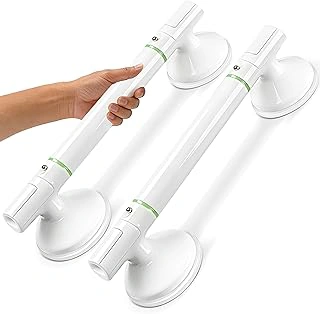
17.7" No-Drill Suction Grab Bars for Shower, 2-Pack
The 17.7" No-Drill Suction Grab Bars for Shower, 2-Pack offer a longer grip surface than compact models, making them a practical choice for shower stalls and tub entries where you need more hand-travel distance. With a 4.5/5 rating, this option sits above many budget suction models and provides the tile-safe, no-drill convenience that protects your bathroom surfaces. The 2-pack format lets you place bars at different heights or opposite sides of a shower enclosure without needing separate purchases.
At the listed size, these bars provide extended support for entering, exiting, or repositioning inside the shower. The suction attachment works on smooth, non-porous tile, glass, and acrylic without drilling holes or leaving permanent marks. This length is helpful when you need room to slide your hand along the bar for balance, rather than simply gripping a single point. The twin-pack setup makes it easy to create symmetrical support or to position one bar vertically and one horizontally, depending on your bathroom layout.
Because these are suction-mounted, they require smooth, flat surfaces to hold securely. Textured tile, grout lines under the suction cups, or porous stone will reduce grip strength and reliability. Suction bars are not rated for full body weight transfer the way permanent grab bars are, so they work best as light-assist handles for balance rather than primary fall-prevention anchors. You'll need to check the vacuum seal regularly - especially in humid bathrooms - and reattach if you notice any loss of suction. The 2-pack convenience and longer grip length make this set a good fit if your tiles are smooth and you want grab bar support without drilling, but understand that suction models carry real limitations compared to anchored hardware.
- ✅ 17.7-inch length provides extended grip surface for hand travel
- ✅ 4.5/5 rating reflects above-average suction performance
- ✅ 2-pack format for flexible dual placement
- ✅ No drilling required - protects tile and grout
- ✅ Works on smooth tile, glass, and acrylic
- ⚠️ Requires perfectly smooth, non-porous surfaces to hold reliably
- ⚠️ Not suitable for textured tile or grout-line placement
- ⚠️ Suction strength requires regular inspection and reattachment
- ⚠️ Not rated for full body weight transfer like permanent bars
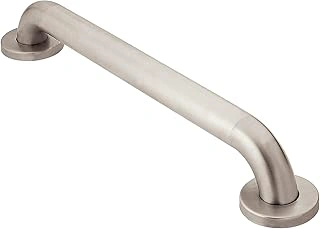
Moen Home Care 36-Inch Stainless Steel Grab Bar, Peened Texture, R8936P
The Moen Home Care 36-Inch Stainless Steel Grab Bar (R8936P) is a permanent-mount solution built for long-term safety and stability. Its 36-inch length provides extensive horizontal support across a shower wall or beside a toilet, giving you multiple hand positions and greater flexibility when sitting, standing, or moving around the bathroom. The peened texture adds a slip-resistant grip even when wet, while the stainless steel construction resists corrosion in humid environments.
This bar requires wall mounting through drilling, which makes it a better fit for homeowners committed to aging-in-place modifications rather than temporary renters. When paired with Moen SecureMount anchors, you can install the bar by drilling into grout lines instead of directly through tile faces, minimizing visible damage and reducing the risk of cracking. This approach still delivers a secure, weight-bearing mount while preserving more of your tile surface.
At $28.32 with a 4.8/5 rating, the R8936P offers strong value for a durable, code-compliant grab bar. The 36-inch span is especially useful in larger showers or along walls where you need consistent support across a wider area. If you want a grab bar that will stay in place for years and can handle daily use, this model delivers the permanence and grip texture that temporary suction bars cannot match.
- ✅ 36-inch length provides multiple hand positions and extended horizontal support
- ✅ Peened texture offers slip-resistant grip when wet
- ✅ Stainless steel construction resists corrosion in humid bathrooms
- ✅ Compatible with SecureMount anchors for grout-line installation that minimizes tile damage
- ✅ Strong value at $28.32 with 4.8/5 rating
- ⚠️ Requires drilling into walls, not suitable for renters or temporary setups
- ⚠️ Permanent installation commits you to fixed bar placement
Key Factors to Assess Before Choosing
- User weight and whether the grab bar will support full body weight during a fall or slip
- Tile type: glossy ceramic, porcelain, textured, or natural stone (affects suction grip)
- Bathroom ownership: renter, homeowner, or assisted living facility with modification rules
- Wall structure behind tile: studs, cement board, or hollow drywall (critical for anchored options)
- Frequency of use: daily support vs. occasional steadying
- Permanence preference: temporary trial, seasonal use, or long-term installation
Common Mistakes to Avoid
- Relying on suction grab bars for full body weight support during falls - they're best for steadying, not catching falls
- Installing suction bars on textured, porous, or freshly cleaned tile without proper drying time
- Drilling into tile face instead of grout lines when using anchors, creating unnecessary cosmetic damage
- Choosing length based on aesthetics rather than actual grip span needed during transfers
- Skipping periodic suction cup checks - they need re-seating and cleaning to maintain hold
- Ignoring wall structure: anchoring into drywall alone without hitting studs or using toggle anchors