We may earn a commission when you buy through links on this page, at no extra cost to you. How this works.
The decision to modify stairs versus installing a stairlift comes down to three factors: current mobility level, home budget, and how quickly balance or strength is declining. A stairlift solves accessibility completely but costs $3,000-$15,000. The modifications below work when someone can still navigate stairs with care but needs better conditions to do so safely.
Falls on stairs cause more than 12,000 deaths annually in the U.S., with adults over 65 representing the majority. Poor lighting, worn treads, and single-side handrails create unnecessary risk. The good news: you can address all three problems for under $200 and a weekend of work.
Compare your situation against these scenarios. If your parent hesitates at the top step, grips the rail tightly, or has fallen once already, modifications buy time and reduce immediate danger. If they avoid stairs entirely or cannot climb without assistance, a stairlift or first-floor bedroom conversion becomes necessary.
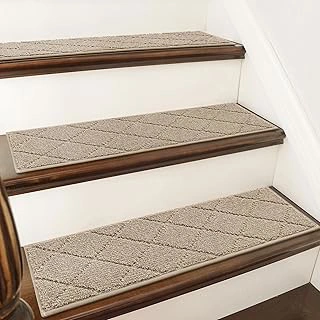
COSY HOMEER Non-Slip Edging Stair Treads for Wooden Steps
These adhesive strips attach to the front edge of each step rather than covering the full tread surface. At $23.99, they address the highest-risk zone where feet land during descent. The 4.7/5 rating reflects reliable adhesion on wood, tile, and laminate surfaces.
The edging design works well when you want grip without hiding the stair's finish. Each strip is pre-cut to standard stair width, and the adhesive bonds strongly after 24 hours of curing. They're thin enough that they won't create a tripping hazard at the step edge.
Imagine your mother descends the stairs slowly, placing her full weight on the ball of each foot. The textured edge catches her sole and prevents forward momentum, giving her time to shift weight safely to the next step.
Check your stair nosing material before ordering. These work on most hard surfaces but may not adhere well to heavily varnished or oiled wood without light sanding first.
- ✅ Targets the highest-risk front edge of each step
- ✅ Doesn't hide wood grain or existing finishes
- ✅ Strong adhesive for long-term use
- ⚠️ Requires proper surface prep for best adhesion
- ⚠️ Covers only the nosing, not the full tread
Step 1: Improve Visibility with Better Lighting
Depth perception weakens with age, making it harder to judge where one step ends and the next begins. Overhead lighting casts shadows that obscure stair edges, especially at the top and bottom transitions where most falls occur.
Motion-sensor LED strip lights installed along the stair edge solve this problem. They activate automatically when someone approaches, illuminate each tread clearly, and turn off after a set period to conserve energy. Look for battery-powered options if wiring is impractical, or plug-in strips if an outlet is nearby.
For example, imagine your mother comes downstairs for water at 2 a.m. With motion-sensor lights, she doesn't fumble for switches or navigate in darkness. Each step edge glows softly, removing guesswork and reducing misstep risk.
Install lights low on the wall adjacent to stairs or directly under the nosing of each tread. Avoid bright white LEDs that cause glare; warm white (2700-3000K) provides clear visibility without harshness.
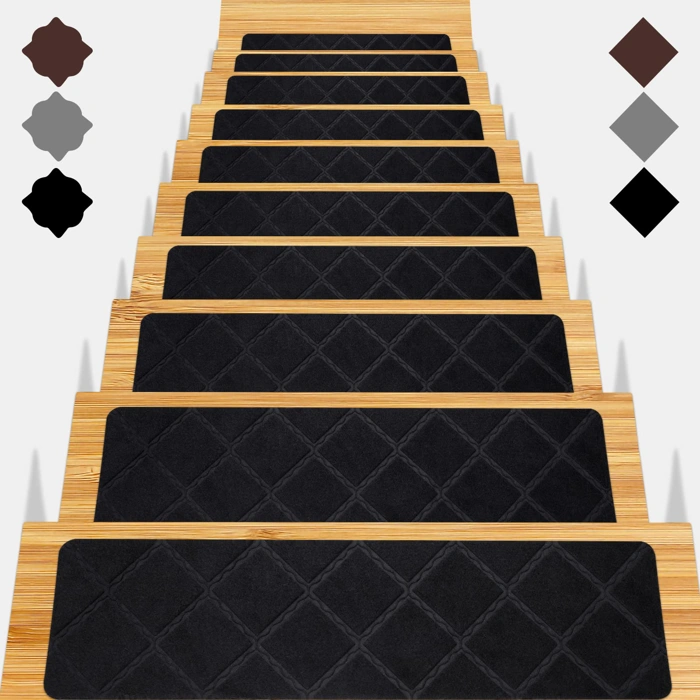
Indoor Non-Slip Carpet Stair Treads for Wooden Steps, 15-Pack (8x30in)
These carpet treads cover the entire step surface and provide cushioning in addition to grip. At $25.49 for 15 treads, they offer full coverage for a standard staircase. The 4.3/5 rating indicates solid performance, though some users report occasional corner lifting on heavily trafficked stairs.
The carpet surface feels softer underfoot than adhesive strips and adds warmth to cold wood or tile stairs. Installation uses peel-and-stick backing, and the treads are machine washable if they become soiled. Each measures 8x30 inches, fitting most residential stairs.
Picture this scenario: your father has arthritis in his knees and finds hard stairs painful. The cushioned carpet treads reduce impact on his joints while giving his slippers something to grip, making both ascent and descent more comfortable.
Measure your stair depth before ordering. These work best on stairs with 8-10 inch treads; deeper stairs may show exposed edges. Also consider whether the carpet aesthetic matches your home's style.
- ✅ Full-surface coverage and cushioning
- ✅ Softer feel on bare feet and slippers
- ✅ Machine washable for easy cleaning
- ⚠️ May lift at corners with heavy use
- ⚠️ Changes the visual appearance of stairs significantly
Step 2: Increase Grip with Non-Slip Stair Treads
Smooth hardwood or worn carpet on stairs becomes slippery, especially in socks or soft-soled slippers. Non-slip treads add texture and friction exactly where feet land, preventing the forward slide that causes falls.
You'll find three main types: adhesive strips, carpet treads, and clear grip tape. Adhesive edging strips attach to the front nose of each step and work well on wood or tile. Carpet treads cover the entire step surface and add cushioning. Clear grip tape is nearly invisible and ideal when you want to preserve the stair's appearance.
Installation takes 30-60 minutes for a standard 13-step staircase. Clean each step thoroughly with rubbing alcohol, let dry completely, then press treads firmly from center outward to eliminate air bubbles. Most adhesive treads stick permanently but can be removed with a heat gun if needed.
Consider the scenario: your father wears smooth-soled slippers and tends to rush. Textured treads give his feet something to grip against, slowing any slide and giving him a split-second to catch himself on the handrail.
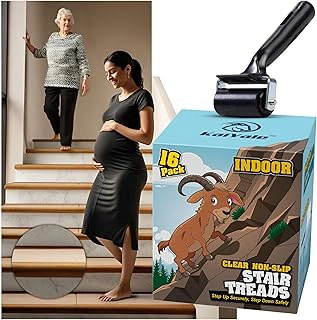
KaiYale 16 Pack 24x4 Inch Clear Non Slip Self-Adhesive Stair Treads for Wooden Steps
Clear grip strips provide traction without altering your stair's appearance. At $22.49 for 16 strips, this option preserves wood grain, tile patterns, or painted finishes while adding safety. The 4.7/5 rating reflects strong adhesion and durability.
Each strip measures 24x4 inches, designed to cover the front landing zone where feet make contact. The clear material becomes nearly invisible after application, making it ideal for homes where aesthetics matter or rental properties where permanent changes aren't allowed.
Consider this: your mother takes pride in her home's oak staircase but recently had a close call in socks. Clear treads give her the friction she needs without covering the wood she loves, and they'll peel off cleanly if she ever moves.
These require clean, dry surfaces for proper adhesion. Avoid installing in high humidity or on textured surfaces where air pockets can form. The clear material may yellow slightly after a year of sun exposure near windows.
- ✅ Nearly invisible after installation
- ✅ Preserves the original look of stairs
- ✅ Removes cleanly if needed
- ⚠️ May yellow with prolonged sun exposure
- ⚠️ Requires careful application to avoid air bubbles
Step 3: Provide Reliable Support with Dual Handrails
Most homes have a handrail on only one side of the staircase. Adding a second rail gives your parent continuous support regardless of which direction they're moving. Descending becomes safer because they can grip with their stronger hand, and ascending allows them to pull themselves up with less leg strain.
Building codes require one handrail, but two is optimal for aging in place. The second rail should run at the same height (34-38 inches from stair nosing) and extend beyond the top and bottom steps for secure grip before and after transitions.
Wall-mounted rails work for staircases with walls on both sides. For open staircases with a banister on one side, retrofit kits attach a rail to the wall side. Professional installation costs $200-$400, or you can DIY if you're comfortable locating studs and using a drill.
Picture your father carrying laundry downstairs. With rails on both sides, he can balance the basket against his hip and maintain two-handed support, reducing the temptation to carry too much at once.
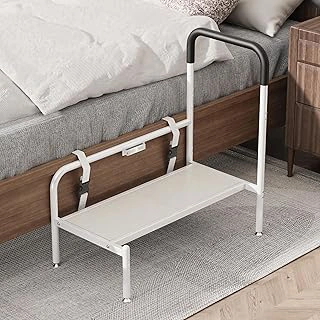
Josmimic Bed Step Stool with LED Light and Assist Rail for High Beds
While not a stair solution, this bed step addresses a related fall risk for seniors with mobility challenges. At $129.99, it combines a stable step platform, LED lighting, and an assist rail to help with getting in and out of high beds. The 4.3/5 rating reflects its practical design for bedrooms.
The integrated rail provides pull-up support, and the LED light activates via motion sensor for nighttime visibility. The step height reduces the distance from floor to mattress, decreasing strain on knees and hips. It's particularly useful for seniors who have difficulty with stairs and would benefit from similar support in the bedroom.
Imagine your mother navigates stairs carefully during the day but struggles most at night when getting up for the bathroom. This step with its built-in light and rail creates a safer bedroom environment that complements stair modifications.
Measure your bed height and floor clearance before ordering. The step works best with beds 20-30 inches high and requires at least 18 inches of clearance alongside the bed frame.
- ✅ Combines step, lighting, and support rail in one unit
- ✅ Motion-sensor light for nighttime safety
- ✅ Reduces bed entry/exit strain
- ⚠️ Higher price point than basic steps
- ⚠️ Requires specific bed height and floor space
Step 4: Keep Stairs Clear of Clutter
This step costs nothing but requires consistent habits. Shoes, bags, books, and pet toys left on stairs create tripping hazards, especially when someone's attention is focused on their footing rather than obstacles.
Establish a firm rule: nothing lives on the stairs, even temporarily. Place a basket at both the top and bottom for items that need to go up or down, and make a habit of carrying them during your next trip. This removes the temptation to leave things 'just for now' on a step.
Low-pile carpet runners help by providing a visual boundary and making objects more visible against the textile surface. Darker stairs in particular benefit from lighter-colored runners that create contrast.
For example, imagine your mother needs her reading glasses from upstairs. Instead of setting her coffee mug on the fourth step while she retrieves them, she leaves it on the hall table. That single habit prevents the scenario where she forgets the mug and trips over it later.
When Are These Solutions Not Enough? Knowing When to Consider a Stairlift
These modifications work when mobility is declining but not absent. Watch for these signs that indicate a stairlift or first-floor living arrangement is needed: your parent uses hands and knees to crawl upstairs, avoids the second floor entirely, has fallen on stairs despite these improvements, or requires physical assistance to climb.
Balance problems, significant leg weakness, or conditions like Parkinson's or severe arthritis may progress beyond what lighting and treads can address. A physical therapist can assess whether stair navigation is still safe with modifications or whether alternative solutions are necessary.
Stairlifts range from $3,000 for straight indoor stairs to $15,000+ for outdoor or curved installations. Medicare doesn't cover them, but some state Medicaid programs do. Alternatively, converting a first-floor room to a bedroom and adding a half-bath costs $5,000-$12,000 but eliminates stair risk entirely.
The goal is safe independence for as long as possible. These modifications buy time, but staying alert to declining ability prevents denial from becoming dangerous.
A Simple Checklist for Safer Stairs and Peace of Mind
- Install motion-sensor LED lighting along stair edges or under nosing
- Apply non-slip treads to all steps, choosing strips, carpet, or clear tape based on aesthetic preference
- Add a second handrail on the opposite wall for continuous support
- Clear all objects from stairs and establish a 'nothing on stairs' rule
- Test lighting at night to ensure each step edge is clearly visible
- Check that handrails are secure and mounted at 34-38 inches height
- Schedule a physical therapy assessment if balance or strength concerns exist
- Compare modification costs side-by-side with stairlift quotes to make an informed decision
- Reassess safety every six months as mobility changes