We may earn a commission when you buy through links on this page, at no extra cost to you. How this works.
Narrow tubs create a frustrating problem when you need safe, seated bathing: traditional transfer benches often overhang the rim awkwardly or simply won't fit without blocking the door or toilet. The two practical solutions - wall-mounted transfer benches and sliding shower chairs - both eliminate the need for interior tub width, but they differ sharply in how they're installed, how much floor space they reclaim, and how much weight they can handle.
Wall-mounted transfer benches anchor directly to the studs behind your tub wall. The seat extends across the tub rim and swings or folds out of the way when not in use. Because they're fixed to the structure, they typically support higher weight limits and provide a stable pivot point for transfers. The tradeoff is permanent installation: you'll need to locate studs, drill through tile or fiberglass, and commit to the placement.
Sliding shower chairs sit inside the tub and let you slide across the rim rather than lifting your legs over it. Most models rest on adjustable legs with suction or rubber feet, so installation is tool-free and reversible. They work well when you want portability or rent your home, but weight capacity is usually lower and the chair remains inside the tub full-time, reducing usable space.
The right choice depends on whether you value long-term stability and floor clearance over easy removal and low commitment. This comparison walks through tub width constraints, installation requirements, transfer mechanics, and daily usability so you can match the design to your bathroom layout and mobility needs without guessing.
Quick comparison
| Wall Mounted Folding Shower Seat and Bench, 350 lb Capacity | Check current price and mounting specifications |
| 20-inch Folding Wall Mounted Shower Seat, Stainless Steel, 400 lb Capacity | See installation requirements and dimensions |
Fit and safety come first
Use the comparison as a shortlist, but keep fit, comfort, and any health or safety constraints ahead of price.
What is a Wall-Mounted Transfer Bench?
A wall-mounted transfer bench attaches directly to wall studs inside the shower, eliminating the need for any contact with the tub edge or floor. The bench consists of a fold-down seat secured by heavy-duty brackets that support weight capacities typically between 350 and 400 pounds. When not in use, the seat folds flush against the wall, reclaiming floor space and reducing visual clutter in small bathrooms.
Installation requires locating wall studs and drilling permanent anchor points, which means the bench becomes a fixed part of the shower structure. Most models extend 18 to 20 inches from the wall when deployed, providing a stable perch without requiring balance on a movable base. The folding mechanism usually involves a simple hinge or pin system that locks securely in the down position during use.
The primary advantage is space efficiency: once folded, the bench adds almost no footprint to a narrow tub enclosure, making it easier for other household members to use the shower normally. This design also avoids the leg-clearance issues that freestanding benches create in tight quarters. Installation complexity is the main constraint - you need access to solid framing, basic power tools, and confidence in permanent wall penetrations. Renters and those uncomfortable with structural modifications will find this option less practical than portable alternatives.
Wall-mounted benches work best when the wall placement aligns naturally with the entry point of the tub, allowing a direct side transfer without twisting. Permanence means careful planning: once installed, repositioning involves patching old holes and drilling new ones.
What is a Sliding Shower Chair?
A sliding shower chair works by straddling the tub edge, placing part of the seat outside the tub and part inside, so the user can sit down outside and slide across into the bathing area without having to step over the rim. The seat glides along a smooth surface or track, supported by adjustable legs on both sides of the tub wall. This bridge design depends on stable, level contact with the tub rim at two points, which means the tub opening must be wide enough to accommodate the seat frame and provide balanced support.
Most standard sliding models require a tub opening between 22 and 28 inches to fit correctly. Tubs narrower than 24 inches often cannot accommodate the seat width and leg spread needed for safe, stable positioning. The seat needs room to rest firmly on both the outside bathroom floor and the tub floor, with the rim supporting the middle section during the slide.
Setup is straightforward: adjust the leg heights to match your tub and floor, confirm that the seat sits level across the rim, and test the sliding motion before use. No drilling, permanent brackets, or wall anchors are required, which makes sliding chairs well-suited for rentals, temporary care situations, or households that may need to move the equipment between bathrooms. Portability is a key advantage when flexibility matters more than a fixed installation.
Because the chair is not anchored to the wall, it relies entirely on friction and the user's centered weight for stability. Users who need maximum support during transfers or have very narrow tubs may find that a wall-mounted bench offers better control and a more secure feel.
Head-to-Head Comparison for Narrow Tubs
Choosing between a wall-mounted transfer bench and a sliding shower chair for a narrow tub depends on how much interior space you have, whether permanent installation is acceptable, and what kind of stability you need. Wall-mounted benches bypass the width constraint entirely because they anchor directly to wall studs and fold out over the tub without touching the rim. Sliding transfer benches, by contrast, rest on both the tub edge and the bathroom floor, so they require enough clearance for the frame to span the opening and stable, level rim surfaces on both sides.
Wall-mounted models fold flush against the wall when not in use, leaving the full width of the tub available for other users or cleaning. Sliding chairs need clearance on both the exterior and interior sides of the tub, and the frame remains in place even when the seat is slid to one end. If your tub opening is less than twenty-four inches wide, most sliding benches will not fit securely, whereas wall-mounted options work in any tub width as long as the wall behind the tub can accept lag bolts into studs.
Installation effort differs sharply: wall-mounted benches require drilling pilot holes, locating studs, and fastening the hinge bracket with heavy-duty hardware, while sliding models assemble with hand-tightened knobs and clamps that grip the tub edge. Once installed, a wall-mounted bench is permanent and cannot be moved to another bathroom or taken on trips. Sliding chairs are portable, making them a better match if you split time between two homes or need the chair to travel with you.
Stability also comes from different sources. Wall-mounted benches anchor to the building structure, so they feel rock-solid and do not shift during transfers. Sliding models rely on friction pads and adjustable legs that grip the tub rim and floor; if the rim is rounded, uneven, or slippery, the frame may wobble. Weight capacity for wall-mounted benches typically reaches three hundred fifty to four hundred pounds when properly anchored, while sliding chairs vary widely depending on frame material and leg design - check the manufacturer rating for each specific model.
In a narrow tub, the wall-mounted route makes the most sense when you want maximum interior space, permanent anchor-point stability, and are comfortable drilling into studs. A sliding chair works better when you cannot modify the wall, need the option to remove the chair between uses, or want to take the equipment with you if you move.
Key Factors to Consider: User Mobility and Bathroom Layout
Choosing between a wall-mounted transfer bench and a sliding shower chair depends on two factors that often decide the question before price or preference enter the picture: how much weight-bearing ability the user retains, and whether your bathroom structure permits the installation you want.
Users who can stand briefly and pivot benefit most from a sliding shower chair. The seat glides along the tub rim, letting someone sit outside the tub, shift their weight onto the seat, and slide across into the shower area without a full step over the threshold. This works well when balance is limited but leg strength remains sufficient for a controlled sit-to-stand motion. In contrast, someone who cannot bear weight safely or who tires quickly during transfers will find a wall-mounted transfer bench more appropriate. These benches anchor to the wall and extend across the tub edge, creating a stable platform for a fully seated transfer from wheelchair or walker directly onto the bench, then swinging legs over without standing.
Bathroom layout imposes hard limits. Wall-mounted benches require access to wall studs behind the tile or surround, typically 16 or 24 inches apart. If studs fall in the wrong location or the wall is concrete block, installation becomes complicated or impossible without professional reinforcement. Sliding chairs need a flat, even tub rim at least 1.5 inches wide and made of material firm enough to support the track without flexing. Older cast-iron tubs usually work; flimsy fiberglass surrounds or tubs with curved, narrow rims may not. Measure the rim width and check for any warping before committing to a sliding model.
Shared bathrooms tip the decision toward removable or foldable options. Wall-mounted benches with fold-up seats keep the shower open for other users, though the brackets remain visible. Sliding chairs lift off their tracks in seconds, leaving only small clamps on the tub edge. If the bathroom serves multiple people or you anticipate selling the home soon, a sliding chair offers more flexibility. Renters face the same constraint: permanent wall anchors usually violate lease terms, making a sliding chair the practical default unless the landlord grants written permission for modifications.
Caregiver assistance changes the equation as well. A wall-mounted bench provides a fixed, predictable transfer point that caregivers can approach from the side, offering consistent hand placement and body mechanics. Sliding chairs require the caregiver to steady the seat during the glide, which can be awkward in a narrow tub alcove. If transfers happen alone, both options work, but the user must be able to operate any locking mechanisms and manage their own balance during the move.
Installation feasibility sometimes overrides every other consideration. If you cannot locate studs where the bench needs to mount, or if your tub rim cannot support a sliding track, the choice is made for you. Check these structural realities early, ideally before purchasing, to avoid returns and wasted time.
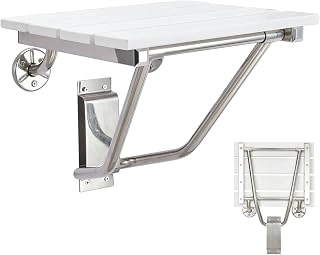
Wall Mounted Folding Shower Seat and Bench, 350 lb Capacity
This wall-mounted folding bench offers a 350 lb weight capacity and addresses the tight-clearance challenge in narrow tubs by folding flat against the wall when not in use. The permanent mount reduces wobble and instability common in freestanding or sliding seats, and the fold-up design means you reclaim floor space after every shower.
Priced at $115.99 with a 4.5/5 rating, this option sits between basic wall-mount seats and premium transfer benches. The 350 lb capacity handles most users comfortably, and the stainless mounting hardware installs into wall studs for secure attachment. You'll need to locate studs behind tile or fiberglass, drill pilot holes, and confirm waterproof sealant around the mounting points to helps reduce the chance of moisture intrusion behind the wall surface.
The tradeoff is installation commitment. Unlike portable sliding chairs, you're drilling into your shower wall and creating a permanent fixture. If you rent, share the bathroom with someone who doesn't need the seat, or anticipate moving within a year or two, a sliding chair offers more flexibility. But when tub width restricts floor-based options and you want rock-solid stability without sacrificing usable space, a folding wall-mount bench solves both problems at once.
Measure the distance from your tub rim to the nearest wall stud before purchase. If studs fall outside the ideal mounting zone - typically the listed size from the tub edge - you may need blocking installed between studs or a different mounting strategy. Verify clearance when folded up so the seat doesn't interfere with shower controls, handheld spray holders, or sliding doors.
- ✅ 350 lb weight capacity suits most users
- ✅ Folds flat against wall to free up floor space in narrow tubs
- ✅ Permanent wall mount eliminates wobble and shifting
- ✅ Priced at $115.99 for stable, space-saving solution
- ⚠️ Requires drilling into shower wall and locating studs
- ⚠️ Permanent installation limits flexibility for renters or shared bathrooms
- ⚠️ Stud placement may not align with ideal mounting location
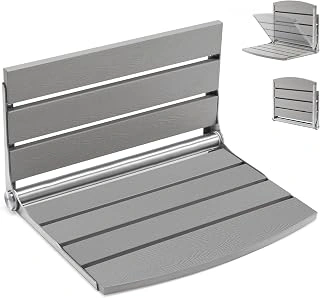
20-inch Folding Wall Mounted Shower Seat, Stainless Steel, 400 lb Capacity
Users who need higher weight capacity without sacrificing narrow-tub compatibility will find this 20-inch stainless steel folding seat delivers both durability and value at $104.99. The 400 lb capacity rating exceeds most competing wall-mounted models while maintaining the same 20-inch depth that fits standard narrow tubs without blocking movement.
Stainless steel construction provides corrosion resistance and long-term stability in wet environments, addressing common concerns about rust and frame degradation that affect coated aluminum alternatives. The folding mechanism uses reinforced hinges designed to handle the higher weight threshold, and the seat folds flat to approximately the listed size when not in use - critical for maintaining usable tub width in tight bathroom layouts.
Installation follows the same pattern as other wall-mounted options: locate wall studs, drill pilot holes, and secure with included hardware. The 20-inch depth places the seat edge near the tub midpoint in most standard larger configurations, which means taller or longer-limbed users can sit comfortably without their knees crowding the opposite tub wall. Weight distribution across stainless steel support arms spreads the load evenly, reducing stress on mounting points.
The 4.9/5 rating reflects consistent performance across different user weights and bathroom conditions. At this price point, the combination of capacity, material quality, and space efficiency makes this model a practical choice when budget and structural support requirements align with wall-mounted installation.
- ✅ 400 lb weight capacity handles broader user range
- ✅ Stainless steel resists corrosion in constant moisture
- ✅ 20-inch depth fits narrow tubs while providing comfortable seating
- ✅ Folds flat to preserve tub width when not in use
- ✅ Lower price than many lower-capacity alternatives
- ⚠️ Requires wall stud placement and drilling into tile or surround
- ⚠️ Fixed position limits adjustment once installed
- ⚠️ Heavier construction may complicate single-person installation
Our Recommendation: Which Option is Safer for a Narrow Tub?
For most narrow tub installations, wall-mounted transfer benches offer the safest and most practical solution. When your tub measures under 26 inches wide, a sliding shower chair will struggle to fit properly, leaving minimal clearance for safe transfers and increasing the risk of equipment shifting during use.
Wall-mounted benches eliminate width constraints entirely. The seat attaches directly to wall studs, so stability depends on structural anchoring rather than tub dimensions or rim condition. This makes them especially valuable when the tub edge is curved, angled, or made from materials that don't grip well. The fold-up design also restores full tub access for other household members, a practical advantage in shared bathrooms.
Sliding chairs do have a place. If you're renting and cannot install permanent hardware, or if you need to move the equipment between locations, a sliding model provides portability that a wall-mounted bench cannot match. They work well in standard-width tubs when the rim provides a stable, level surface. But in narrow installations, the compromised fit and reliance on tub-edge friction create stability tradeoffs that most users find unacceptable.
Choose a wall-mounted bench when your tub is narrow, when you own your home and can anchor hardware properly, or when long-term stability matters more than portability. Reserve sliding chairs for temporary use, rental situations, or when you genuinely need equipment that travels with you.
Installation and Safety Tips for Wall-Mounted Benches
Mounting a wall-mounted transfer bench safely requires locating and securing into wall studs, not just drywall or tile backing. Use a stud finder to identify at least two studs within the mounting bracket span, typically 16 or 24 inches apart. Mark stud centers, drill pilot holes through tile or fiberglass with a masonry bit, then fasten the bracket assembly with the lag screws provided by the manufacturer. Seat height should fall between 17 and 19 inches from the tub floor for most adults, though an occupational therapist can provide personalized guidance based on leg length and mobility patterns.
Grab bars placed within arm's reach of the seated position add a second layer of stability during transfers. Mount these into studs as well, positioned so the user can grip them while pivoting onto or off the bench. Before the first unassisted use, test the installed bench with the user present and confirm the fold mechanism locks securely in both the open and stowed positions.
Monthly maintenance checks help catch loosening hardware early. Inspect mounting bolts, hinge pins, and any locking tabs for signs of movement or wear. Tighten fasteners as needed and verify the seat surface remains clean and free of soap buildup that could reduce traction. If wall construction involves steel studs, unusual spacing, or you're uncertain about load-bearing capacity, professional installation ensures the bench will support the user's weight safely over time.
Making the Confident Choice for Your Parent's Safety
Narrow tubs create real constraints that wall-mounted transfer benches address more directly than sliding alternatives. When your parent's tub measures 28 inches or less in width, a fold-down bench eliminates the constant worry about whether a freestanding chair will fit securely or tip during transfers.
Both installation cost and permanence are acceptable tradeoffs for the stability and space efficiency wall-mounted solutions deliver in tight bathrooms. A sliding chair might seem easier because it requires no installation, but the spatial reality of a narrow tub often makes that convenience irrelevant when the chair can't position properly or blocks the shower controls.
Before purchasing, measure your tub width at the narrowest point, assess whether wall studs are accessible behind the mounting area, and talk with your parent about whether they're comfortable with a fold-up seat. Some users prefer the visible reassurance of a freestanding frame, while others appreciate that a wall-mounted bench disappears when not in use, making the bathroom feel less medicalized.
Addressing the physical space constraint removes ongoing worry about fit and stability. Once you've confirmed the wall structure can support the load and the bench height works for your parent's mobility needs, installation creates a permanent solution that doesn't shift, slide, or require repositioning before each shower.
For guidance on reinforcing bathroom walls and positioning support rails alongside your transfer bench, review grab bar placement guides and bathroom safety checklists to ensure every element works together for confident, independent bathing.