We may earn a commission when you buy through links on this page, at no extra cost to you. How this works.
Standing under a fixed shower head becomes harder as balance, strength, and flexibility decline with age. A traditional overhead fixture demands that your parent maintain a stable stance, twist to rinse shoulders or legs, and reach overhead to adjust the spray - all movements that raise fall risk in a slippery tub.
Handheld shower heads shift control back to the bather. Seated bathing becomes possible. Directing water to specific areas no longer requires contorting the body or shuffling wet feet. The hose allows someone using a shower chair or transfer bench to rinse without standing at all, and the pause button lets them soap up without a continuous stream running cold or wasting water.
Fixed models still have a place. When a senior maintains good mobility and prefers the simplicity of a stationary spray, a well-positioned rain head or adjustable wall mount can work. But the decision matrix tilts heavily toward handheld designs once stability or sitting becomes part of the routine. The flexibility to aim the spray, the option to dock the wand at seated height, and compatibility with grab bars make handheld units the safer default for most aging adults.
This guide compares the two formats and highlights three handheld shower heads built around senior bathing safety: pause switches that stop the flow mid-shower, hose lengths that reach a seated user, and mounting hardware that coexists with grab bar installations.
Quick comparison
| AquaDance 7" Premium High Pressure 3-Way Rainfall Handheld Shower Combo - Chrome | Check current price and mounting options |
| LEVERLOC 12 Inch Heavy Duty Suction Shower Grab Bars (2 Pack) - Grey | Check current price and suction capacity |
| Reyiu 16.5 Inch Suction Shower Grab Bars with Safety Indicators (2 Pack) | Check current price and indicator system |
Fit and safety come first
Use the comparison as a shortlist, but keep fit, comfort, and any health or safety constraints ahead of price.
AquaDance 7" Premium High Pressure 3-Way Rainfall Handheld Shower Combo - Chrome
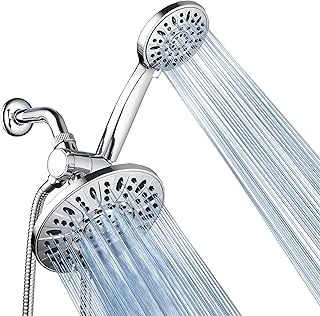
Households with both seated and standing bathers face a common challenge: choosing between a handheld wand and a fixed overhead spray. The AquaDance 7" Premium High Pressure 3-Way Rainfall Combo solves this by installing both at once, using a three-position diverter that switches between the handheld wand, the fixed rainfall head, or both running together.
The 7-inch fixed head mounts at standard height and delivers a wide rainfall pattern for independent bathers who prefer hands-free rinsing. The handheld wand lifts from its dock and extends on a flexible hose, allowing seated users or caregivers to direct spray exactly where needed. The diverter knob sits between the two heads, so switching modes requires no pipe changes or reaching behind a wall plate.
This dual-head arrangement works well when one bathroom serves people with different mobility levels. A standing adult can use the overhead spray in the morning, then a seated senior can switch to the handheld wand in the evening without any reinstallation. Families report that the ability to run both heads at once helps with rinsing hair or warming the stall quickly, though total pressure drops slightly when both run simultaneously.
The handheld wand weighs more than single-function models because it shares internal pressure-boosting components with the fixed head. Seniors with weaker grip may notice the extra heft during longer rinses. The spray pattern adjusts by rotating a collar on the wand face, which requires two hands and moderate finger strength - less convenient than single-button controls found on lighter handheld-only designs.
Installation replaces a standard shower arm without new plumbing. The fixed head screws onto the existing arm, and the diverter body attaches below it. The handheld hose connects to the diverter, and the wand clips into a separate wall bracket that mounts with an adhesive pad or screws. The chrome finish matches most bathroom hardware, and the hose measures long enough to reach from a seated position to shoulder height.
At $34.99, this combo costs less than buying separate handheld and fixed units, making it a practical choice when multiple bathing styles need to coexist in one stall. The tradeoff is a heavier wand and less intuitive spray adjustment compared to purpose-built handheld safety models, but the flexibility of switching between modes without replumbing offers real value for mixed-mobility households.
- ✅ Installs both handheld and fixed heads without new plumbing
- ✅ Three-position diverter switches modes with a simple knob turn
- ✅ 7-inch rainfall head provides hands-free rinsing for independent bathers
- ✅ Flexible hose allows seated users to direct spray as needed
- ✅ Both heads can run together for faster warmup or rinsing
- ⚠️ Heavier wand may strain weaker grip during extended use
- ⚠️ Spray adjustment requires two-hand rotation, not a single button
- ⚠️ Total pressure drops when running both heads simultaneously
Fixed Shower Heads: Are They a Safe Option for Seniors?
Fixed shower heads mount directly to the wall or ceiling and spray water from one stationary position. For many seniors, that rigid setup creates safety problems that aren't immediately obvious until balance or mobility changes.
The biggest structural issue is reach. A fixed overhead spray forces you to stand directly under the water to rinse your back, sides, and lower body. If standing balance becomes unreliable, you're stuck choosing between incomplete rinsing or risky movement. Seniors who need to sit on a shower chair face an even harder problem: the water angle is wrong, leaving large areas untouched unless you stand up or lean forward - both of which defeat the purpose of seated bathing.
Head position adds another layer of difficulty. Rinsing hair under a fixed head requires tilting your head back and looking up, which can trigger dizziness in people with vestibular issues, neck arthritis, or blood pressure changes. That momentary imbalance is enough to cause a slip, especially on wet tile.
Fixed heads do work for seniors who remain very mobile, have no balance concerns, and prefer the simplicity of a traditional setup. They also make sense as a secondary option in a dual-head system, where a handheld unit handles the detailed work and the fixed head provides overhead coverage. But as a sole bathing solution, fixed shower heads lose functionality quickly as physical needs shift. The inability to redirect water, adjust height on demand, or support seated use makes them a poor match for aging in place.
If a fixed head is already installed and working well today, plan ahead: know that mobility changes can make it unsafe within months, and a handheld retrofit is straightforward when the time comes.
LEVERLOC 12 Inch Heavy Duty Suction Shower Grab Bars (2 Pack) - Grey
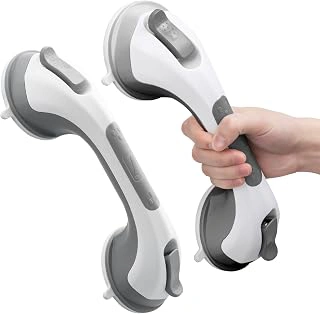
Grab bars make handheld shower heads safer and more practical, especially for seated bathing or transfers between standing and sitting positions. The LEVERLOC 12 Inch Heavy Duty Suction Shower Grab Bars arrive as a two-pack in grey, offering stable grip points without the need for drilling or permanent installation.
Each bar spans the listed size, giving enough length to accommodate different hand positions and grip styles. The lever-lock mechanism creates suction against smooth tile surfaces - you can see the lever's position at a glance, which helps during monthly safety checks. This visibility matters when you or a family member needs to confirm the bar is secure before relying on it during a shower.
Because these bars use suction rather than screws, placement is flexible. Position one near the shower control to steady yourself while adjusting water temperature with a handheld wand, and mount the second where you need support during seated washing or standing up from a shower chair. The pack format lets you create two support points tailored to your specific routine.
The tradeoff is surface dependency. Suction grab bars require smooth, non-porous tile to hold reliably - they will not work on textured surfaces, grout lines, or acrylic panels. You must test the suction monthly by pulling firmly on each bar before use, and reinstall if you notice any loosening. This ongoing maintenance is simple but non-negotiable for safety.
Pairing these grab bars with a handheld shower head creates a seated bathing setup that doesn't require a contractor. The bars provide stability for transfers and posture adjustments, while the handheld wand gives you control over water direction without stretching or standing. Together, they address two of the most common bathing challenges: maintaining balance and reaching all areas comfortably.
At $34.99 for two bars with a 4.4/5 rating, this option suits renters, temporary needs, or anyone testing grab bar placement before committing to permanent installation. Just verify your shower walls are smooth tile, and build the habit of monthly suction testing into your routine.
- ✅ 12-inch length accommodates varied hand positions
- ✅ Lever-lock mechanism visible for quick security checks
- ✅ No drilling required, reversible installation
- ✅ Two-pack allows multiple support points
- ✅ Pairs with handheld shower heads for seated bathing
- ⚠️ Requires smooth, non-porous tile surface
- ⚠️ Monthly suction testing necessary
- ⚠️ Will not adhere to textured or acrylic walls
Handheld Shower Heads: The Clear Winner for Accessibility and Safety
Handheld shower heads reduce fall risk by eliminating the need to stand directly under a fixed spray. Seniors who use a shower chair or transfer bench can direct water exactly where needed without twisting or reaching overhead, which lowers the chance of losing balance on wet surfaces.
The pause button is a practical safety feature. It stops water flow temporarily so you can soap up, adjust position, or exit the shower without temperature surprises when you resume. That control matters when reaction time slows or when stepping in and out requires focus.
Adjustable slide bars let you set the spray height to match seated or standing posture. If shoulder mobility is limited, positioning the head lower means less strain and better coverage. Most handheld models attach to existing plumbing with a diverter, so installation is straightforward and no permanent modification is required.
A flexible hose - usually 59 to 72 inches - gives you freedom to rinse from any angle. Paired with a grab bar or mounted holder, a handheld head supports independence while keeping one hand free for balance. For seniors bathing seated or needing directional control, a handheld design delivers more safety and comfort than a fixed overhead spray.
Reyiu 16.5 Inch Suction Shower Grab Bars with Safety Indicators (2 Pack)
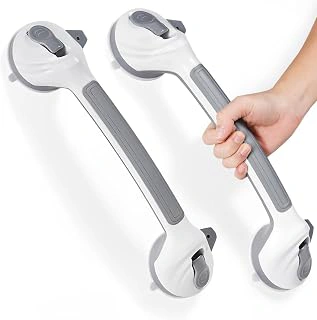
Wider shower stalls and tub transfers need longer support surfaces, and the Reyiu 16.5 Inch Suction Shower Grab Bars deliver that reach in a two-pack that runs $39.99. The extra the listed size over typical larger bars creates more grip options when stepping over tub walls or steadying yourself across a larger shower enclosure.
Each bar includes a safety indicator window that shows green when suction is secure and red when pressure drops. This visual check removes guesswork - you know at a glance whether the bar needs repositioning or re-suction. The two-pack setup lets you place one bar near the showerhead and another by the tub edge, building a pathway of stable contact points.
The tradeoff for longer bars is surface requirement: you need at least the listed size of smooth, uninterrupted tile or fiberglass to create a full seal. If your shower wall has grout lines, textured patterns, or narrow tile panels, the bar may not mount securely. The LEVERLOC larger model fits tighter spaces and shorter tile runs more reliably.
Installation follows standard suction procedure - clean the surface, press the bar flat, and flip the locking levers. Check the indicator windows after installation and again every few weeks. If red appears, release the levers, clean both surfaces again, and re-mount.
Two bars at this price point offer flexibility: mount them horizontally for tub entry, vertically for shower support, or staggered to match your movement pattern. The 16.5-inch length works best when you have the tile real estate and need support that spans a wider distance than compact grab bars provide.
- ✅ 16.5-inch length spans wider shower stalls and tub transfers
- ✅ Safety indicator windows show red when suction weakens
- ✅ Two-pack allows strategic placement at entry and shower zones
- ✅ Visual confirmation removes guesswork about bar security
- ⚠️ Requires 16.5 inches of smooth, uninterrupted tile surface
- ⚠️ Longer bars less adaptable to narrow tile panels or grout-heavy walls
- ⚠️ Higher price than single 12-inch compact models
Key Features to Look For in a Senior-Friendly Handheld Shower Head
- Pause switch on the wand to stop water flow without adjusting temperature
- Lightweight design under 1 pound for limited grip strength
- Hose length of at least 5 feet for seated bathing flexibility
- Adjustable slide bar or multiple mounting heights
- Single-hand operation for spray pattern changes
- Non-slip grip texture on handle
Handheld Shower Head Installation: What You Need to Know
Most handheld shower heads install in minutes without a plumber. The standard approach involves unscrewing your existing fixed head from the shower arm, wrapping the threads with plumber's tape, and hand-tightening the new handheld unit or diverter. Many models include a mount bracket that attaches to the shower arm, so the handheld sits in a cradle when not in use.
Slide bars and wall brackets offer more flexibility. Suction-cup mounts work on smooth tile and glass without drilling, making them ideal for rental bathrooms. Adhesive-backed brackets bond to most surfaces and remove cleanly when needed. Screw-mount bars provide the most stability and adjustability, but they do leave holes. Measure your available wall space before choosing a slide bar, and confirm the bracket height suits your tallest user.
You will need a plumber if you want a dual setup with both handheld and fixed heads running from separate valves, or if your existing shower arm is corroded, leaking, or positioned too low. Valve replacement and replumbing fall outside the typical DIY scope. Renters should review lease terms before drilling or making permanent changes; stick with suction or adhesive mounts when restrictions apply.
Check product pages for included mounting hardware, adapter fittings, and renter-friendly installation options before you order. Most handheld kits arrive with everything you need except plumber's tape, which costs under two dollars at any hardware store.
Other Bathroom Safety Upgrades to Pair with Your New Shower Head
- Shower chair or transfer bench for seated bathing
- Non-slip mats inside and outside the shower or tub
- Grab bars at entry and exit points, not just inside the shower
- Anti-scald valve or temperature limiter set to 120°F maximum
- Improved lighting with motion-sensor or always-on night lights
- Raised toilet seat if bathroom transfers are already difficult
Final Thoughts: Choosing the Right Shower Head for Your Parent's Safety
The safest shower head for an older adult is almost always a handheld model with a pause switch, an anti-slip grip, and enough hose length to reach from a seated position. Fixed heads leave your parent standing under a continuous stream with no quick shutoff, which compounds fall risk when water floods the tub floor or soap gets in their eyes. A handheld unit lets them control the spray, rinse while sitting, and hit pause without fumbling for the main valve.
Grab bars remain the non-negotiable companion. A shower head upgrade does not replace structural support; it reduces the number of moments when your parent has to reach, twist, or stand on one foot. If balance is inconsistent, pair the handheld with at least one suction or permanently mounted grab bar within arm's reach of the seat.
Combo systems make sense when multiple people use the same shower and mobility levels vary. The fixed head serves standing users, while the handheld slides down for seated bathing. Both heads stay plumbed, so no tools are required to switch between users. This arrangement works well in shared bathrooms or when a spouse still showers standing.
Budget should not be the barrier. The three handheld options in this guide range from thirty-five to forty dollars, and installation takes fifteen minutes with a wrench and thread tape. Waiting until after a fall costs far more in medical bills, rehab, and loss of confidence. Measure the current shower-arm height, check whether the tub has a soap dish or corner shelf that might block hose movement, and order this week. Small changes in how water is delivered can preserve independence for years.