We may earn a commission when you buy through links on this page, at no extra cost to you. How this works.
Choosing between daily check-in services and medical alert systems often comes down to one question: are you watching for slow changes in independence, or preparing for sudden falls and emergencies?
Daily check-in services work by tracking routine patterns - whether someone took their morning medication, opened the refrigerator, or moved around the house at expected times. A human or automated system reaches out when those patterns break, catching subtle declines like skipped meals, confusion about medication schedules, or unusual isolation. These services shine when cognitive changes or general frailty make it hard to assess day-to-day wellbeing from a distance.
Medical alert systems take a different approach. They wait for a crisis - a fall in the bathroom, chest pain in the kitchen, a stumble outside - and put help within reach through a wearable button or voice-activated device. Response is immediate, connecting the user to trained operators who can dispatch emergency services or notify family. They excel when the primary risk is a sudden event that requires fast action.
Neither system replaces the other completely. A parent recovering from hip surgery faces acute fall risk and benefits from a wearable alert button. A parent with early dementia living alone may move safely but forget meals or medications, making daily check-ins more valuable. Some households layer both, using check-ins to monitor trends and an alert system as a safety net for emergencies.
The decision often hinges on mobility, cognition, and living situation. Understanding how each system monitors, responds, and fits into a care routine helps match the tool to the actual risk your parent faces today.
Fit and safety come first
Use the comparison as a shortlist, but keep fit, comfort, and any health or safety constraints ahead of price.
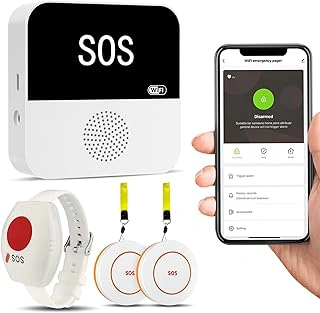
PILSAMAS WiFi Caregiver Pager with Wireless Call & Panic Buttons, App Alert
Families who want emergency notification without monthly subscription fees may find the PILSAMAS WiFi Caregiver Pager a practical middle ground. At $39.96, this system sends app alerts directly to family caregivers when a button is pressed - no professional monitoring center, no recurring costs.
The system includes wireless call and panic buttons that connect through your home WiFi network. When your parent presses a button, the app notifies you immediately on your smartphone. This approach works well if you live nearby or have multiple family members who can respond quickly. The 4.2 rating reflects generally positive user experiences with the basic notification function.
The tradeoff is clear: you become the monitoring center. There's no trained operator to assess the situation, dispatch help, or serve as backup if you miss the alert. WiFi dependency also means the system stops working during internet outages, and coverage is limited to areas within your home network's range. You'll need to keep your phone charged and notification volume enabled at all times.
This option fits families with strong communication habits and realistic response times. If your parent needs help during a fall, can you or another caregiver reach them within minutes? If the answer is yes most of the time, this unmonitored approach may cover routine needs. If your parent lives alone with unpredictable health episodes, or if family members travel frequently for work, a monitored system with professional dispatch becomes more appropriate.
The upfront cost and zero monthly fees make this an accessible starting point for families testing whether button-based alerts improve their daily check-in routine without committing to a subscription service.
- ✅ One-time purchase of $39.96 with no monthly subscription fees
- ✅ App alerts notify family caregivers directly when button is pressed
- ✅ Multiple wireless buttons included for different rooms
- ✅ Simple setup through home WiFi network
- ⚠️ No professional monitoring center or emergency dispatch
- ⚠️ Relies entirely on family availability to respond to alerts
- ⚠️ WiFi-dependent operation stops working during internet outages
- ⚠️ Coverage limited to home network range

Clever Fox Medical Planner Daily – Health Diary Notebook, Wellness Journal & Self-Care Logbook, Lasts 3 Months, 7x10.5″ (Forest Green)
Some families need a middle ground: a way to track daily health without asking an older parent to adopt new technology. The Clever Fox Medical Planner Daily offers a paper-based structure for logging symptoms, medications, appointments, mood, and meals. At $34.99 for a three-month notebook (7×the listed size, Forest Green edition), it turns wellness tracking into a daily handwriting routine that tech-averse seniors may accept more readily than apps or wearable devices.
The planner works when a caregiver can review entries in person during weekly visits or by asking the senior to photograph pages and text them. Each daily spread includes prompts for vitals, water intake, sleep quality, and notes, which helps create consistency even if memory is starting to fade. The 4.6 rating reflects appreciation for the clear layout and durable binding.
The significant limitation is timing: there is no real-time alert if something goes wrong. If your parent falls on Tuesday morning, the planner cannot call for help. It also requires the physical ability to write legibly and the cognitive routine to fill it out each day. Families using this approach typically combine it with scheduled phone calls or pair it with a separate medical alert device for emergencies.
This planner fits stable situations where the goal is longitudinal tracking rather than urgent response - think managing chronic conditions, medication adherence, or preparing for doctor visits. It will not replace a medical alert system if fall risk or isolation is the primary concern, but it can complement regular caregiver contact when the senior prefers pen and paper over digital dashboards.
- ✅ No learning curve for seniors uncomfortable with technology
- ✅ Structured daily prompts support consistent health logging
- ✅ Caregivers can review entries during visits or via photo sharing
- ✅ Useful for tracking chronic conditions and preparing for appointments
- ⚠️ Provides no real-time alerts or emergency response capability
- ⚠️ Requires manual handwriting and cognitive routine to complete daily
- ⚠️ Review depends on caregiver visits or photo uploads, not automatic monitoring
- ⚠️ Not suitable for high fall risk or isolated living situations
What Daily Check-in Services Do
Daily check-in services operate on a predictable schedule, typically using phone calls or mobile app prompts to confirm that routine activities have been completed. A parent might receive a call each morning asking whether medication was taken, breakfast was eaten, and whether they feel well enough to move about the home. Some systems rely on a simple button press or app tap to signal that the day has started normally.
When a check-in is missed, the service follows a tiered escalation path. The first step is usually a follow-up call or notification within a set window - often fifteen to thirty minutes. If there's still no response, the service contacts a designated family member or neighbor. This structure creates a safety net without requiring the older adult to wear a device or press a button during a crisis.
The operational advantage lies in pattern tracking over time. Because these services collect daily data points - sleep quality, appetite changes, mood shifts - they can surface gradual declines that wouldn't trigger a medical alert. A parent who begins skipping morning walks or reporting fatigue more frequently might benefit from a wellness visit or medication review, long before a fall or emergency occurs.
Unlike crisis-response systems that activate only when something goes wrong, check-in services monitor whether normal routines continue. This makes them useful for detecting early signs of cognitive change, medication non-compliance, or social withdrawal. The tradeoff is slower response: if a fall happens between scheduled check-ins, there's no immediate way to summon help unless the individual can reach a phone.
What Medical Alert Systems Do
Medical alert systems provide immediate help when someone presses a wearable button during an emergency. The user wears a pendant or wristband with a button that, when activated, connects to a monitoring center or designated contact - depending on whether the system is monitored or unmonitored.
Monitored systems route calls to a professional operator who assesses the situation, speaks with the user through a two-way speaker, and dispatches emergency services if needed. Unmonitored systems dial a preset list of family members or friends, cycling through the contacts until someone answers. Both types work only when the user presses the button, which means the person must be conscious, able to reach the device, and aware that an emergency is happening.
This reactive design makes medical alert systems effective for acute crises: a fall that causes immediate pain, sudden chest discomfort, or an injury that prevents mobility. The button press triggers an instant response, shortening the window between incident and help. However, these systems do not track daily patterns, detect missed meals, or flag gradual changes in routine. If someone becomes disoriented, forgets to wear the device, or loses consciousness before pressing the button, the system cannot initiate contact on its own.
Medical alert systems shine in situations where fast intervention matters most, but they rely entirely on the user's ability to recognize trouble and take action in the moment.
Head-to-Head: How They Differ in Practice
Cost structures divide sharply between the two services. Daily check-in programs typically charge between $50 and $150 per month for human calls or automated messages, with no equipment purchase required. Medical alert systems range from around $25 to $50 monthly for basic monitoring, but many require an upfront device fee or long-term contract - though some providers now offer no-contract plans with higher monthly rates.
User burden differs even more. Check-in services ask your parent to answer a call or respond to a message every day at a set time. Missing that window triggers follow-up, which means the routine becomes part of daily life. Medical alert systems stay silent until your parent presses a button or the device detects a fall, so there's no scheduled task to remember - just a wearable to keep charged and within reach.
Detection scope reflects each service's design. A check-in call can catch subtle signs: confusion in conversation, skipped meals, unusual sleep patterns, or a general sense that something feels off. The operator may notice changes before a health event turns critical. Medical alert systems focus on acute moments - a fall, chest pain, sudden dizziness - and provide immediate two-way voice contact with a response center trained to dispatch help. They won't detect a gradual decline or a missed medication unless it causes an emergency.
Caregiver involvement follows a similar pattern. Daily check-ins create a rhythm of updates. Many services send you a summary after each call, so you stay informed about small shifts in routine or mood. Medical alert monitoring is quiet until something goes wrong; you receive alerts only when your parent activates the device or an automatic sensor is triggered. That hands-off approach suits families who want crisis backup without daily messages.
Intrusiveness cuts both ways. Some older adults appreciate the predictable human contact of a daily call and the accountability it provides. Others find scheduled check-ins intrusive or patronizing, preferring the independence of wearing a device that stays in the this product. A fall-detection pendant or wristband is visible but passive, while a daily phone call demands attention and, for some, feels like surveillance. Understanding your parent's personality and daily rhythm helps you choose the option they'll actually accept and use over the long term.
Daily Check-in Services: Advantages and Limitations
Daily check-in services track wellness patterns over time rather than responding to emergencies in real time. A coordinator - human or automated - reaches out at scheduled intervals, and the absence of a response triggers an escalation protocol. This structure works well for monitoring subtle changes in routine, medication compliance, or mood that might otherwise go unnoticed until a crisis forces intervention.
Cost is often a deciding factor. Many check-in services charge a fraction of what monitored alert systems require, and there is no equipment to install or replace. For families managing tight budgets while still wanting oversight, this difference matters. The scheduled touchpoints also serve a social function, reducing the isolation that accelerates cognitive and physical decline in some older adults.
The trade-off is timing. If your parent falls or experiences chest pain thirty minutes after a morning check-in, the service will not know until the next scheduled contact - hours or even a day later. Effectiveness depends entirely on whether the person answers calls, responds to app prompts, or completes daily tasks on schedule. Someone with advancing dementia or a habit of ignoring the phone will render the system less useful. Families also report that some older adults feel monitored rather than supported, especially when check-ins are frequent or the tone feels transactional.
These limitations do not make check-in services inadequate; they make them situational. For a parent who is generally stable, lives in a community with nearby neighbors, and benefits from routine reinforcement, a daily call can provide meaningful peace of mind without the expense or stigma of wearing a device. For someone at higher risk of falls, cardiac events, or confusion, the gap between check-ins becomes a vulnerability that an alert system is better positioned to cover.
Medical Alert Systems: Advantages and Limitations
Medical alert systems excel when seconds matter. A fall, sudden chest pain, or stroke creates a narrow window for response, and a wearable button connects directly to trained operators who dispatch help without delay. The passive design requires no daily routine - wear the pendant or wristband, and the system stays ready around the clock.
Monitored models route emergency signals through a professional call center staffed 24/7. Operators assess the situation, contact emergency services if needed, and notify family members according to your preferences. Unmonitored systems skip the call center and send alerts directly to designated caregivers, typically through a mobile app or automated phone call. The monitored approach adds a layer of professional judgment but comes with higher monthly fees, often between $25 and $50. Unmonitored options cost less - sometimes under $20 per month - but place the response burden entirely on family or friends who may not always be available.
The core limitation is user action. If someone loses consciousness, becomes confused, or cannot reach the button during a fall, the system cannot initiate help on its own. Medical alert devices also focus exclusively on crisis moments. They do not track daily routines, spot gradual health changes, or provide wellness check-ins between emergencies. For seniors who remain active and independent but face fall risk or cardiac concerns, this reactive model fits well. For those whose safety depends more on consistent oversight and early intervention, the lack of preventive monitoring leaves gaps that other solutions address more directly.
Which Approach Fits Your Parent's Situation?
Matching the right monitoring approach to your parent's situation depends on their specific risks and your family's ability to respond. Daily check-in services make the most sense for parents experiencing gradual cognitive decline, those who need gentle medication reminders, or anyone facing social isolation. These scheduled calls provide routine touchpoints that catch slow changes over time, but they require a caregiver who can realistically respond within a few hours if a check-in is missed.
Medical alert systems are the better choice when your parent has documented fall risk, lives with heart disease or diabetes that could cause sudden episodes, or spends significant time truly alone without nearby family. The immediate two-way connection to emergency operators matters most when seconds count and you cannot guarantee your own availability.
Many families discover they need both tools working together. A daily check-in service creates the structure and accountability that prevents small issues from becoming crises, while a medical alert button stays ready for the acute emergencies that cannot wait for the next scheduled call. This layered approach works especially well when adult children live more than an hour away or juggle demanding work schedules.
Start by honestly assessing your parent's most pressing vulnerability: Is it loneliness and forgetting routines, or is it the physical danger of falling and being unable to call for help? Your answer to that question should drive the decision. If you find yourself worried about both scenarios equally, that's a strong signal that combining approaches will give everyone better peace of mind than forcing a single choice.
Making the Choice That Fits Your Family
Choosing the right monitoring approach starts with an honest look at your parent's current independence, medical risk, and daily routine. A daily check-in service often works well for someone who is active, mobile, and has no immediate fall risk but lives alone and would benefit from regular connection. Medical alert systems make more sense when quick emergency response is a priority - especially if your parent has experienced falls, balance issues, or manages conditions that could require urgent help.
Technology comfort matters more than many families expect. Some older adults welcome a friendly phone call each day but resist wearing a pendant or pressing a button. Others feel more secure knowing they can summon help instantly without waiting for a scheduled call. Walk through both options with your parent to understand what feels supportive rather than intrusive.
A trial period can clarify which approach fits best. Many daily check-in services and medical alert providers offer month-to-month plans or short-term trials. Starting with a lower-cost option gives you and your parent time to see how the system works in real life before committing to annual contracts or equipment purchases.
Recognize that the right choice may shift over time. A parent who thrives with daily check-ins today might need a wearable alert button six months from now. Monitoring needs evolve as mobility changes, health conditions progress, or living situations adjust. Building flexibility into your plan means you can adapt without guilt or wasted investment.
Peace of mind comes from matching the monitoring level to actual risk, not from choosing the most expensive or feature-heavy system. A simple daily phone call can be just as reassuring as a multi-sensor setup if it aligns with your parent's needs and preferences. Compare both daily check-in services and medical alert systems side-by-side to see which features, costs, and interaction styles fit your family's situation best.